For English scroll down
السلفية وعلم المعاني
رئيس بلديّة روتردام في هولندة أحمد أبو طالب، وهو من اصل مغربي، قال في مقابلة في برنامج اذاعي هولندي حديثا: إن كل مسلم هو سلفي الى حد ما. واستخدم ابو طالب التعريف اللغوي بمعنى ان السلفي هو شخص يريد ان يسلك سنة النبي محمد. واعترف ابو طالب ايضا ان ثمة انواع عنيفة في الحركة السلفية
في الجريدة الهولندية “ن. ر. س. هاندلسبلاد” رد بعض المستعربين على قول ابو طالب. فقال مارتن زيغرس (كتبت عن كتابه في مدونة اخرى) مثلا، انه يرفض استحدام ابو طالب لكلمة “سلفي” قائلا ان ابو طالب يستخدمها بتعريف واسع جدا وبذلك فانه “يلوّث” الجدل عن هذا الموضوع. مستعرب آخر، يان ياب دي رويتر، يرحّب بما قاله ابو طالب وقال ان قوله “عبقري” لانه يستعيد معنى الكلمة الى معنى غير عنيف وغيرسياسي
لا واحد من هذه التعريفات المستخدمة لكلمة سلفي، صحيح او غير صحيح. هذا ما يجعل الكلمة غير ملموسة ولذلك غير مفيدة للجدل العام عن موضوع السلفية. فاي جدل جيد يجب ان يبدأ بتعريف مفهوم. عندما يتجادل المشاركون عن موضوع السلفية فيتحدث كل واحد منهم حسب تعريفه ولذلك لا يستمع احدهم الى الآخر، او يبقى النقاش معلّقا في “كلام فارغ” عن معنى السلفية وبدون نتيجة موضوعيّة عن المضمون
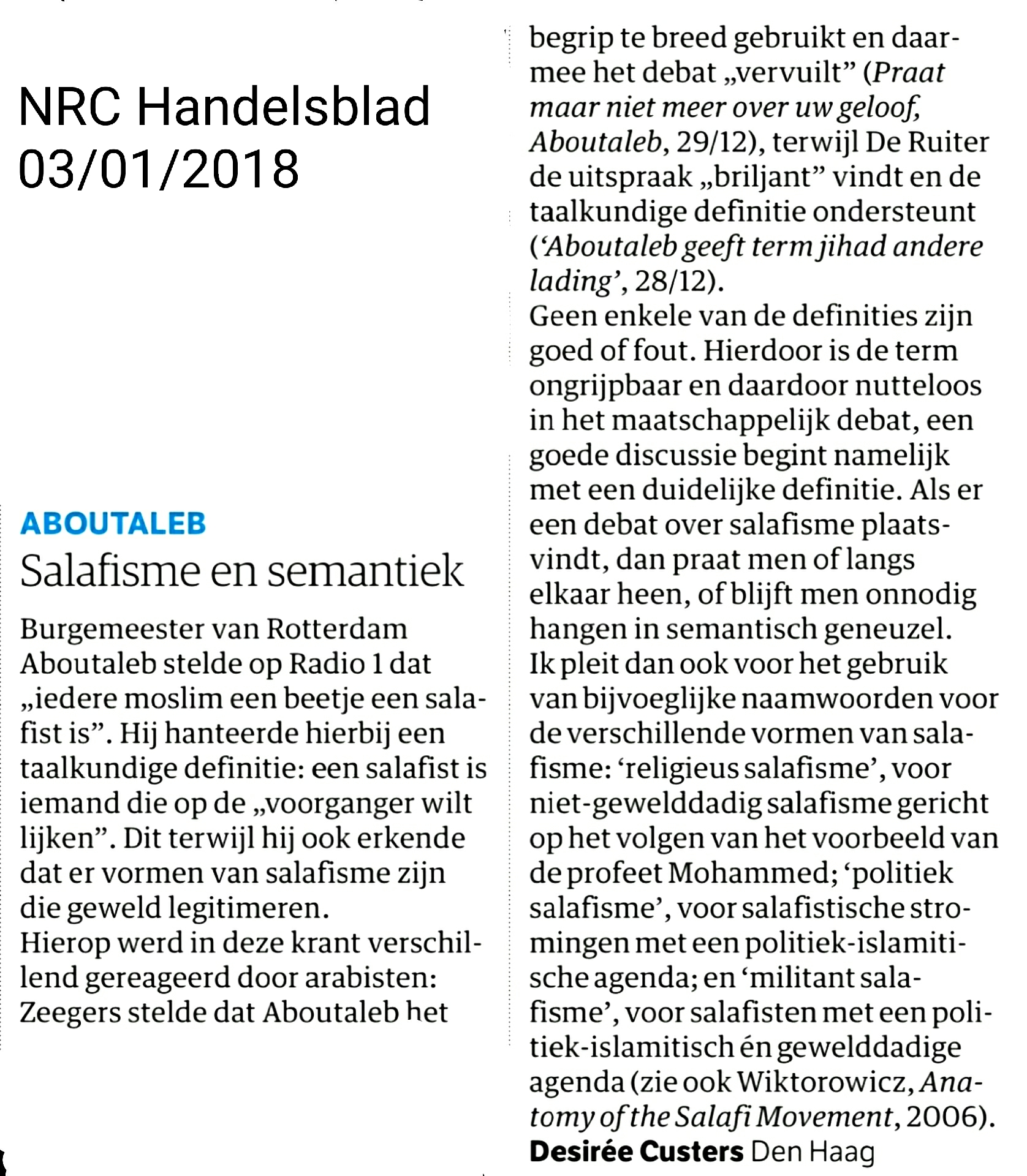
لهذا السبب ارسلتُ للجريدة مقالة صغيرة (200 كلمة، نشرت في 3 يناير 2018) وتشاهدوها في الصورة فوق. وفيها ادعو الى استخدام صفة بعد كلمة سلفي التي تصف بصورة ادق انواع السلفية. باضافة الصفات تكون المصطلحات عن الموضوع اكثر وضوحا. انا أسست هذا الاقتراح بالاعتماد على مقالة “تشريح الحركة السلفية” كتبها بالانجليزية قوينتن ويكتورويس، ولكنني اقترح صفات اقل حساسية سياسيا
الصفات التي اقترح استعمالها هي: “السلفية الدينية” للنوع غير العنيف من السلفية والذي يركز على اتباع النبي محمد كمثال، و”السلفية السياسية” للنوع من السلفية الذي لديه برنامج اسلامي سياسي، و”السلفية المتعصّبة” للنوع من السلفية الذي لديه برنامج اسلامي سياسي وعنيف
تابعوا ديسيري على تويتر @desicusters
Salafism and Semantics
The major of the Dutch city of Rotterdam, Ahmed Aboutaleb (from Moroccan heritage) recently stated in an interview with a Dutch radio station “that every Muslim is a little bit Salafist”. To make this statement he used a linguistic definition of Salafism: a Salafi is someone who aims to look like his predecessor. While stating this matter he did acknowledge that there are forms of Salafism that legitimize violence
In the newspaper NRC Handelsblad Dutch Arabists reacted differently. To name two examples, Maarten Zeegers (who’s book I wrote about in a different blog) opposed Aboutaleb’s use of the word Salafi because according to him Aboutaleb defines it top broad, and therefore “pollutes” the debate on the topic. Jan Jaap de Ruiter, by contrast, thought Aboutaleb’s use of the word was “briljant” because he reclaims the non-politicized and non-violent meaning of the word
None of these definitions and interpretations of Salafi and Salafism is correct or incorrect. This makes the use of the words in the public debate elusive and therefore useless, a good discussion needs clearly defined topic of discussion. Debates on Salafism therefore lead either to people speaking independently from each other using different definitions, or to endless semantic bickering with no substantive conclusion
For this reason I sent the small article (200 words, printed on the third of January, 2018) that you see in the picture too the NRC Handelsblad. In it I call for the use of adjectives describing the different forms of Salafism as so to keep terminology clear when speaking about the topic. It is based on Quintan Wiktorowicz article Anatomy of the Salafi Movement (2006) but suggests less politically sensitive
The different terminology I suggest is: “religious Salafism”, for the non-violent form of Salafism that aims to follow the example of their predecessor, the prophet Mohammed; “political Salafism”, for a form of Salafism with an Islamic political agenda; and “militant Salafism”, a form of Salafism with a Islamic political and violent agenda
Salafisme en Semantiek
Burgemeester van Rotterdam Aboutaleb stelde op Radio 1 dat “iedere moslim een beetje een salafist is”. Hij hanteerde hierbij een taalkundige definitie: een salafist iemand is die op de “voorganger wilt lijken”. Dit terwijl hij ook erkende er vormen van salafisme zijn die geweld legitimeren
Hierop werd in het NRC Handelsblad verschillend gereageerd door arabisten. Maarten Zeegers (over wiens boek ik in een eerdere blog heb geschreven) stelde dat Aboutaleb het begrip te breed gebruikt en daarmee het debat “vervuilt”. Dit terwijl Jan Jaap de Ruiter de uitspraak “briljant” vindt omdat Aboutaleb “de gepolitiseerde en gewelddadiger vorm van salafisme zo de wind uit de zeilen neemt”. Hij ondersteunde dus de taalkundige definitie ondersteunt
Geen enkele van de definities zijn goed of fout. Hierdoor is de term ongrijpbaar en daardoor nutteloos in het maatschappelijk debat, een goede discussie begint namelijk met een duidelijke definitie. Als er een debat over salafisme plaatsvindt, dan praat men of langs elkaar heen, of blijft men onnodig hangen in semantisch geneuzel
Om deze reden heb ik een korte brief (200 woorden, gepubliceerd op 3 januari 2018) gestuurd naar het NRC Handelsblad. Daarin pleit ik voor het gebruikt van bijvoeglijke naamwoorden voor de verschillende vormen van salafisme om de terminologie omtrent het onderwerp duidelijk te houden, en discussies beter mogelijk te maken
De terminologie die ik voorstel is: “religieus salafisme”, voor niet-gewelddadig salafisme gericht op het volgen van het voorbeeld van de profeet Mohammed; “politiek salafisme”, voor salafistische stromingen met een politiek islamitische agenda; en “militant salafisme”, voor salafisten met een politiek islamitisch én gewelddadige agenda
Deze termen zijn geïnspireerd op het artikel van Quintan Wiktorowicz, Anatomy of the Salafi Movement (2006) maar zijn minder politiek gekleurt
Desiree tweets via @desicusters
 issabramil.com
أضف تعليق