For English scroll down
من كنيسة الى جامع: مثالان في هولندا
هولندة واحدة من البلاد القليلة في غرب اوروبة التي تمّ تحاويل كنائس الى جوامع فيها. لاني فضولية في هذا الموضوع سوف اقوم في هذه المقالة بتحليل للمثالين الموجودين في هولندا: جامع الفاتح في امستردام، وجامع عمر الفاروق في اوفيرفيخت، قريب من اوترخت
اولاً ساصف الاسلام والدين بشكل عام في غرب اوروبة، وثانياً ساذكر العناصر العامة للجوامع واخيراً ساحلّل المثالين
الاسلام والدين في غرب أوروبا
ظهر الاسلام في غرب أوروبا للمرة الاولى في حوالي الخمسينات من القرن الماضي عندما انتقل عمال مسلمون الى أوروبا بعدما استقلت بلدان عربية من المستعمريها الاوروبين. منذ الثمانينات من نفس القرن، تمّ لم شمل العمال وفي نفس الوقت زاد عدد اللاجئين المسلمين مثلاً من الصومال وأفغانسنات. ظهر الدين الاسلامي بشكل ملموس عبر الجوامع، والمحجبات، ومطاعم الحلال. فالمواجهة بين المسلمين والاوروبيين تشكلت بطريقتين: اولاً، المسلمون كانت لديهم حرية دينية ولكن في نفس الوقت كان عليهم ان يندمجوا، ثانياً، الاسلام المتطرف والعنيف أدى الى الخوف من الاسلام.[1]
من المفارقة انّ العلمانية استقرت في غرب أوروبا في نفس وقت استقرار الاسلام .لذلك اصبح الدين في غرب أوروبا قضية ذاتية[2]. ورغم وجود احزاب سياسية على اساس الدين، فالحكومة والمجموعات الدينية منفصلتان عن بعضهما البعض. نتيجة لذلك فالحرية هي الدينية احد العناصر الرئيسية في علمانية غرب أوروبا. ازدياد العلمانية ادى ايضاً الى ان المظاهر الدينية خسرت معناها والى انخفاض العضوية في الكنائس[3]. بسبب ذلك تُحول بناء الكنائس مثلا الى مكتبات، ومطاعم، واحياناً الى جوامع
جوامع وكنائس
الجامع هو المكان الذي يصلي المسلمون فيه ، ويتعلموا عن الدين، ويجتمعوا مع بعضهم البعض. من الناحية المعمارية الشرطان الوحيدان ليكون الجامع جامعاً، هو حائط موجه الى القبلة، ومصلى[4]. كثير من الجوامع لديها ايضاً محاريب، ومنابر للخطبة، ومرافق للوضوء، وفناءات[5]. خارج الجامع توجد عادة مئذتان او اكثر
بالمقارنة مع عناصر الكنائس، فالمحراب يُذكّر بالمذبح المسيحي، والمنبر يُذكّر بالمنابر او “الأمبون” في الكنيسة. أخيراً مآذن الجوامع تُذكّر بأبراج الكنائس . توجد في التاريخ امثلة كثيرة لكنائس تحولت الى جوامع، قد يكون اشهر مثال تحويل هو أيا صوفيا في اسطنبول التي بُنيت ككاتدرائية بعدما احتلّ السلطان العثماني المدينة.[6]
في غرب أوروبا يعتبر البعض ان الجوامع غير مرغوب فيها[7]. خصوصاً المآذن التي تُفسرّ كرمز لهيمنة المسلمين والاسلام. لذلك، فالجوامع موضوعة كثيراً ما في أماكن هامشية وتوجد شروط لمظهرها[8]. في المانية مثلاً، ممنوع للمآذن ان تكون اعلى من ابراج الكنائس
المثالان
المثال الحديث الاول لكنيسة التي تحولت الى جامع، هو الجامع التركي “فاتح”. هو اكبر جامع في امستردام واستخدم ككنسية حتى 1971 عندما بيعت لانّ قليل من الناس حضروا طقوسها
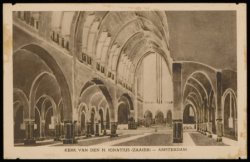
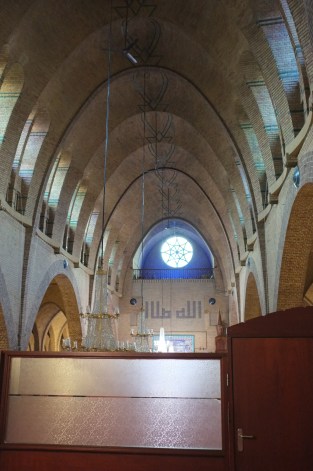
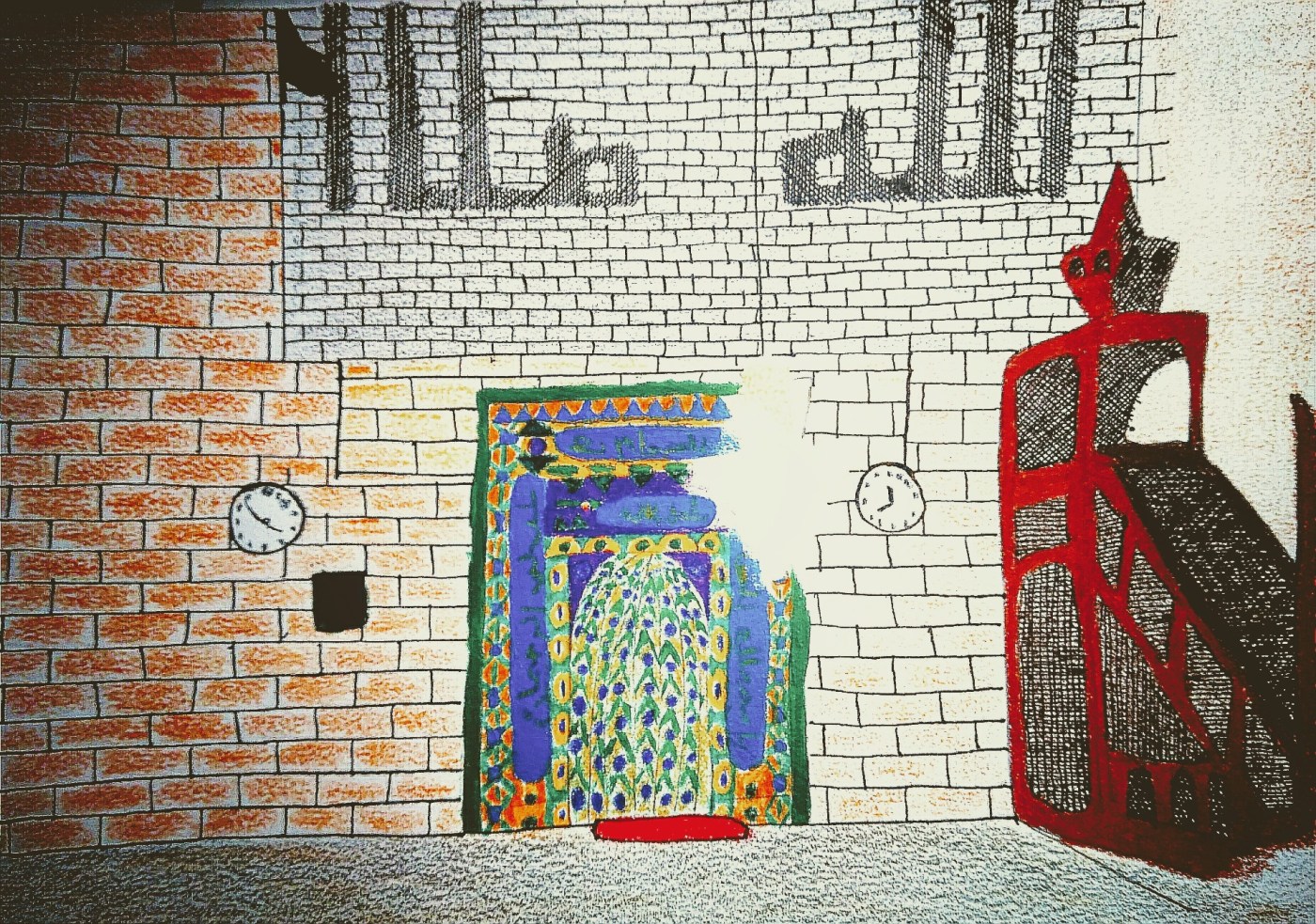
تمّ بناء المحراب في مكان المدخل الاصلي، وتزيّن المحراب كلمة “الله” فوقه. داخل الجامع ظل تقريباً مثل الكنيسة، الّا الزينة بالخط العربي التي تظهر اسماء الخلفاء. فحافظ الجامع على الزجاج الملون وبعض من الزينة المسحية . وراء الجامع أضيفت بعض الغُرف فواحدة منها مصلى للنساء، والباقية هي حجرات للدراسة ولتعليم الدين الاسلامي وتلاوة القرآن
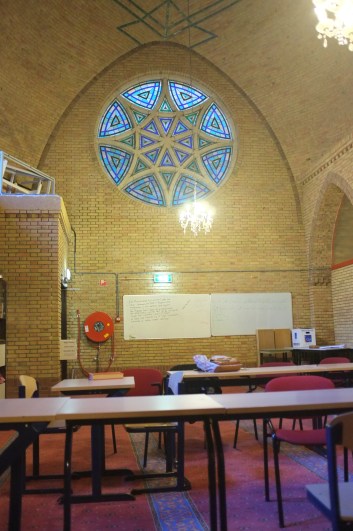
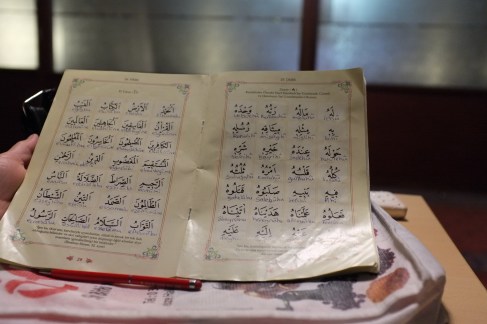
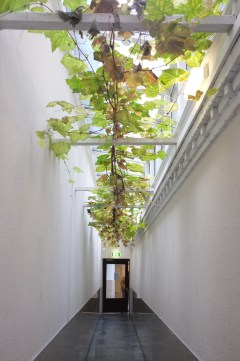
بجانب المدخل الاصلي يوجد مدخل جديد يُفتح على رواق مؤدياً الى مدخل جانبي للجامع. في الرواق توجد قاعة لشرب الشاي أي الدور الاجتماعي للجامع. سقف القاعة شفافي وهذا يعطي شعوراً خارجياً. علاوة على ذلك، اُضيف الى البناء مرافق للوضوء
خارج الجامع ظل برجاً الكنيسة وتمّ فقط تبديل الاصلبان بأهلة التي تمثل الدين الاسلامي
لانّ الجامع حافظ على كثير من عناصر الكنيسة، فهو يتوافق بمحيطه الاجتماعي والتاريخي[9]. مثال لذلك هي “سمك الايختوس” رمز للدين المسيحي الذي يزيّن سقف الجامع ايضاً. هكذا فالبناء يمثل على نحو صحيح الاختلاط السلامي بين عالمين: المسيحي والاسلامي
المثال الثاني، جامع عمر الفاروق، قد بُني في عام 1966 واستخدم ككنسية حتى عام 1981 عندما بيع لمجموعة مغربية بسبب النقص في عدد الاعضاء
كانت معامارية الكنيسة حديثة، فلم تكن فيها نفس العناصر التقليدية مثل الكنيسة المذكورة فوق. القاعة المركزية الكبيرة للبناء اصبحت مصلى للرجال، بينما مصلى النساء اصبح الغرفة المنفصلة التي كانت موجودة في البناء الاصلي. كل مصلى لديه مدخل خاص
بُنّيت داخل مصلى الرجال شرفة مفتوحة مزينة بآيات قرآنية لكي تتَّسع للعدد الكبير من المسلمين الذين يزورون الجامع. رُكّب ايضاً محراب مزيّن بالوان واشكال عربية ومنبر متحرك. هذان لا يُشاهدان من مصلى النساء، فالنساء يتبعن الخطبة عبر شاشة تلفزيونية
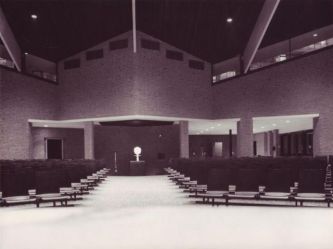
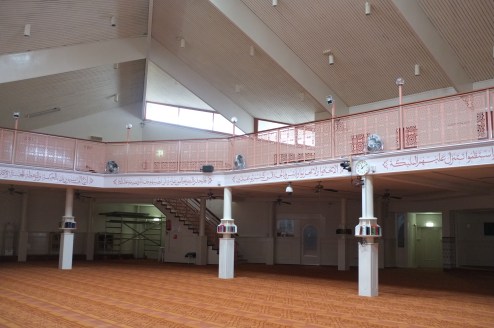
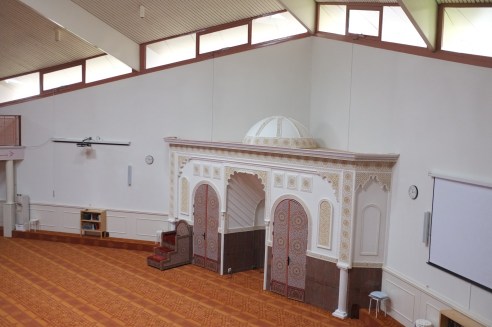
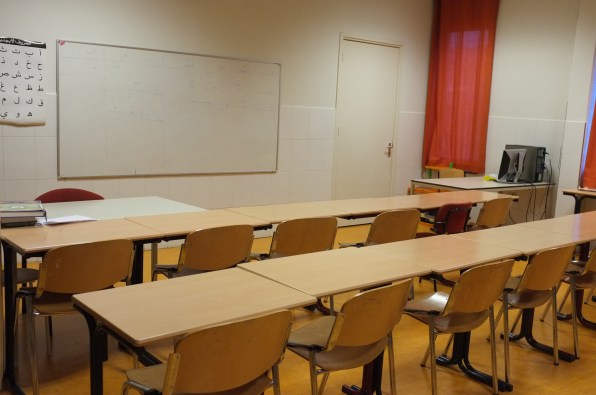
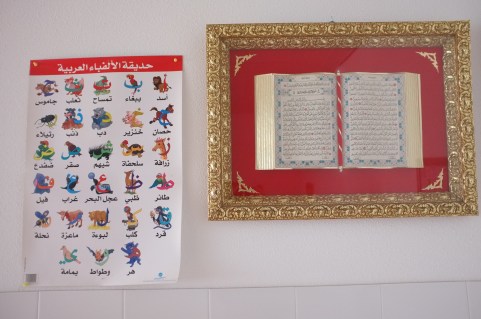
لم يتمّ بناء مئذنتين خارج الجامع. لذلك يبدو مظهر الجامع مثل مظهر الكنيسة. بُنّيت طبقة ثانية فوق البناء بجانب الجامع التي كانت ايضاً تابعة للكنيسة. والبناء كله اصبح “مركز الثقافي اسلامي” يُقدم فيه تعليم عن الاسلام، كما هو ايضاً في جامع “الفاتح”، وايضاً تُقدم دروس اللغة العربية للمسلمين وغير المسلمين. المركز يشكّل مكان للاجتماعات
استنتاج
يُظهر هذان المثالان انّ العناصر التالية “خلقت” الجامع: المصلى، المحراب، المنبر، مرافق الوضوء، الزينة الاسلامية، ومكان للاجتماع الذي يبدل دور فناء الجامع. في الخارج لا احد من الجامعين اُضيف اليه رموز واضحة للاسلام
المثالان ايضاً لعبا دوراً في تعليم اعضائه ومحيطه غير الاسلامي، سواء كان عبر الدروس او عبر المركز الثقافي الاسلامي. هكذا فالجامع هو جسر التواصل بين المجتمع الاسلامي والمحيط غير الاسلامي
نشاهد ايضاً في هذين المثالين انّ الجامعين اخذا بعين الاعتبار الإطار الاجتماعي والتاريخي في غرب أوروبا. وهذا ممكن لانّ الجامع تشكّل عبر رموز دينية وليس عبر تغييرات جذرية في بناء الكنيسة
هذا الاستنتاج على أساس هذين الجامعين فقط. توجد في هولندا كثير من الجوامع التي تتخذ المظهر الاسلامي التقليدي بما في ذلك المآذن العالية
تابعوا ديزيري على تويتر @desicusters
Two Churches turned Mosques in the Netherlands
The Netherlands is one of the few western European countries that in recent years witnessed churches turned into mosques. Curious about this topic I will describe the two cases that exists in the Netherlands: the Fatih mosque in Amsterdam and the Omar al Farouk mosque in Overvecht (near Utrecht)
First, I will describe Islam and religion in general in western Europe, then main characteristics of mosques, and finally the two cases
Islam and religion in western Europe
Islam in western Europe first appeared in the 1950s when Muslim labor workers settled after their country’s independence from European colonizers. From the 1980s their families migrated, and Europe saw an increase in Muslim refugees. Islam became visible through mosques, headscarves, and halal restaurants. The confrontation between Muslims and Europeans showed in two ways: first, Muslims had religious freedom but also need to integrate; second, Islamic radicalism and violence has led to ‘Islamophobia’.[1]
Ironically, when Islam appeared, so did secularization. Religion became a private affair[2] and although there are political parties based on religion (this will be the topic of my next blog), the state and the religious communities are separated. As a result, religious freedom is one of the main pillars of western European secularism. Increased secularization has also led to religious manifestations losing their meaning and the church’s loss of membership.[3] Many church buildings were made into for example libraries, restaurants, and in some cases mosques
Mosques and Churches
The mosque is where Muslims pray, learn about their religion, and gather together. From an architectural point of view, a mosque is a mosque if it has a wall oriented towards the qibla in Mecca, and a musalla, the prayer room.[4] Many mosques also have a mihrab (a niche in the qibla direction in which the imam leads the prayer) and a minbar (an elevated platform from which the imam pronounces the khutba or, sermon)[5]. Facilities of ablution also standard in most mosques as are minarets on the outside and a courtyard
In comparison to the church, the mihrab reminds of an altar, and the minbar resembles the Christian ambon. There are also many historical examples of churches turned into mosques. One of these is the Hagia Sophia which was built as a Cathedral but transformed into a Mosque after the Ottoman Empire conquered Istanbul[6]
In western Europe, mosques are seen by some as undesirable.[7] Especially the minaret has been interpreted as a symbol of Muslim domination. Therefore, mosques are often located in peripheral areas and there are conditions to the mosques’ outlook.[8] Minarets in Germany for example, are not to be higher that church steeples
Case Studies
The first example of a modern church-turned-mosque is the Turkish Fatih Mosque. It is the biggest mosque in Amsterdam and was used as a Church until 1971 when it was sold after very little people attended its ceremonies
A mihrab was built in the original entrance of the church, decorated with above it the Arabic word for “God”. The interior of the mosque largely remained the same except for subtle decoration in Arabic calligraphy. It preserved the stained glass and the ceiling decoration. In the back of the mosque rooms were made to serve as a praying room for women and class-rooms for teaching Islam and reading the Quran
Next to the original entrance a new entrance opens to hallway leading to the side entrance of the mosque. In this hallway is a tearoom that allows for the mosque’s social function. The celling of the tearoom is transparent giving the illusion of being in a courtyard. Furthermore, facilities for ablution were added to the original church building
On the outside of the mosque the two church towers remain, the only change being the replacement of the crosses by half-moons that represent the Islamic religion
Because the mosque preserved many of the church’s elements it agrees with its social and historical environment.[9] An example is the “Ichthus-fish”, a Christian symbol that decorated the mosque’s ceiling. The building therefore accurately represents the peaceful coming together of both two worlds: the Islamic and the Christian
The second example, the Omar al Farouk mosque, was built in 1966. It was used until 1981 when it was also sold to the Moroccan Muslim community because it did not have enough visitors
The architecture of the church was modern and did not have the same traditional characteristics as the previously described church. The building’s central open space became the praying room for men, while the praying room for women is a separate space that was already in existence, each praying with its own entrance
An open balcony decorated with Qurʾanic verses was added to the men’s praying room to accommodate the large number of its visitors. A mihrab colored subtly in Arabesque style and a mobile minbar were installed. From the women’s praying room these cannot be seen, and the women can follow it the imam’s khutba by television
No minarets were added to the building. Therefore, it’s outlook remains like the church’s. The building next to the mosque was extended to include a second level which became the “Islamic cultural centre”. Here education on Islam is offered, as was the case in the Fatih mosque, but also Arabic courses for Muslims and non-Muslims. It is also a meeting centre
Conclusion
These two examples show that the following elements “made the mosques”: prayer room(s), the mihrab, the minbar, and facilities of ablution, Islamic decoration, and a social gathering space that replaced the function of the courtyard. On the outside, neither mosque showed obvious Islamic signs
Both cases also took on a role in educating its members and its non-Muslim environment, whether through classes or the “Islamic cultural Centre”. It thus forms a communication bridge between the Muslim community and its non-Muslim social environment
We can see in these two cases that the mosque is shaped while taking into consideration the western European social and historical context. This is possible because it is religious symbolism and not radical changes to the building, that make the mosque
These conclusions are based on these two cases only. There are many mosques in the Netherlands that have a traditional Islamic outlook including high minarets
Desiree tweets via @desicusters
Sources/ مصادر
[1] [1] Maurits S. Berger. 2014. A Brief History of Islam: of Islam in Europe. Thirteen Centuries of Creed, Conflict, and Coexistence. Leiden University Press: Leiden p. 196
[2] [2] Maurits S. Berger. 2014. A Brief History of Islam p. 194-5
[3] [3] Michael Guggenheim. 2013. “Unifying and Decomposing Building Types: How to Analyze the Change of Use of Sacred Buildings” Qual Sociol, 35: 445-464, p. 450
[4] [4] Robert Hillenbrand. 1994. Islamic Architecture: Form, Function and Meaning. Columbia University Press: New York, p. 31
[5] [5] Robert Hillenbrand. 1994. Islamic Architecture, p. 46
[6] [6] Chad F. Emmett. 2009. “The Siting of Churches and Mosques as an Indicator of Christian- Muslim Relations”, p. 453 and p. 458
[7] [7]Nebahat Avioglu. 2007. “Identity-as-Form: The Mosque in the West” Cultural Analysis 6: 91-112, p. 103
[8] [8]Chad F. Emmett. 2009. “The Siting of Churches and Mosques as an Indicator of Christian- Muslim Relations” Islam and Christian-Muslim Relations 20(4): 451-476, p. 456
[9] Interview with one of the visitors of the mosque, December 28, 2017/
[9]مقابلتي مع احد المسلمون في الجامع
 issabramil.com