For English scroll down
لقد كتبتُ في مدونتي الاخيرة أن سياسة غرب أوروبا تتميز بعلمانيتها، بمعنى أن الحكومات لا تتدخّل في القضايا الدينية، أو تتدخّل بأقل ما يمكن. فالدين يُعتبر شأناً خاصاً. مع ذلك، ذكرت ايضا أن في هولندا توجد احزاب سياسية ذات مصدر إلهام ديني أو خلفية دينية. في هذه المقالة سوف أركز أكثر على هذه الأحزاب وذلك في إطار الانتخبات البلدية التي ستجرى يوم 21 مارس 2018
النظام الإنتخابيّ
أولا دعوني أشرح النظام الإنتخابيّ في هولندا. هذا النظام هو نظام التمثيل النسبي ايّ تعدد الأحزاب في الحكومة. كل أربع سنوات تتم الإنتخابات العامّة ويُنتخَب فيها أعضاء مجلس النوّاب. لم يحدث أبداً وجود حزب واحد الذي يحصل على أكثرية مطلقة من الأصوات، فهولندا تعرف نظاماً متعدد الأحزاب التي عليها تشكيل إئتلاف يحصل على الأكثرية لكي تحكُم
الإنتخابات العامّة الأخيرة وقعت في مارس 2017 وأكثر أصواتها فازبها حزب ألشعب للحرية والديمقراطية الذي شكّل الحكومة الحاضرة مع الأحزاب النداء المسيحي الديمقراطي و ديمقراطيي 66 والإتحاد المسيحي
لقد إعتُبرت هذه الأنتخابات الأولى في سلسلة إنتخابية (من بينها الإنتخابات في فرنسا وألمانيا) التي أظهرت شعبية الإيديولوجية السياسية اليمينية. فللكثيرين كان التصويت للحزب ألشعب للحرية والديمقراطية نوعا من الإرتياح وخصوصا إذا أخذنا بعين الإعتبار فوز حملة “بريكست” في إنكلترا وإنتخاب الرئيس ترامب في أمريكا
الإنتخابات البلدية ايضا تستخدم نظام ألتمثيل النسبي الذي يحدد مجلسها لمدة أربع سنوات. عدد المقاعد التي يحصل عليها كل حزب يعتمد على كبر البلدية. ليس كل الأحزاب العامّة موجودة في كل ألبطاقة الإنتخابية للبلدية، وليس كل الأحزاب البلدية ناشطة في المستوى العام
الأحزاب السياسية
هولندا تعرف أحزاباً كبيرة تهدف إلى تمثيل جزء كبير من المجتمع. على سبيل المثال حزب ألشعب للحرية والديمقراطية وحزب العمال. ولكن، الأسقف الإنتخابية المنخفضة (نسبة 1/150 من ألأصوات الصالحة) تسمح بوجودة أحزاب لقضية واحدة. هذا يعني أن هذه الأحزاب لا تمثل المواطنين ككل، بل تمثل شريحة منهم. اذا كان هناك كفاية من المؤيدين، فيستطيع هذا الحزب أن يكسب مقاعد في مجلس النواب وأن يمثّل رغبات هذا المجموع الخاص. مثال لأحزاب لقضية واحدة هو حزب الحيوانات وحزب الذين تعدّوا أل 50 عاما
مثال آخرهو حزب دِنْك (هذه الكلمة تعني الأمر “فَكِّـرْ” والفعل “تفكير” والحزب يسمي نفسه “حركة سياسية”)، ويقول إنه يمثل صوت المهاجرين غير ألغربيين، سواء كانوا جدداً أم ساكنين في هولندا منذ اجيال. فلذلك يدعو الحزب الى، على سبيل المثال، مجتمع متسامح ومتعدد. ولكن، الكثير ربطوا هذا الحزب بالحكومة التركية، وكثير من مؤيديه هم أتراك
احزاب دينية
ايضا الأحزاب الدينية أمثلة لأحزاب لقضية واحدة. ومع إن برامجها السياسية قد تتضمن بيانات تتعلق بقضايا تهم المجتمع ككل، فالحزب يهدف أن يمثل شريحة منه
لأن هولندا لديها خلفية تاريخية مسيحية، فهي تعرف عدداً من الأحزاب المسيحية. مثال هو الحزب المذكور فوق الذي يشارك ايضا في الحكومة وهو حزب الإتحاد المسيحي. الحزب ألمسيحي من المذهب البروتستانتي فسياسته مؤسسة على الكتاب المقدس فالإتحاد المسيحي يتخذ مواقف إجتماعية محافظة بالنسية لمثلا للإجهاض والموت الرحيم في حالة المرض والألم. ولكن للحزب آراء تقدمية ايضا مثلا في موضوع الإقتصاد والمهاجرين والبيئة والمثلية. الحزب الإصلاحي ألسياسي والديمقراطيون المسيحيون مثالان آخيران لأحزاب مسيحية
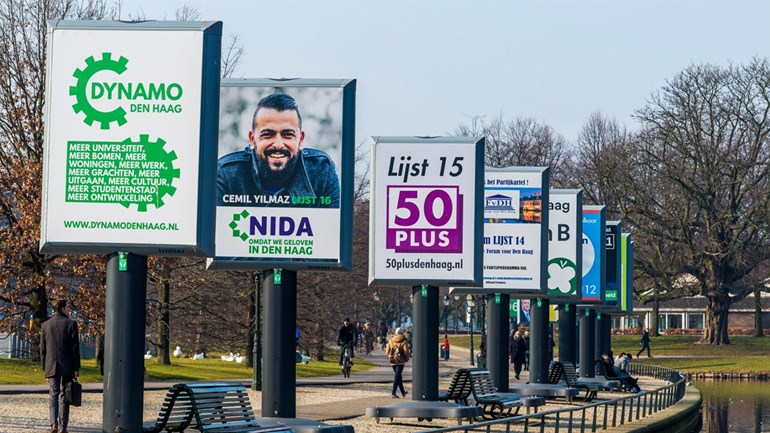
لا يوجد حزب محدّد للمسلمين في المستوى العام وبشكل عام المسلمون أعضاء في الاحزاب الموجودة (مثلا المسلمة المصرية الهولندية نورهان بدر في حزب العمال: جريدة الوفد). بل في المستوى البلدي توجد ثلاثة أحزاب مع مصدر إلهام ديني إسلامي أو لها خلفية إسلامية. على سبيل المثال حزب نداء وهو يشارك في الإنتخابات في المدينتين روتردام ولاهاي. مع أنه بالأساس إسلامي، فالحزب يقول انه يمثّل كل سكان المدينتين ولذلك فهومثل الإتحاد المسيحي يقول إنه يقبل المثليين. علاوة على ذلك الحزب يريد أن يستثمر في البيئة وأن يشجع التعاون بين ألثقافات وألأديان ألمختلفة. امثالان اخيران لأحزاب بأساس إسلامي هما حزب للإتحاد والمسلمون الديمقراطيون
هاتان المجموعتان من ألأحزاب ألدينية لاتتنافسان. يواجه الأحزاب ذات الخلفية الإسلامية، مع أحزاب المهاجرين، الأحزاب العلمانية اليمنينية. وهذا يظهر في الإنتخابات في مدينة روتردام
مثال: مدينة روتردام
المنافسة في المدينة ثنائية: أولا بين دِنْك ونداء على أصوات المهاجرين (المسلمين)، وثانيا بين حزب للحرية ومنتدى للديمقراطية وروتردام صالحة للمعيشةعلى الأصوات (العلمانية) اليمنية. الطرفان الإيديولوجيان يتنافسان على ألفوزب أكثرية الأصوات. لقد تحالفت ثلاثة أحزاب يسارية مع نداء لكي تُواجه ألجبهة اليمنينية أيّ أدى إلى إستقطاب الإحتمالات السياسية في روتردام
استنتاج
طبيعة النظام الإنتخابي في هولندا تسمح بأحزاب لقضية واحدة أن تكون موجودة بجانب ألأحزاب ألعامة. هذه الأحزاب الخاصة ممكن أن تكون علمانية، مثلا تُركز على مجموعة من عمر أو أصل معينين، أو ممكن تكون دينية. الأحزاب الدينية تضم الآن أحزاب بلدية ذات إلهام إسلامي إلى جانب الأحزاب المسيحية التي كانت من زمان
الإنشقاق السياسي في هولندا لايظهر أن يكون دينيا، بل بين جبهة ألأحزاب ألعلمانية أليمينة في طرف واحد، وجبهة ألأحزاب ألعلمانية أليسارية وأحزاب للمهاجريين وأحزاب ذات إلهام إسلامي. بين الجبهتين توجد أحزاب عامة معتدلة مع مجموعة مؤيديين ثابتة
الأحزاب
ألشعب للحرية والديمقراطية = VVD
المسيحي الديمقراطي = CDA
ديمقراطيي 66 = D66
الإتحاد المسيحي = CU
وحزب العمال = PvdA
دِنْك = DENK
نداء = Nida
حزب للإتحاد= Partij voor de Eenheid
المسلمون الديمقراطيون = Islam Democraten
تابعوا ديسيري على تويتر @desicusters
Local Elections in the Netherlands and religious parties
In my last Blog I wrote that Western European politics is characterized by secularism, meaning that the government does not meddle in religious issues and religion is seen as a private matter. However, I also mentioned that there are religiously inspired political parties. In this article I will further describe these parties in light of the upcoming municipal elections that will take place on the 21st of March 2018
The Electoral System
First, let me start by briefly describing the electoral system. The Dutch electoral system is one of proportional representation resulting in a multitude of parties in the government. Every four years national elections are held in which the members of the House of Representatives are chosen. Because there is never one party that gets the majority of the votes, the Netherlands has a multi-party system in which parties need to form a coalition with other parties to rule
The most recent general election was in March 2017. This resulted the most votes for the People’s Party of Freedom and Democracy (VVD) which formed a ruling coalition with the Christian Democratic Appel (CDA), Democrats 66 (D66), and the Christian Union (CU)
The election was the seen as the first of a sequence of national elections (followed by France and Germany, among others) in Europe that would show the popularity of the right-wing political ideology. For many it was thus a relief when the VVD won, especially considering the victories of the Brexit campaign and Donald Trump
The municipal elections also use proportional representation to determine their councils for a period of four years. The number of seats that are assigned to the different elected parties depends on the size of the municipality. Not all national parties are on the ballot list in all municipalities, and not all municipal parties are nationally active
The Political Parties
The Netherlands knows big, main parties that aim to represent of wide segments of society, such as the liberal VVD party, and the social-democratic workersparty PvdA. However, the low electoral threshold (1/150th of the total number of valid votes) also allows for “one-issue” parties. These entail political parties that do not aim to represent society as a whole, but rather one segment of it. If their support is big enough, this party can win seats in the parliament, and represent the wishes of this specific group. An example is the Animal Party and the 50+ Party
Another example is DENK (the word means “to think”, officially it is a political movement), which says to be representative of the non-Western migrants, whether new or settled in the country for generations. It thus calls, among others, for a tolerant, diverse society. However, many have associated the party with the Turkish government and its followers are many Turkish
Religious Parties
Religious parties are examples of political parties that are focused on one segment of society. Although their party program might involve statements that refer to issues outside of their interest group, they mainly aim to represent a specific group
The Netherlands, being a country with a Christian historical background, knows several Christian parties. An example is the CU, which is currently in the ruling coalition. Being a protestant party, it bases its policy on the Bible and holds socially conservative positions on for example abortion and euthanasia. It has progressive views on economic, immigration, and environmental issues. Other Christian parties include the Christian Democrats and the Reformed Political Party
There are no explicit national political parties representing Muslims, who are generally members of existing parties (such as in D66). However, the local party Nida, partaking in the elections in Rotterdam and The Hague, is explicitly an Islamic inspired party. Despite its religious orientation, it says aims to represent all citizens of the two cities, and therefore, like the CU, says to for example accept the LGBT community. Furthermore, the party wants to invest in the environment, and aims to promote cooperation between people of different cultures and religions. Other Islam-inspired parties include the Party for Unity and the Islam Democrats, both in The Hague
These two groups of religious parties do not compete. Rather, the Islamic inspired parties, together with migrant parties, face right-wing secular parties. This can be seen in the following example of Rotterdam
The case of Rotterdam
The city’s political competition is seen as bringing twofold: first, between DENK and Nida for the (Muslim) migrant vote; and second, between the Freedom Party (PVV), Forum for Democracy (FvD), and Livable Rotterdam for the right (secularist) vote. Both ideological sides then compete for the majority of the votes. Three leftist parties and Nida have allied to face the right-wing parties, resulting in a polarization of Rotterdam’s political options
Conclusion
The nature of the Dutch electoral system allows for small, one-issue parties next to main stream parties. These specific parties can have secular orientations, such as age groups or ethnic backgrounds, but can also be religious. This latter group has come to include (local) Islamic inspired parties next to the already existing Christian parties
Dutch political cleavages show not to be religious, but rather between on the one side secular right-wing political parties, and on the other side secular leftist, migrant parties and Islamic inspired-parties. In between these two there are mainstream parties that have a solid support bases
Desiree tweets via @desicusters
 issabramil.com