
For English scroll down
الرواية التي ترجمتها حديثا من اللغة العربية إلى الهولندية، ‘نساء بروكسل’، تصف تواصل جزء من الجالية العربية في مدينة بروكسل مع بعضهم البعض، كما تصف أيضاً اتصالها مع بلجيكيين وأقليات أخرى. الرواية شبّاك إلى التعدد الثقافي الموجود في بروكسل، والمراحل التي تمر بها الشخصيات خلال الاندماج في المجتمع البلجيكي، على سبيل المثال تعلم اللغة الفلمنكية أو الفرنسية. أنتقلتُ إلى بروكسل منذ أكثر من سنة، وأستطيع القول إن بروكسل مدينة تهيمن فيها الأقليات الثقافية والدينية والعرقية.
أحب أن أكتب سلسلة مقالات تصف هذه التعددية الثقافية بالتركيز على مواضيع مختلفة، مثل الإندماج، والدين والنشاطات الثقافية. في هذه المقالة سوف اسلّط الضوء على إجراءات اندماج القادمين الجدد في مدينة بروكسل. ولكن، مثلما كتبت سابقاً. بلجيكا تعرف مستويات سلطوية مختلفة، مما يؤثر في الإجراءات في بروكسل. وعليه، يوجد في المدينة مسارين للإندماج: واحد منهما باللغة الهولندية وهو مرتبط بالسلطة الفدرالية الفلمنكية، والثاني بالسلطة الفدرالية الفرنسية الوالونية.
المسار الفلمنكي، الذي يحذو إجراءات الاندماج في هولندا، هو أكثر شمولا من المسار الفرنسي. ففي المسار الفلمنكي يجب على القادمين الجدد المرور بعدة امتحانات لكي يحصلوا على شهادة. في المسار الفرنسي يكفي متابعة الدروس للحصول على الشهادة. يركز المسار الفلمنكي على المجتمع البلجيكي، مثل القيم والأعراف والتقاليد، وعلى المواطنة، من ضمنها الحقوق والواجبات، وعلى اللغة الهولندية.
بينما ينظر المسار الفرنسي إلى الإندماج من الناحية السياسية- المواطنية، ويعطي أولوية إلى التماسك الإجتماعي في مجتمع متعدد الثقافات، والمساواة في الوصول إلى الخدمات، والمشاركة الاجتماعية والاقتصادية. ولا يفرّق في إجراءاته بين إحتفالات دينية أو عرقية أو ايَ إختلاف آخر.
في المسار الفلمنكي يحصل القادمون الجدد على مساعدة عبر نظام المشورة، مثلا في إيجاد شغل ومكان للعيش. وهذه المساعدة مهمة جدا لهم، مع انها يمكن أن تجعلهم معتمدين على السلطة.
بالفعل، المعلم هو الذي يحدد مضمون الدروس. كما شرحت لي معلمة في المسار الفلمنكي، فهي تحصل على كتيب أفكار عامة، مثل التضامن الإجتماعي وإحترام الإختلافات الإجتماعية، ولكن على كل معلم اختيار كيفية إيصال هذه الأفكار إلى القادمين الجدد. قد تُرك وكيفية التدريس والأفكار الموجودة بالكتيب غامضة بسبب حساسيتها السياسية.
يعترف المسار الفلمنكي أيضاً بحق الأقليات في الإحتفاظ بهويتها الخاصة ويدعم الأقليات بالتعبير عن ثقافتها ولغتها ودينها الخ… يترك المسار الفرنسي الكثير للقادمين أنفسهم. ولكن هناك وحدتان فقط مجبرين على إنجازهما، وهما: تعلم اللغة لمدة ١٢٠ ساعة وتعلم المواطنة لمدة ٢٠ ساعة.
في مدينة بروكسل، حيث كلا الفدراليتان الفلمنكية الفرنسية تسيطر على مسارهما، تم التوصل إلى اتفاق بأن كل قادم جديد إلى بروكسل من خارج الإتحاد الأوروبي، بدءاً من ٢٠٢٠ فصاعداً عليه أن يتبع دورة اندماج مجاناً. وهذه الدورة مخططة لكي تنسجم فيها المسارين الفرنسي والفلمنكي، وتضمن تعلم لغة (أما الفرنسية أو الهولندية) إلى مستوى A-2 وتعلم مواطنة وتعلم المشاركة الإجتماعية والإقتصادية.
تواجه هذه المقاربة الجديدة إلى الاندماج تحدٍ بسبب تعدد السلطات الموجودة في بروكسل. فهناك منظمات للإندماج من الفدراليتين، ومع أنه المنظمات الفلمنكية لديها أكثر من ١٠ سنين تجربة في اندماج الأجانب، فمنظمات المسار الفرنسي حديثة ومؤخراً فقط بدأت بدورات الإندماج في بروكسل. رغم الفرق في التجربة، فمقاربة متماسكة جديدة تطلب من المسارين أن يتوحدا. على المدة الطويل، ليصبح مساراً ثنائي اللغة، ايّ بدون إختيار إحدى اللغتين الفرنسية أو هولندية.
تؤثر المنافسة بين اللغتين في تطوير مسار اندماج جديد في عاصمة بلجيكا. ففي العقود الأخيرة، تمت “فرنسة” بروكسل، أيّ أن اللغة الفرنسية أصبحت اللغة المهيمنة في المدينة، أحد الأسباب قدوم الكثير من المهاجرين من المستعمرات الفرنسية السابقة. واتخذ المجتمع الفلمنكي تدابير لزيادة أهمية اللغة الهولندية. على سبيل المثال، تقمد دورتها مجاناً، بينما تكلف نفس الدورة الفلمنكية خارج بروكسل ٣٦٠€، وهكذا يجذبوا طلاب لدراسة الهولندية. وأيضاً توجد احتمالات عمل أكثر بعد متابعة المسار الفلمنكي، كما قالت لي طالبة دورة الإندماج: اللغة الهولندية تفتح مجالات أوسع لإيجاد عمل.
هناك ٧٠٠٠ مكان في المسار الاندماجي للقادمين الجدد في بروكسل، وتم تمويلها من الفدراليتين الفلمنكية الوالونية. ولكن هذا العدد ليس كفاية بالنسبة لتوقعات عدد القادمين، وهي بين ٩٠٠٠ و١٣٠٠٠ في السنة ٢٠٢٠. قد أُجلت الدورة لعدة أشهر في يناير لأسباب لوجيستيكية، مثل عدم الوضوح عن القادمين الجدد، ومن منهم يجب أن يتابع مساراً معيناً.
سوف تكون السنة ٢٠٢٠ سنة تجريبية لمقاربة الٱندماج الجديدة في بروكسل. لكن، رغم نجاحها أو فشلها، سوف تبقى بروكسل مدينة ذات اختلافات ثقافية ودينية وعرقية للغاية، وتجاوز اللغة الفرنسية والهولندي بعدد كثير من اللغات الأجنبية الثانية.
تابعوا ديسيري على تويتر @desicusters
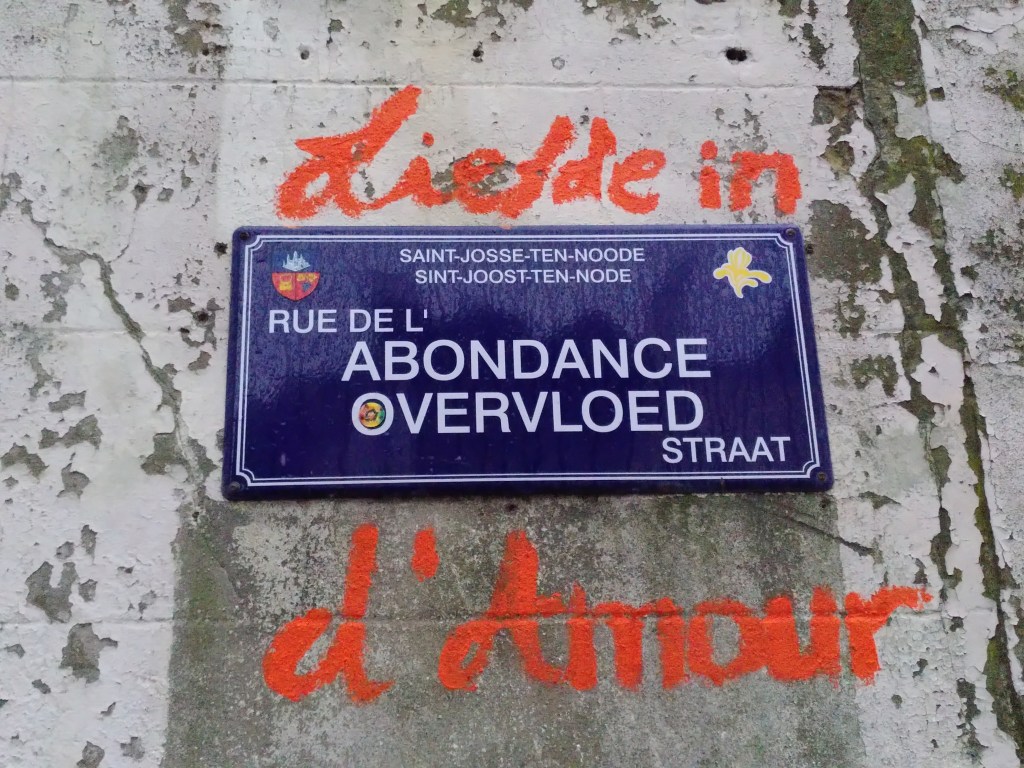
وفرة من الحب جرافيتي باللغة الهولندية والفرنسية في بركسل
The novel I recently translated from Arabic to Dutch with the title “Brusselse Vrouwen”, describes how the Arab diaspora living in Brussels interacts with each other in their daily activities, as they also interact with other minority communities. The novel is an insight in the multiculturality of Brussels, including how the characters integrate to Brussels society, such as having to learn the Dutch language. I myself have live in the city for a little over a year now, and can say that Brussels is a ‘majority of minorities’ city with a large number of cultures, religions etc. living in a limited public space
I would like to write a series of articles describing this plurality in Brussels with themes such as integration, religion, cultural activities, and restaurants. In this article, I would like to take a look at the integration policies for foreigners in the city of Brussels. But, as I mentioned in a previous article, Belgium has different levels of authority that both effect integration policies in Brussels. For integration this means that there is a Flemish and French community’s trajectory linked to the two trajectories in the Flemish and Walloon federal regions
The Flemish trajectory, which is modeled after integration policy in the Netherlands, is more extensive than the French-language model. While in the Flemish model newcomers must take tests before they receive a certificate, in the French community’s model you only need to follow the courses to obtain the certificate. The Flemish model is very much focussed on social orientation, including values, norms and customs of the Belgian society, active citizenship, including rights and duties, and Dutch as a second language
The French community’s model looks at integration in more politico-civil terms, and prioritizes social cohesion within an intercultural society, equal access to services, and social and economic participation. In its policy it does not distinguish between different ethnic, religious, or other groups
In the Flemish model newcomers get social support through a counselling system, such as looking finding a job and place to live. This is a big help for newcomers, but can also make them dependent on authorities. Furthermore, teaching newly arrived individuals the norms and values of the Flemish community can come across patronizing
The exact content of these classes are left to the individual teacher. As one teacher of newcomers explained to me, she receives a slim handbook with general concepts, such as solidarity and respect for diversity, but it is up to the teacher how to communicate these. The concepts are especially left vague due to political sensibility
The Flemish model also acknowledges the right of minorities to retain their identity, and supports minorities in representing themselves culturally, linguistically, or otherwise. The French community’s model leaves much up to the newcomers themselves, since only two modules of the integration programme are mandatory (language, 120 hours, and citizenship, 20 hours).
In Brussels, where both the Flemish and French community have authority, an agreement was reached to be implemented from 2020 onward, that every newcomer from a country outside of the EU is obligated to follow a free ‘integration course’. This course combines both the French community and Flemish models, and consists of learning a language, either Dutch or French up to A2 level, citizenship training, and learning about social and economic participation
One challenge to an independent programme in Brussels is the multiple levels of authority active in the city. Both French and Flemish communities have organisations in the city that provide integration courses. While the Flemish community though its organisation “Brussels onthaal Nieuwkomers” has over 10 years of experience in integrated newcomers, the French community only recently started. Nevertheless, for an integrated and unified new approach in both languages, both programmes will have to adapt to each other. Eventually, this should even become a bilingual trajectory
Furthermore, integration in Brussels is influenced by the language competition in the Belgian capital. In the previous decades, Brussels has significantly ‘Francizised’, meaning that French has become the dominant language. In part this is because many newcomers come from French-speaking ex-colonies. The Flemish community has taken measures to increase the Flemish language influence in Brussels. Among others is has made their integration programme free in Brussels, while it costs 370 euros in other Flemish areas, so newcomers would not choose the French trajectory for financial reasons. Furthermore, as one former integration programme student told me, an attractive reason for following the Flemish trajectory are the job prospects for Dutch-speaking people, seeing as Brussels is in need of Dutch-speaking personnel in public functions
There are 7000 places for newcomers available for the new Brussels’ integration programme that are financed by the Flemish and French federal authorities. This number might not be enough however, since the number of newcomers is predicted to be between 9.000 and 13.000 for 2020. In January the programme was already been postponed for a few months, its biggest obstacle being a lack of clarity on who should follow a course, how to communicate with newcomers, and what trajectory they need to follow
This year, 2020, will therefore be a test-year for the new integration approach in Brussels. But however successful it will turn out to be, Brussels will remain a city of superdiversity and interculturalism, surpassing both French and Dutch in the languages that are heard on a daily basis
Desiree tweets via @desicusters
 issabramil.com
أضف تعليق