
For English scroll down
الخيال العلمي الفلسطيني والعربي والإسلامي: حوار مع الدكتورة ليلى عزمي غوشة والدكتور عماد الدين عيشة
المشاهد العنيفة المروعة التي وصلتنا من فلسطين في الأسابيع الأخيرة أثارت الحسرة في كل أنحاء العالم والرعب، وعدم التصديق. رغم ذلك، ظهرت بشكل واضح – مرة أخرى – ثبات وصمود الفلسطينيين وقوتهم. في هذه المقابلة، التي أجريت عبر إيميل، شاركتنا الدكتورة ليلى عزمي غوشة والدكتور عماد الدين عيشة، الاثنان من أصل فلسطيني، بآرائهما حول كيفية تصوّر مستقبل فلسطيني بمساعدة الخيال العلمي. ويتأملان أيضاً في كتابة الخيال العلمي الإسلامي، وتحديات كتابة الخيال العلمي في العالم العربي.
الخيال العلمي الفلسطيني: تصوّر للمستقبل
كتابة الخيال العلمي الفلسطيني، كما وصفتها د. ليلى، هي إستكشاف لكيفية مساعدة العلم والتقنية في القضية الفلسطينية، سواء في تكريمه للماضي أو تصوره للمستقبل. ولذا، كما وصفتها الدكتورة، هي أداة مفيدة للتفكير في حلول إبداعية وتحذيرات، على سبيل المثال المستقبل الديستوبي.
يضيف د. عماد أن خيبة الفلسطينيين بالواقعية والرواية التاريخية تزداد باطّراد، وأن كتّاباً فلسطينيين يريدون أن يكتبوا عن المستقبل. أشار إلى رواية غسان كنفاني الهائلة “عائد إلى حيفا” عندما تساءل: “ما هو الوطن؟، هل هو الذكريات الحلوة فقط، أم مشروع للمستقبل؟” ويستكشف د. عماد في إمكانيات إنشاء منصة افتراضية حيث يمكن لكتاب الخيال العلمي أن يتصوروا مستقبل الشعب الفلسطيني، سواء في فلسطين، وفي المنفى أو المهجر، و في أماكن آخرى، مثل الفضاء الخارجي أو في بُعدٍ مُوازٍ أو زمن بديل.
في أحد قصص د. عماد القصيرة، “الوطن الرقمي”، تحاول الشخصية الرئيسية، وهو رئيس أمن إسرائيلي، أن يُعاقِب هاكراً فلسطينياً يستخدم لقب هانيبال. تبدأ القصة بلعب إفتراضي يصوّر أوتوبيا فلسطيني مع خيارات وسيناريوهات مختلفة. وخلال القصة يتعرف قراء على الحقائق حول طريق فلسطين القاسية والصعبة إلى الإستقلال التي كثيراً ما تُنسى والتي تحققت في القصة عبر حكومة افتراضية. القصة موجودة في المجموعة القصصية “فلسطين +100″، التي تتخيل فلسطين بعد مئة سنة من نكبة 1948، عندما طردت إسرائيل الآلاف من الفلسطينيين.
ولاحظت د. ليلى أن كثيراً من الأفكار الإبداعية والتأملات في مستقبل فلسطين والعلم والتقنية تأتي من الشباب في فلسطين. أجرَت مؤخراً مقابلة مع باحث في القصص التراثية الشعبية الفلسطينية وهو ايضاً مدير ورشات خيال علمي لشباب فلسطينيين، وقال إن ثمة إهتمام من قبل الشباب في الثقوب السوداء وأفكار علمية أخرى للنظر إلى القضية الفلسطينية ولِإبداع قصص خيالية.
أما بالنسبة لقراء هذه القصص، تقول د. ليلى إنه قد يكون من المدهش والمثير للإهتمام للمعجبين بالخيال العلمي أو لقصص الفنتازيا، أن يدركوا بأن ثمة تاريخ وتقليد فنتازيا في الثقافة العربية يتماشى ويندمج بسهولة مع تيمات الخيال العلمي والكتابة المستقبلية. وعلى الغرب، باهتمامه المتزايد في الخيال العلمي والفنتازيا، أن يتضمن قصصاً أكثر تجد أساسها خارج الغرب، فلسطين مثلاً.
كتابة الخيال العلمي الإسلامي والعربي
شارك، د. عماد، مع د. حسام الزمبيلي، في تحرير كتاب “الخيال العلمي الإسلامي والعربي” وكتابته ومع مساهمة العديد من الكتّاب والذي سوف يصدر في سبتمبر/أيلول 2021. وذكر د. عماد تنوع الخيال العلمي المكتوب من قبل كتّاب مسلمين. الخيال العلمي المصري، والباكستاني، والماليزي، على سبيل المثال، يؤيد الدين إلى حد بعيد، بينما آسيا الوسطى وتركيا، العراق، والأردن، ولبنان، وسوريا، والبوسنة أكثر علمانية. دول المغرب مثل المغرب، والجزائر، وتونس، وموريتانيا، وليبيا، بالإضافة إلى اليمن وفلسطين في مكان ما في الوسط.
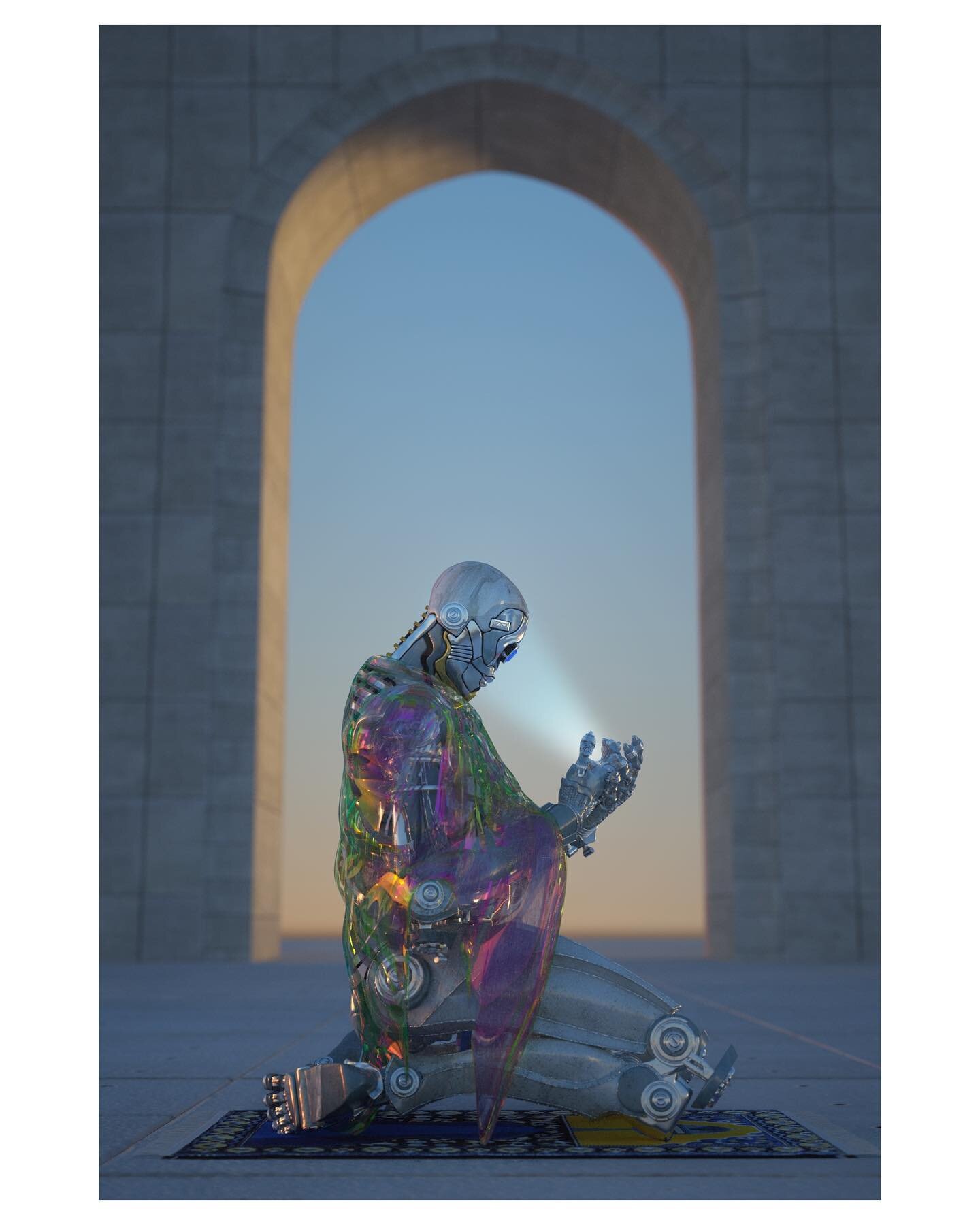
From the series ‘SpaceMosques’ by Saks Afridi: source / من السلسلة الفنية “مساجد الفضاء”للفنان ساكس أفريدي: مصدر
ذكر د. عماد أن الكتاب يركز من ناحية على وصف المسلمين مثلما يكون وقد يكون في المستقبل، ومن ناحية ثانية على المنطقة العربية برمتها. مع ذلك، يرى د. عماد وجود سِمات مشتركة في الخيال العلمي العربي والإسلامي، من بينها العنصر الإنساني، ومناهضة الغطرسة التي قد تأتي مع العلم والتقنية، وتصوّر حب لخلق الله. على سبيل المثال، يعطي بطولة قصصه لصالح أعدائه ويترك الإمكانية للخلاص مفتوحاً دائماً. وأمثلة لذلك نهاد شريف (1921-2011)، أول كاتب عربي متخصص بالخيال العلمي، وعمار محمود المصري من الجيل الجديد.
وسِمة مشتركة أخرى هي استعادة التراث. وهي ما نراه أيضاً في الأفروفيوتورِسم (أو المستقبليّة-الإفريقية). استعادة التراث يمكن أن يكون أي شيء من إنجازات الماضي في العلم مثل الإشارة إلى ملاحم ثقافية وأساطير صوفية. الكاتب والصحفي الأوزبكي حامد إسمايلوف، على سبيل المثال، يستخدم قصصاً صوفية من آسيا الوسطى في كتابته، ويقدّم صورة جديدة للصوفية حيث يكتشف العالم والفيلسوف والصوفي إبن سينا إكسير الحياة ويعيش إلى العالم الحالي. الخيال العلمي الإيراني، كما ذكر د. عماد، ومن الأرجح يكون الخيال العلمي الأكثر عمقاً وحجماً في الشرق الاوسط. ولكنه لا يقول ماذا يعني أن تكون مسلماً/ة، بل يركز على البُعد الروحي ونقل هذا البُعد إلى المستقبل أو إلى عوالم غريبة.
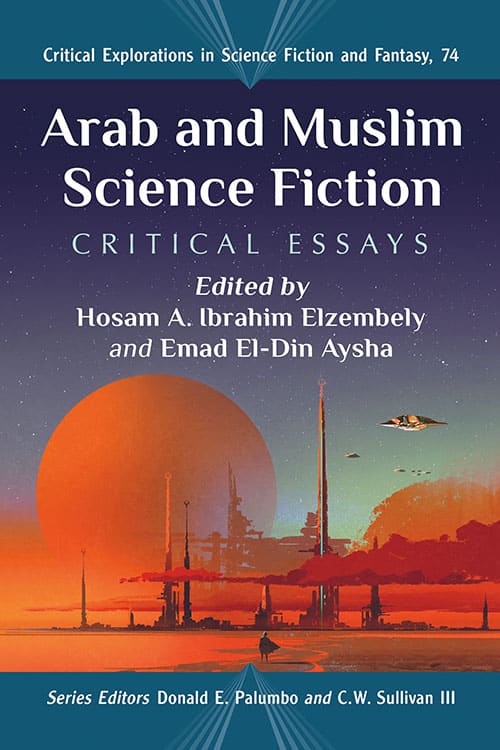
Arab and Muslim Science Fiction co-authored by Emad el-Din Aysha / الخيال العلمي العربي والإسلامي لعماد الدين عيشة وحسام الزمبيلي
حول نشر الخيال العلمي العربي وترجمته
بالنسبة لنشر الخيال العلمي، فهناك عدة مشاكل داخل العالم العربي، مثلما ذكر د. عماد. في مصر، على سبيل المثال، هناك عدة مشاكل في قطاع النشر، مثل الرقابة، ودور نشر لا تريد المخاطرة، ومشاكل متعلقة بحقوق المؤلف. وهذه الظروف صعبة للكتاب، خصوصاً الشباب الذين يكافحون وكثيراً ما يكونون مضطرين أن يساهموا مالياً في نشر أعمالهم.
الحصول على الاعتراف الدولي عقبة أخرى. هذه من تجربة د. عماد نفسه ايضاً، فقصصه مع ابطال مسلمين أو عرب قلما تُنشر خارج مصر. ولكن إذا حصلتَِ على شهرة محلية، سيكون من الأسهل أن تحصل/ي على إمكانيات دولية وتحمل/ي مجموعة كاملة من الكتاب معك إلى الساحة الدولية. مثال ذلك رواية الطابور (2013) لبسمة عبدالعزيز التي تُرجمت إلى الإنجليزية في السنة 2016.
التطور الإيجابي هو أن الشباب في المنطقة العربية متعطّش للأدب التأملي، مثل أدب الرعب والخيال العلمي التي يتمّ بيعها في الشوارع، وأكشاك الصحف، والمكتبات. وايضاً الأفلام والمسلسلات التأملية تكسب زخماً كوسيلة بنائية لمعالجة مشاكل العالم العربي. لقد قوبل أول مسلسل خيال علمي مصري النهاية، الذي عرض على التلفزيون رمضان 2020، قبولاً حسناً وكان إنتاج المسلسل جيداً بالنسبة للحركة الحيّة والرسوم التخطيطيّة الحاسوبيّة (CGI).
هناك ايضاً إهتمام متزايد بترجمة الخيال العلمي وأنواع أخرى من الخيال التأملي. د. عماد ترجم رواية رعب (لعنة سويك) ورواية خيال علمي (رسالة إلى العالم). ولكن لا يوجد تثقيف المترجمين أو إطار قانوني واضح فيما يتعلق بملكية حقوق النشر وحصص المبيعات. يؤكد د. عماد الحاجة إلى ترجمة أكثر: “إنك تخسر/ين فرصة هائلة في تطوير تيارات خيال علمي جديدة وفي الحوار الثقافي”. يدعو د. عماد إلى ترجمة كلاسيكيات الخيال العلمي العربي، مثل أعمال نهاد شريف ومصطفى محمود، وأعمال غير خيالية حول الخيال العلمي العربي، مثل كتابات يوسف الشاروني من مصر ومحمد الياسين من سورية.
رؤية للمستقبل
مُنهياً المقابلة برؤية للمستقبل، يدعو د. عماد إلى مؤتمر دولي عن الخيال العلمي العربي والإسلامي في مصر. وثانياً، يؤكد ضرورة أن يكون الخيال العلمي موضوع مستدام على مستوى الجامعي في العالم العربي. وخطا د. عماد الخطوة الأولى بأنه يدرّس دورة دراسية متعلقة بالخيال العلمي في الجامعة الأمريكية في القاهرة، التي تمّ تكييفها في قائمة قراءة لمدرسة الدراسات الشرقية والإفريقية التابعة إلى جامعة لندن، بالعنوان: مولوسيجي: منهج: علم، أدب، والتنمية في الشرق الأوسط
مشاريع د. ليلى المستقبلية تجد أصلها في الشتات، فهي في كتابتها، من ضمن ذلك شعرها الخيالي، تستمر في إستكشاف الأفكار العديدة الناتجة عن تربيتها مع جد كان صياد أشباح وجدة الفلسطينية كانت تؤمن بالجنّ. وبالنسبة لمستقبل الخيال العلمي، تذكر د. ليلى أن مع زيادة الإمكانيات التقنية بشكل متسارع، هناك عودة إلى أهم شيء في الخيال العلمي والخيال التأملي، وهو القصة نفسها. تقول:
“القصة الجيدة ستلفت انتباهنا دائماً. الإنسان منسجم مع قصة فيها جزء عميق من كيانه. من المنطقي في وقت التطورات التقنية والعلمية هذه، أن قصصنا (الفلسطينيين والآخرين) ستتفلتر من خلال أهم تطوراتها واكتشافاتنا.”
الدكتورة ليلى عزمي غوشة شاعرة وكاتبة وأستاذة اللغة الإنكليزية في كلية مجتمعية في أمريكا. هي شغوفة بالتدريس وبأن تشاهد طلابها ينجحون. تقرأ د. ليلى منذ صغرها قصص الخيال العلمي والفانتازيا. في الواقع، يوم الهبوط على القمر، كان عمرها ست سنوات وقد تركت مشاهدة الحدث باللونين الأبيض والأسود أثراً كبيراً عليها. لقد ورثت انفتاحها للغَيْب ايضاً من أجدادها، فجدها الأكبر الأمريكي كان صياد أشباح، وجدتها كانت دائماً تروي قصص مغامراتها مع الأشباح. وفي نفس الوقت، كان تقليد الجنّ جزءاً من تراث د. ليلى العربي الإسلامي الذي نقل إليها عبر جدتها الفلسطينية.
الدكتور عماد الدين عيشة مولود في بريطانيا من أب فلسطيني وأم مصرية. بعدما عاش في الكويت ومصر حصل د. عماد على دكتوراه في العلاقات الدولية ويدرّس في جامعات اللغة الإنكليزية في مصر. وصدرت له مجموعة أعمال خيال علمي باللغة العربية، وهو ايضاً عضو منتسب لإتحاد الكتاب المصريين، ونشيط في الجمعية المصرية لأدب الخيال العلمي. التقط حبه للعِلم من أبيه الطبيب، وحبه للقصص من جده لأمه، الذي كان حكواتياً عظيماً. شاهد د. عماد مسلسل خيال علمي لأول مرة عندما كان عمره أربع سنوات، وكان ذلك مسلسل بليك سبع.
تابعوا ديسيري على تويتر @desicusters
Palestinian, Arab, and Muslim sci-fi: a Conversation with Dr. Layla Azmi Goushey and Dr. Emad El-Din Aysha
The horrific scenes depicting extreme violence against Palestinians in the last weeks have triggered heartbreak, horror, and disbelief around the globe. Nevertheless, what has become clear – once again – is the perseverance, resilience, and strength of Palestinians. In this interview, conducted through email, Dr. Layla Azmi Goushey and Dr. Emad El-Din Aysha (biographies below), both of Palestinian descent, share their views on what science fiction (sci-fi) can mean for imagining a Palestinian future. They also reflect on writing sci-fi as a Muslim and the challenges writing speculative fiction in the Arab world
Palestinian Sci-Fi: imagining the future
Palestinian sci-fi writing, as described by Dr. Layla, is an exploration of how science and technology can contribute to the Palestinian situation, both in terms of how it can honor the past and imagine new futures. It is therefore, as she describes, a useful tool for imaginative solutions and conceiving warnings of what to be aware of, such as dystopian futures
Dr. Emad adds to this that Palestinians have grown increasingly dissatisfied with realism and the historical novel and want to write about the future. He paraphrases Ghassan Kanafani’s monumental Returning to Haifa: “What is a nation, is it just pleasant memories of the past or a project for the future?” Dr. Emad is exploring options of setting up an internet platform where sci-fi authors can imagine a future for the Palestinian people, whether in Palestine, in the diaspora, or elsewhere, like in outer space or a parallel dimension or alternative timeline
In one of Dr. Emad’s short stories, ‘Digital Nation’, the protagonist, an Israeli security chief, tries to track down a Palestinian hacker who uses the alias Hannibal. The story begins with a VR game depicting a Palestinian utopia with different game options and scenarios, and as it unfolds you learn interesting and often forgotten facts about Palestine’s long and tortuous road to independence, which only becomes realized through the instrument of a virtual online government. The story features in Palestine + 100, a collection of short stories by writers from both inside Palestine and of the Palestinian diaspora, which imagines Palestine a hundred years after the Nakbah (‘catastrophe’) of 1948
Dr. Layla noted that many imaginative ideas and reflections on the future of Palestine and science and technology are emerging from Palestinian youth. She recently interviewed a researcher of Palestinian folklore who is also a director of fiction workshops for Palestinian youth, who mentioned the youth’s interest in black holes and other scientific ideas not just for examining the Palestinian question, but for creating imaginative stories
As for the readers of such stories, Dr. Layla states it can be engaging and surprising for fans of western sci-fi/fantasy to realize that there is a tradition of fantasy in Arab culture which easily melds into sci-fi futuristic themes. And the West’s increased interest in sci-fi/fantasy should come to include more and more stories that originate outside of it, including Palestine
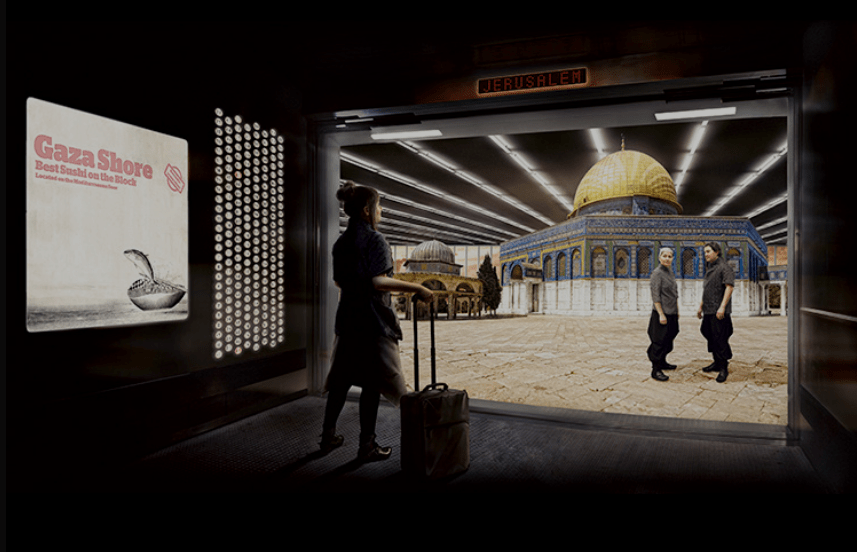
A still from Palestinian artist Larissa Sansour’s sci-fi movie “Nation Estate”: source / صورة من فيلم الخيال العلمي “مبنى الأمّة” للفنانة الفلسطينية لاريسا صنصور: مصدر
Muslim and Arab sci-fi writing
Dr. Emad, together with Dr. Hosam Elzembely, co-edited and co-authored Arab and Muslim Science Fiction, which will be published in September 2021. Speaking about the book, Dr. Emad mentions the diversity of sci-fi coming from Muslim authors. While Egyptian, Pakistani, and Malaysian sci-fi is quite pro-religious, Central Asia and Turkey are more secular. As are Iraq, Jordan, Lebanon, Syria, and Bosnia. Maghrebi countries like Morocco, Algeria, Tunis, and Mauritania, Libya, Yemen, and Palestine are somewhere in the middle
Dr. Emad notes that the book focusses on writing about Muslims as they are and could be, while Arab pertains to the region. It includes contributions from a wide range of authors. Yet, Dr. Emad sees that common characteristics of Arab and Muslim sci-fi include the fact that it tends to be humane, opposes the arrogance of power that comes with science and technology, and depicts love of God’s creation, with heroes giving enemies the benefit of the doubt and always opening the possibility of redemption. Examples include Nihad Sharif (1921-2011), the first Arab author to specialize in sci-fi, and of the younger generation like Ammar Mahmoud Al-Masry
Another commonality is the reclaiming of heritage, something that is also reflected in Afrofuturism. This can be anything from past accomplishments in science to referencing cultural epics to Sufi myths. Uzbek author and journalist Hamid Ismailov, for example, relies in his writing on Sufi stories of Central Asia and provides a modern version of Sufism with the scientist, philosopher, mystic Avicenna finding the elixir of life and living into the present world. Iranian sci-fi, Dr. Emad mentions, is probably the most in-depth body of sci-fi in the Middle East. Yet it doesn’t tell people how to be a good Muslim, but is rather about the spiritual dimensions of human civilization and transposing it into the future or into alien worlds
On Publishing and Translating Arabic sci-fi
When it comes to publishing sci-fi, Dr. Emad mentions issues within the Arab world. In the case of Egypt, for example, the publishing industry has multiple problems, from censorship and risk-averse publishers to the legal-copyright side of things. This is especially difficult for young struggling authors, who end up having to pitch in financially themselves to get their works printed
Getting recognized internationally is an additional hurdle. Dr. Emad’s experienced this himself as his stories of Arab-Muslim heroes hardly get published outside of Egypt. But, if you are well-known locally, you can make it into the big leagues internationally and carry a whole line of people behind you. One example is Basma Abdel Aziz, whose novel The Queue (2013) was translated to English in 2016
A positive development is that young people in the Arab world are increasingly hungry for horror, sci-fi and adventure pocketbook novels, which are sold on the street, at newsstands, and in bookstores. Series and films are also gaining momentum as a constructive way to discuss the Arab world’s problems. Egypt’s first sci-fi TV series Al-Nihaya (‘The End’, aired Ramadan 2020) was well received and well done in terms of CGI special effects and world-building
There’s also growing interest in translating sci-fi and other speculative fiction. Dr. Emad has translated a sci-fi (Message to Earth) and horror novel for an audiobook (Curse of Sobek). Yet, there’s no cultivation of translators and still no clear legal framework concerning copyright ownership and shares of sales. Dr. Emad emphasizes the need for more translation, stating: “You’re losing out on such a tremendous opportunity for new sci-fi streams and cultural dialogue.” He calls for translation of classics of Arabic sci-fi, including authors like Nihad Sharif and Mustafa Mahmoud, and non-fiction literature on Arabic sci-fi, such as the writings of Yousef Al-Sharouni from Egypt and Muhammad Al-Yassin from Syria
Prospects for the future
Ending the interview with prospects on the future, Dr. Emad calls for an international conference on Arabic and Muslim sci-fi in Egypt. Second, he stresses the need to make sci-fi sustainable in the Arab world at the university level. He has made a first step by teaching a sci-fi related course at the American University of Cairo, which he adapted into this SOAS University of London reading list: MULOSIGE Syllabus: Science, Literature and Development in the MENA Region
Dr. Layla’s future projects are diasporic in origin, as she in her writing, including her fantastical poetry, continues to explore the myriad of ideas coming forth from her being raised in a space where one grandparent was a ghost hunter and her Palestinian grandmother a believer in the Djinn. As for the future of sci-fi, she emphasizes that with more and more things becoming technically possible, there is a return to the most important part of sci-fi and fantasy: ‘The Story’, stating
A good story will always hold our attention. Humans are attuned to stories with a deep part of our being. It makes sense that during this time of scientific and technological advancements that our stories (Palestinian and others) will be filtered through our most prominent developments and discoveries
Dr. Layla Azmi Goushey is a poet, writer, and English professor at a community college. She is passionate about teaching and seeing her students succeed. She has been a sci-fi and fantasy reader since she was very young. In fact, the day of the moon-landing she was six and watching the event in black and white made a huge impression on her, though Dr. Layla may have also inherited her openness to the unknown from her ancestors, as her American great grandfather had been a ghost chaser, and her grandmother often told ghost stories of their adventures. Meanwhile, the tradition of the Djinn was part of Dr. Layla’s Arab/Muslim heritage passed on through her Palestinian grandmother
Dr. Emad El-Din Aysha was born to a Palestinian father and Egyptian mother who was born in the UK. Dr Emad, after having lived in Kuwait and Egypt, obtained a PhD in International Relations and teaches at English language universities in Egypt. He also has one published sci-fi anthology in Arabic, is an associate member of the Egyptian Writers’ Union, and is active with the Egyptian Society for Science Fiction (ESSF). Dr Emad picked up a love for science from his father, a medical doctor, and of stories from his maternal grandfather, a great storyteller. He watched his first sci-fi series, Blake’s 7 at age four
Desiree tweets via @desicusters
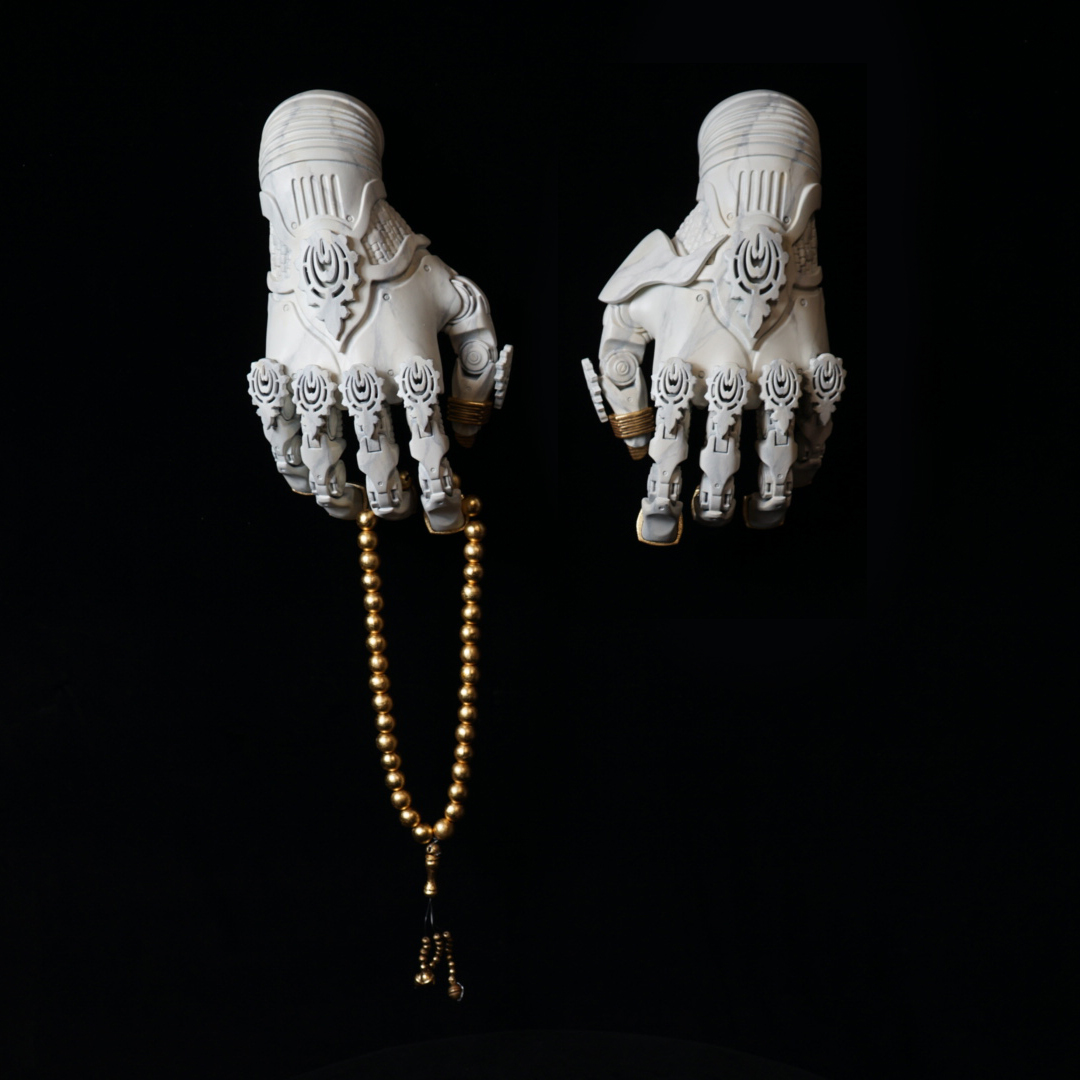
From the series ‘SpaceMosques’ by Saks Afridi: source / من السلسلة الفنية “مساجد الفضاء”للفنان ساكس أفريدي: مصدر
 issabramil.com
Very interesting piece on arab & muslim sci-fi translation. i wonder if there are established marketing/promotion !!channels for the translated literature/ authors to reach to potential readers like myself
إعجابإعجاب