For English please scroll down
زيارتي إلى الرياض: نظرة في التغيرات الثقافية والاجتماعية والاقتصادية
بعد سنتين من السفر المحدود بسبب وباء كوفيد، تمكنت أخيراً من زيارة المملكة السعودية العربية لأول مرة في حياتي في الأسبوع الماضي. كنت فضولية جداً لأسمع من السعوديين مباشرة عن التغييرات التي مرت بها المملكة خلال السنوات الآخيرة. في هذه المقالة سأشرككم ببعض الملاحظات الشخصية عن هذه الرحلة القصيرة.
التغيير الثقافي: الأدب والتراث والفنون المعاصرة
أحد اهتماماتي الشخصية هي الأدب. لذلك، بطبيعة الحال عند سفري إلى السعودية كنت حريصة على التعرف أكثر على المشهد الأدبي في البلد. أعرف من قراءاتي السابقة إن الإنتاج الأدبي في السعودية، والخليج بشكل عام، زاد في الأعوام الأخيرة. تاريخياً، كانت المنطقة على هامش الإنتاج الأدبي، خصوصاً فيما يتعلق بالروايات والقصص القصيرة. أما في العقد الأخير فقد ازداد الإنتاج الأدبي. ملحوظ في هذا الصدد الدعم والاستثمار الحكومي في الثقافة والدور الذي تلعبه التكنولوجيا ووسائل التواصل الاجتماعي في تسهيل الوصول إلى الأدب وتوزيعه.
فيما يتعلق بهذا الأخير، ذكر أحد السعوديين الذين التقيت بهم ظاهرة “شعر تويتر”، حيث يشارك الكتاب قصائدهم وقصصهم القصيرة جداً على تويتر، بدلاً من نشرها عبر القنوات التقليدية. بالإضافة إلى ذلك، سهلت التكنولوجيا على المهتمين بالأدب الالتقاء عبر الإنترنت على سبيل المثال من خلال نوادي الكتب. انا شاركت في مثل هذا النادي الإفتراضي: مجتمع الخيال العلمي العربي الذي نظمه شاب سعودي من عشاق الخيال العلمي من مدينة جدة.
فيما يتعلق بالدعم الحكومي للثقافة والفن، أسست المملكة في السنة ٢٠١٨ وزارة الثقافة السعودية. الثقافة، حسب رؤية ٢٠٣٠، “من مقوّمات جودة الحياة“، ولذا تسعى المملكة إلى زيادة كل من نوعية أنشطتها الثقافية وكمّها. تدعم المملكة من ضمن ذلك الإنتاج الأدبي والترجمة الأدبية، ولكن ايضاً أحداثاً ثقافية وتطوير التراث السعودي وترميمه. أحد الأمثلة على هذا الأخير هو حي الطريف في منطقة الدرعية في شمال غرب الرياض، الذي سررت بزيارته. هذا الحي هو أول عاصمة لأسرة آل سعود وبُني في الأسلوب المعماري النجدي. تم تسجيله ضمن قائمة التراث العمراني العالمي باليونسكو في العام ٢٠١٠. ومثال ثانٍ الذي زرته هو أول بينالي سعودي للفن المعاصر، نظمته مؤسسة بينالي الدرعية، حيث عُرض الفن المعاصر من داخل المملكة وخارجها.

زيارتي إلى حي الطريف/ my visit to the al-Turaif district
الفنون: المحافظة على الماضي من أجل المستقبل
تظهر هذه الأمثلة تطوراً متزايداً للثقافة في السعودية، إلا أن البعض يتساءل عن السرعة التي تحدث بها. ذكرت إحدى الفنانات التي قابلتها أن التغيير نحو التحديث في عالم الفن يسير بسرعة كبيرة، وأوضحت أن هناك العديد من الفنانين الجدد الذين، حسب رأيها، لم يدرسوا الفن وينتجون فقط من أجل الإنتاج. وصفت مشهداً فنياً يتطور بشكل متزايد نحو السوق، والذي على العواقب الإيجابية المحتملة، فإنه يضر ايضاً بجودة الفن.
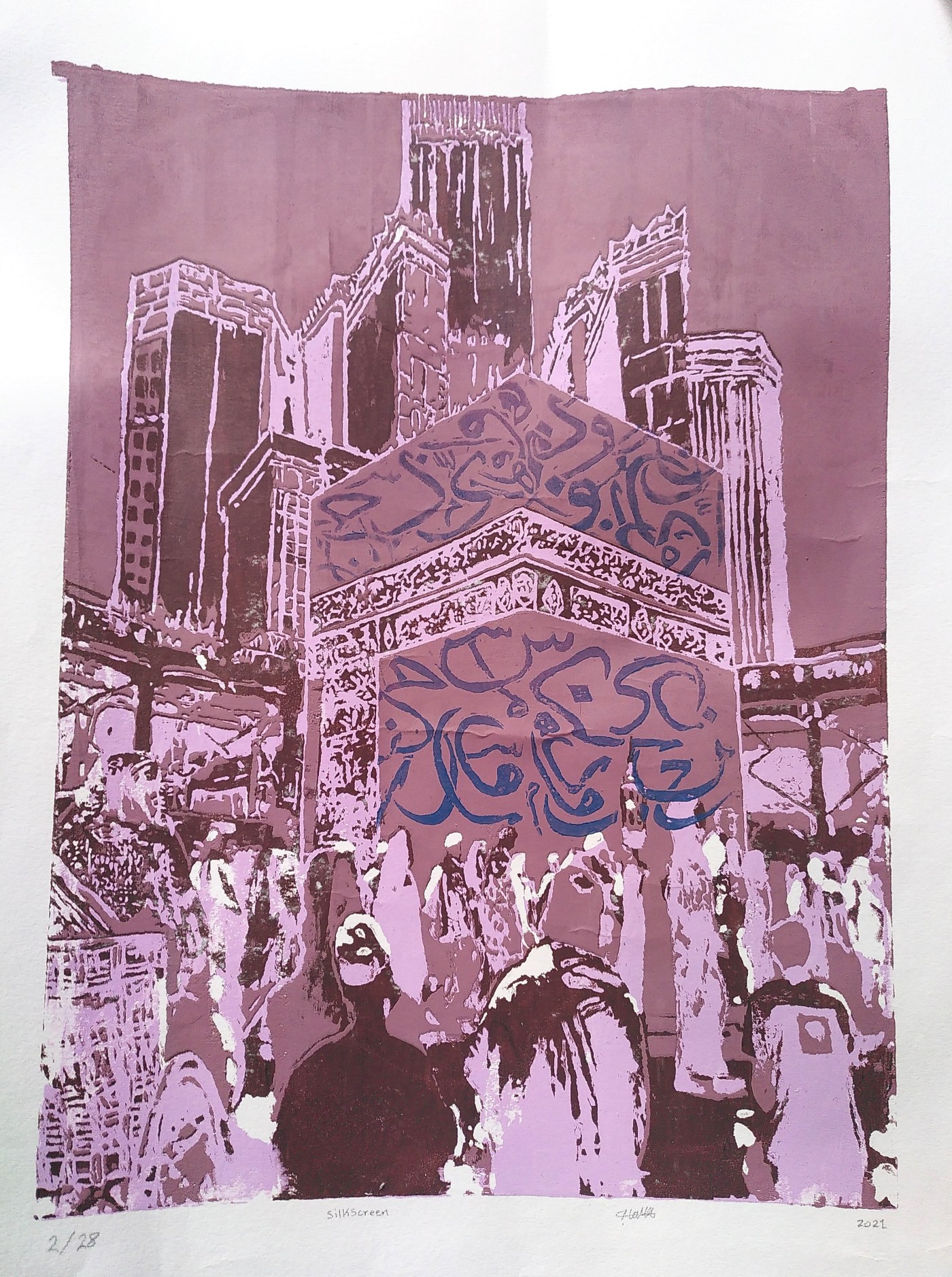
خلال زيارتي إلى المملكة اشتريت لوحة أصلية من الفنانة السعودية لمى المقبل، وهي طالبة فنون في جامعة الأميرة نورة بنت عبد الرحمن. بالنسبة لي تجمع اللوحة الطباعية عناصر تقليدية للفن، مثل الخط، مع تقنية معاصرة. تظهر اللوحة الكعبة في مكة المكرمة وبالنسبة لي اللوحة ترمز نوع ما النظرة المعاصرة إلى ما هي المملكة السعودية الآن، والإسقاط بتاريخ المملكة في المستقبل.
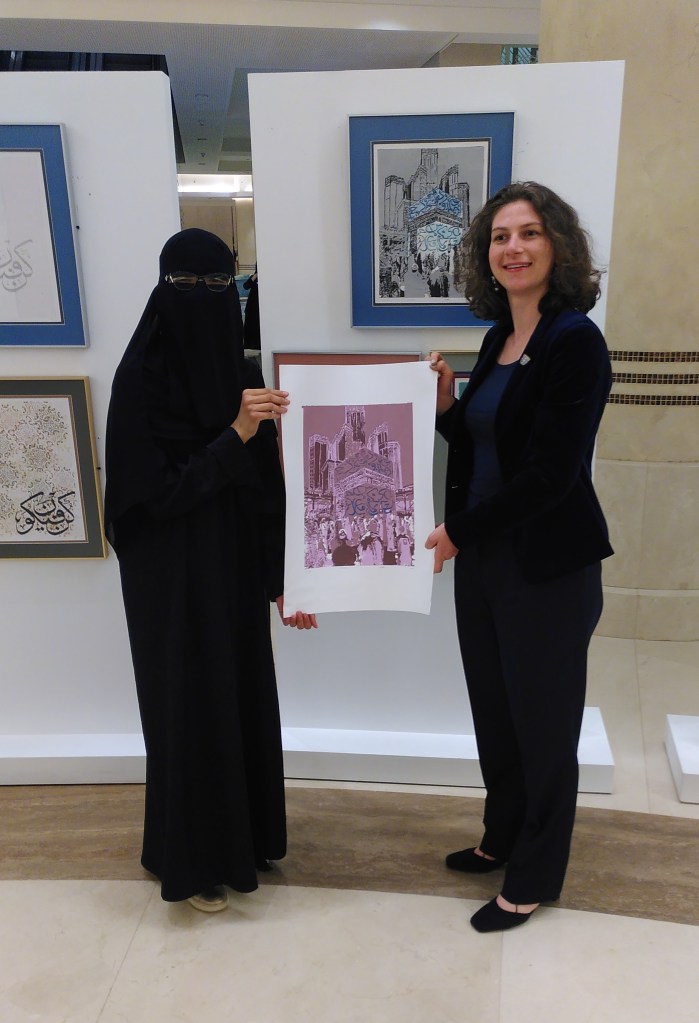
مع الفنانة لمى المقبل/ with the artist Lama al-Mugbel
تغيير الهوية السعودية: من هوية دينية إلى هوية وطنية
التطورات في المجال الثقافي في السعودية تركز على زيادة وعي الجمهور السعودي عن تاريخ بلدهم كما هي ايضاً مبادرة لجذب المزيد من السياحة الأجنبية. بالنسبة لهذا الأخير، فأصبح من السهل جداً الحصول على تأشيرة سياحة سعودية. ما استغرق في الماضي عدة أسابيع، يتحقق الآن في بضع دقائق. يرتبط بهذه التطورات موضوع آخر ذُكر كثيراً ما خلال زيارتي، وهو تحول هوية المملكة العربية السعودية من دولة ذات هوية دينية مرتبطة تاريخياً بالوهابية، إلى هوية وطنية تشمل جميع السعوديين.
وهذا التحول كان واضحاً في مقابلة مع ولي عهد السعودية محمد بن سلمان آل سعود مع قناة العربية، حيث قام بفصل الدولة السعودية عن الوهابية. وترافق هذه الهوية السعودية الجديدة دفع إلى قوانين مكافحة التمييز التي تمنع العنصرية ضد الأقلية الشيعية. ولكن، كما أشار أحد السعوديين الذين التقيت بهم، فإن هذا التمييز لا يزال يحدث. وفي نفس الوقت، أصبح المجال الديني أقل تقديساً فأصبح رجال الدين أكثر وداً لأنهم ينتقلون بشكل متزايد إلى تويتر ووسائل التواصل الإجتماعي أخرى ويتفاعلون مع الجمهور السعودي بشكل مباشر.
الرياض: عاصمة مستقبل المملكة السعودية
للاسف، كانت زيارتي إلى السعودية مقتصرة على العاصمة الرياض. خلال الكثير من اللقاءات، أصبح الانقسام بين المدينة والريف واضحاً بما يتعلق بالتغيير الاجتماعي والاقتصادي. الرياض عاصمة هذه التغيرات، ولكن هذا لا يعني أن التغيرات سوف تصل بعد إلى المناطق الريفية. رغم ذلك، فقد طورت الحكومة السعودية خطة لتجعل من المدينة إحدى أهم المدن في العالم. ومن ضمن الخطة إيصال عدد سكانها إلى ١٥-٢٠ مليون، من بين أمور أخرى من خلال زيادة إمكانيات اقتصادية.
تعمل الحكومة على تقديم العديد من الحوافز لنمو المدينة، على سبيل المثال زيادة فرص توظيف المواطنين السعوديين في المجال العام والخاص عبر برنامج نطاقات، خصوصاً السعوديات. ما زال هناك عمال أجانب يعملون في المطاعم، والفنادق، وسائقي تاكسي (سائقو الأوبر كانوا سعوديين). الرياض تتحول ايضاً إلى الأفضل بالنسبة لمستوى المعيشة فيها. رأيت مثلاً العمل في شبكة المترو الكبيرة التي يتم بناؤها والتي ستجعل التنقل في المدينة أسهل. علاوة على ذلك، تم استعادة العديد من المناطق الطبيعية في الرياض وما حولها مثل وادي حنيفة، حيث يذهب السعوديون ليستمتعوا في نهاية الأسبوع.
إستنتاج: هل التغيرات شاملة؟
يدعم العديد من الأشخاص الذين قابلتهم التغييرات. ومع الحذر من التعميم، فجزء كبير من مؤيدي التغيرات شباب وشابات من السعودية الذين تعلموا في الغرب و اختاروا العودة إلى بلدهم من أجل بناء مستقبلهم ومستقبل بلدهم. مع ذلك، سمعت عدة مرات إنه لم يتم التغيرات الكافية عندما يتعلق الأمر بحقوق المرأة والأقليات.
ايضاً يجب توخي الحذر حتى لا نفترض إن التطورات الحديثة تعود بفائدة على الجميع، فالنمو الاقتصادي والتغير الاجتماعي يكون دائماً مع خاسرين. في زيارتي إلى السعودية لم يكن واضحاً لي من هم الخاسرون. قد يكون العمال الأجانب، أو المواطنين الذين يفقدون منازلهم لإفساح المجال لمشاريع تنموية جديدة، أو الآخرين الذين يظلون غير مرئيين.
لذا، مع إني سمعت قصصاً إيجابية كثيرة عن التطورات الحديثة، من المجال الثقافي إلى زيادة الإمكانيات الاقتصادية ومستوى العيش في الرياض، سوف يوضح الوقت مدى استدامة التطورات من وجهة نظر اجتماعية.
تابعوا ديزيري على تويتر @desicusters
My visit to Riyadh: a look at its cultural, social, and economic transformations
After two years of limited travel due to the Covid-19 pandemic, I was finally able last week to visit the Kingdom of Saudi Arabia for the first time in my life. I was very curious to meet with Saudi’s and hear firsthand about the changes the country has gone through in the last years. In this article I will share some of my personal impressions made during the short visit
Cultural change: literature and heritage
One of my personal passions is literature. So naturally, when traveling to Saudi Arabia, I was keen to learn about the literary scene in the country. From my previous research I know that Saudi Arabia, as well as the Gulf at large, has seen an increasing literary output. Historically, the country has been at the periphery of literary production, especially when it comes to novels and short stories. But in the last decade literary output has grown. Noticeable in this respect is the increased government institutional support and investment in culture and the role technology and social media play in making access to and distribution of literature easier
When it comes to this latter, I met one Saudi who mentioned the phenomenon of ‘twitter poetry’, where people are sharing their poetry or short-short stories on twitter, rather than having them published through the traditional channels. Furthermore, technology has made it easier for those interested in literature to for example get together online through book clubs. I have participated in such an online club, the Arab Science Fiction Society, which is organized by a young Saudi sci-fi fan from Jeddah
When it comes to the government support for culture and arts, Saudi Arabia in 2018 established the Ministry of Culture. Culture, according to the Saudi 2030 vision, is indispensable to the quality of life, and thus the kingdom aims to increase both the quality and quantity of its cultural activities. The Ministry among others supports literary production and translation, but also cultural events and the development and restoration of Saudi heritage. One example of this latter is the Turaif district in ad-Dariyah, which I was pleased to visit. This site, the original home of the Saudi royal family, is built in the unique Najdi architectural style and was declared a UNESCO site in 2010. A second example which I visited is that of Saudi’s first contemporary art Biennale, organized by the Diriyah Biennale Foundation, where contemporary art from inside and outside of the kingdom was shown
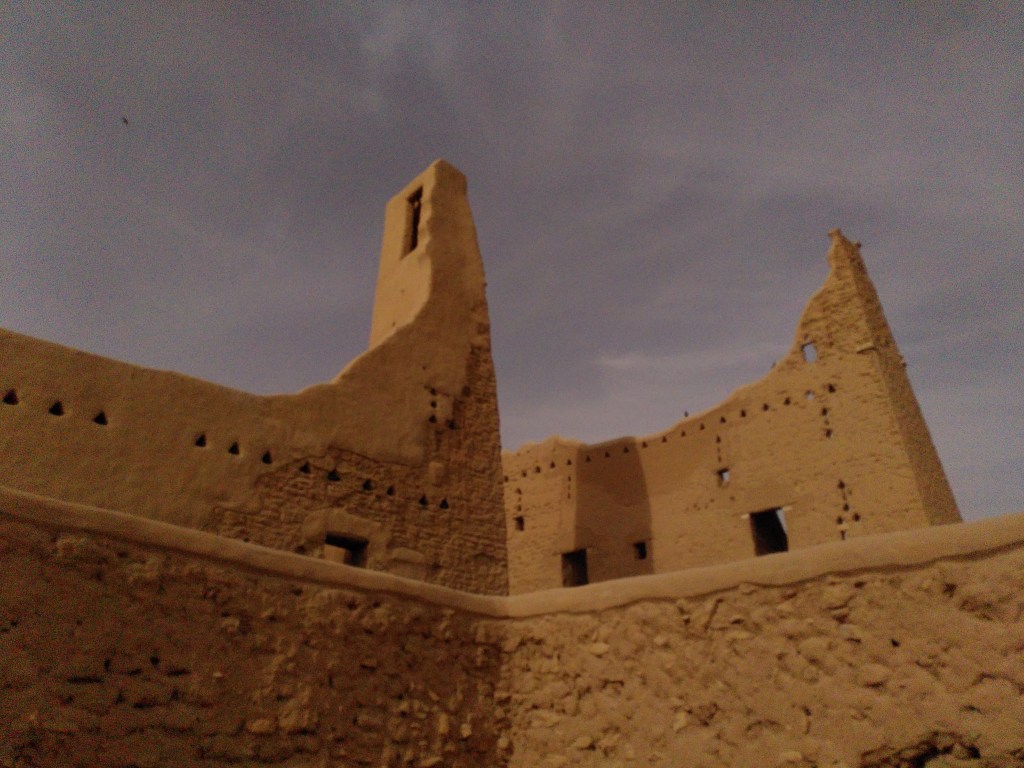
زيارتي إلى حي الطريف/ my visit to the al-Turaif district
Arts: keeping the past for the future
These examples show an increased development of culture in Saudi Arabia, though some question the speed with which it is taking place. One artist I met mentioned that the change towards modernization in the artworld is going too fast and elaborated that there are many new artists who, according to their opinion, have not studied art and are producing just for the sake of producing. They described an increasingly developing market-oriented art-scene, which despite its potential positive consequences, can also be to the detriment of quality art
During my trip I purchased an original artwork by Lama Al-Mugbel, a Saudi art student, at a calligraphy exhibition at the Princess Nourah Bint Abdulrahman University. I found that her print combined traditional elements of art, such as calligraphy, with a modern technique. The print shows the Kaaba in Mecca, and to me, it symbolizes somehow a contemporary perception of what Saudi Arabia is, a projection of Kingdoms history into the future
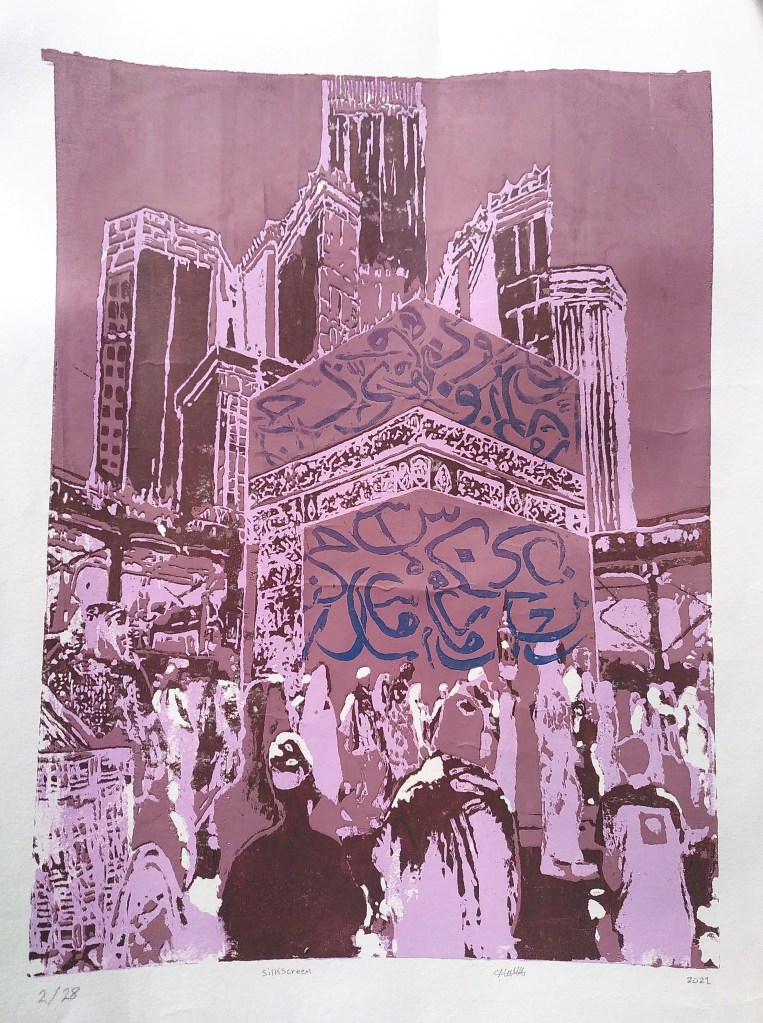
اللوحة الطباعية للمى المقبل / Lama al-Mugbels print Silkscreen
Saudi’s changing identity: from a religious to a national identity
The developments in Saudi’s cultural scene are both focused on increasing the awareness of the Saudi public on its history as a nation, as well as part of the Saudi initiative to attract more foreign tourism. Concerning this latter, it has become very easy to apply for a Saudi tourism visa. Something that took weeks to arrange is now achieved in a few minutes. Linked to these developments is another theme I often heard during my visit, namely the shift of Saudi Arabia from a country with a religious identity historically linked to Wahhabism, to a national identity in which all Saudis are included
This shift was made clear in an interview Crown Prince Mohammed Bin Salman gave recently, in which he uncoupled the Saudi state to Wahhabism. This new Saudi national identity is for example accompanied with a push for anti-discrimination laws which prohibit the discrimination of the Shia minorities. Yet, as one Saudi I met shared, this discrimination is still happening. In the meantime, the religious sphere has become less unreachable. Clerics have become more approachable as they are increasingly taking to twitter and other social media and are engaging with the Saudi public directly
Riyadh: the city of Saudi’s future
Unfortunately, my visit to Saudi Arabia was limited to the capital city Riyadh. During many of my meetings, the city-rural divide in Saudi Arabia became clear when it comes to the social and economic change. Riyadh is the capital of this change, but that does not mean the changes will trickle down to rural areas. Nevertheless, the Saudi government developed a plan to make the city one of the world’s most important. This includes increasing the number of its inhabitants to 15-20 million, a growth to be achieved among others through economic possibilities
The government works to provide many incentives for the growth of the city, such as increased opportunities for Saudi nationals to work in the private and public sector through the Nitaqat framework, especially female workers. I still saw foreign workers working in the restaurants, hotels, and as taxi-drivers (all uber drivers were Saudi). Riyadh is also becoming more pleasurable to live in. For example, I could see the work on the large metro-network being built that should make transport through the city easier. Furthermore, several nature areas in and around Riyadh have been restored, such as Wadi Hanifa, where nowadays Saudi go to on the weekends
Conclusion: inclusive social change
Many of the people I met support the changes taking place. Being cautious of the caveat of generalization, this supportive group included many Western educated young people who chose to come back to the country and are now working together to build up their future. Yet, I also heard several times that not enough is done when it comes to the rights of women and minorities
Caution is furthermore in place not to assume the recent developments benefit all, as economic growth and social change always come with losers. During my visit to Saudi Arabia it was not clear to me who they are, though I had some thoughts. Could they be the migrant workers who came to Saudi Arabia? Or the citizens who are losing their homes to make way for new development projects? Or others who remain invisible
Thus, though I heard many positive stories of the recent development, from the cultural sector to the increased economic opportunities and standard of living in Riyadh, time will tell how sustainable the developments are from a social point of view
Desiree tweets via @desicusters
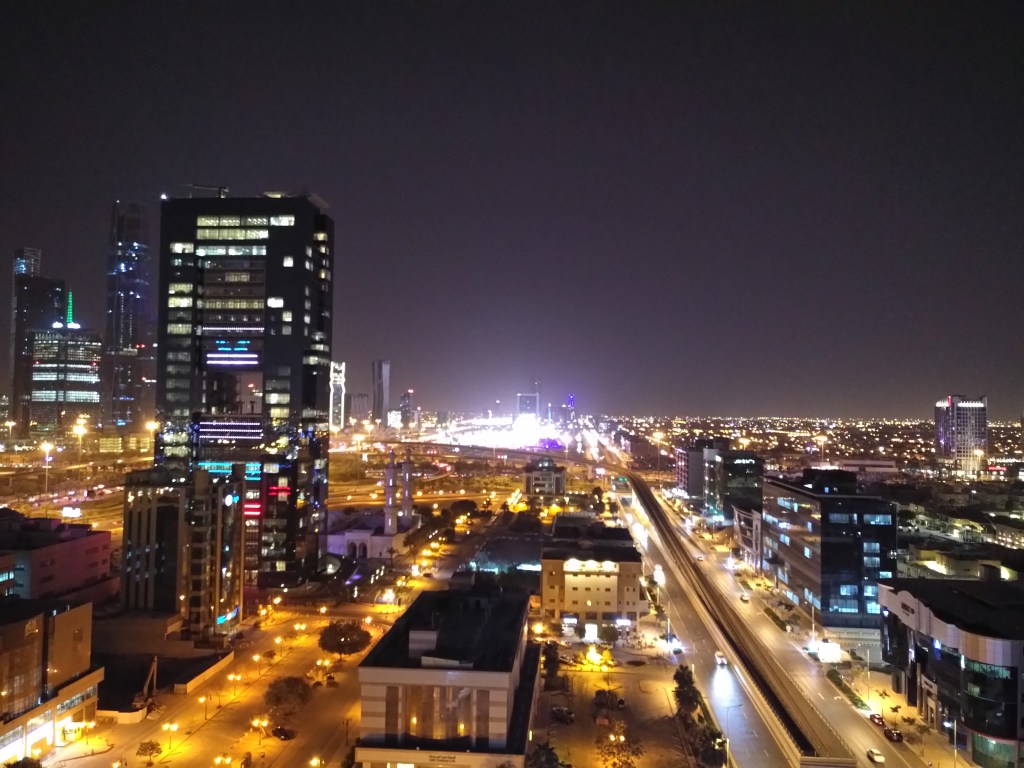
مدينة الرياض / Riyadh city
 issabramil.com
Hope to hear more on this soon!! Intrigued to find out who are the other invisible..
إعجابإعجاب
Thank you so much for reading Mandy, hoping you are well 🙂
إعجابإعجاب