For English scroll down
زيارة إلى موريتانيا، بلاد المخطوطات والمستقبل
وصلت إلى نواكشوط، موريتانيا، ليلة ١٦ ديسمبر ٢٠٢٢. كان معظم ركاب الرحلة موريتانيين، ولم يكن هناك سوى مجموعة صغيرة من المسافرين، من بينهم أنا، شكلوا طابوراً للحصول على تأشيرة الدخول. أمامي في الطابور وقف رجل من جنوب تركيا سألني بلهجة عربية شامية عما أفعله في موريتانيا. عندما أجبته، قال مازحاً بأنني سأكون “السائح الوحيد”.
على الرغم من أن موريتانيا دولة مستقرة في منطقة الساحل، إلا أنها غير معروفة في المجال السياحي، وبالإضافة هي دولة غير معروفة كثيراً في الغرب. ومع ذلك، وبعد جولاتي في هذا البلد، اعتقد بأنه يستحق زيارة المهتمين بالتاريخ والثقافة، والذين يحبون الاستمتاع بمناظر الصحراوية. في هذه المقالة سأكتب بعض ملاحظاتي عن رحلتي.
مكثتُ في موريتانيا تسعة أيام، وسافرت من العاصمة نواكشوط إلى أطار، ومنها إلى الشنقيط وثم اخذت الطريق نفسه للعودة مستخدمة وسائل النقل العام. كان السفر لوحدي كسايحاً سهلاً وكانت البنية التحتية للطرق جيدة.
بلد التنوع الثقافي
أحد أسباب تحمسني للسفر إلى موريتانيا هو التنوع الثقافي والعرقي لسكانها. تخيلته كمكان تلتقي فيه ثقافات أفريقيا جنوب الصحراء ودول المغرب. وهذا هو الحال بالفعل، إذ يتحدث العديد من الموريتانيين باللهجة الحسانية، بالإضافة إلى العربية الفصحى. وهناك لغات أخرى في موريتانيا تمثل تنوعها العرقي وتشمل الولوف، والبولار، والبامبارا. أستطعت التواصل بسهولة مع الموريتانيين مستخدمة اللغتين الفرنسية والعربية الفصحى، كما تعلمت أيضاً بعض الكلمات باللهجة الحسانية.
يمكن تقسيم سكان موريتانيا من أربع مجموعات رئيسية: هناك السكان ذوي الأصول العربية-البربرية الذين يتحدثون اللهجة الحسانية وهم معروفون بالبيضان؛ وذوي البشرة الداكنة الذين يتحدثون الحسانية وهم معروفين باسم الحراطين، وهم حفاد الأرقاء السابقين الذين اصبحوا جزءاً من الثقافة العربية الإسلامية؛ وثم الأفارقة مثل الهالبولار الوولوف والسونينكي والبامبارا، كما هناك مهاجرون من مختلف البلدان الأفريقية، وخاصة من السنغاليين.
ولكن التنوع الثقافي والعرقي لا يخلو من المشاكل. فقبل مغادرتي إلى موريتانيا، شاهدت إحتجاجاً أمام المفوضية الأوروبية في بروكسل لعدد من الأشخاص يحملون لافتات باللغة الفرنسية “لا لتعريب موريتانيا”. وحين قابلت ناشطاً شاباً من الهالبولار في نواكشوط، فهمتُ سبب الاحتجاج أكثر. حدثني الناشط عن نشاطه من أجل المساواة في الحقوق نفسها للموريتانيين كلهم. وتحدث عن مشروع قانون توجيهي صادق عليه البرلمان الموريتاني مؤخراً ومن شأنه أن يسمح بالتعليم باللغة الأم، الأمر الذي يخشاه الموريتانيون السود بأن يُستغل القانون لفرض اللغة العربية.
كما تحدث عن التمييز العنصري في البلاد تجاه السكان ذوي البشرة الداكنة. وتحدث الناشط عن العبودية الوراثية للحراطين، التي لا تزال تُمارس بحكم الواقع، على الرغم من أنها يتم الآن بطرق أقل وضوحاً. وقد أيدت تقارير دولية الاستنتاج القائل بأن الرق الوراثي لا يزال يمارس في موريتانيا.
عندما سألته كيف يمكن أن يتغير الوضع، أجاب الناشط أن الأمر يتعلق “بتغيير عقلية الناس، وهذا تحدٍ كبير”. وأشار إلى أهمية التثقيف والتوعية، وضرب مثالا حول النظرة إلى عمل الشرطة. فيخشى الأشخاص ذوو البشرة الداكنة الشرطة، مع إن الشرطة يجب أن تكون هناك لحمايتهم. وأوضح أنه إذا كانت الشرطة موجودة لحمايتهم، فيجب على الناس أيضاً أن تفعل شيئاً للشرطة. وتحدث في هذا المجال عن دور ومسؤولية المنظمات التي تنادي بالمساواة في الحقوق في توعية وتثقيف الشرطة وغيرها من الجهات الرسمية حول قضايا العنصرية. وعلى الرغم من أن اقتراحاته لم تجد آذانا مصغية وتبدو غير مجدية بعد، إلا أنه لا يزال يأمل في أن يتغير الوضع يوماً ما.
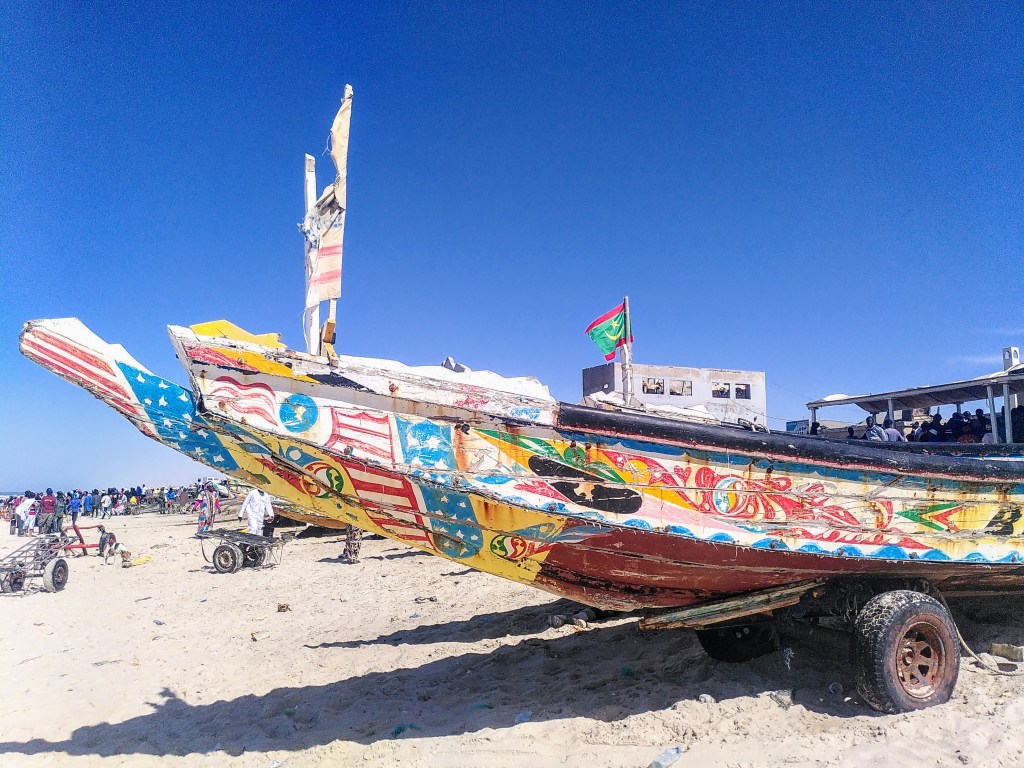
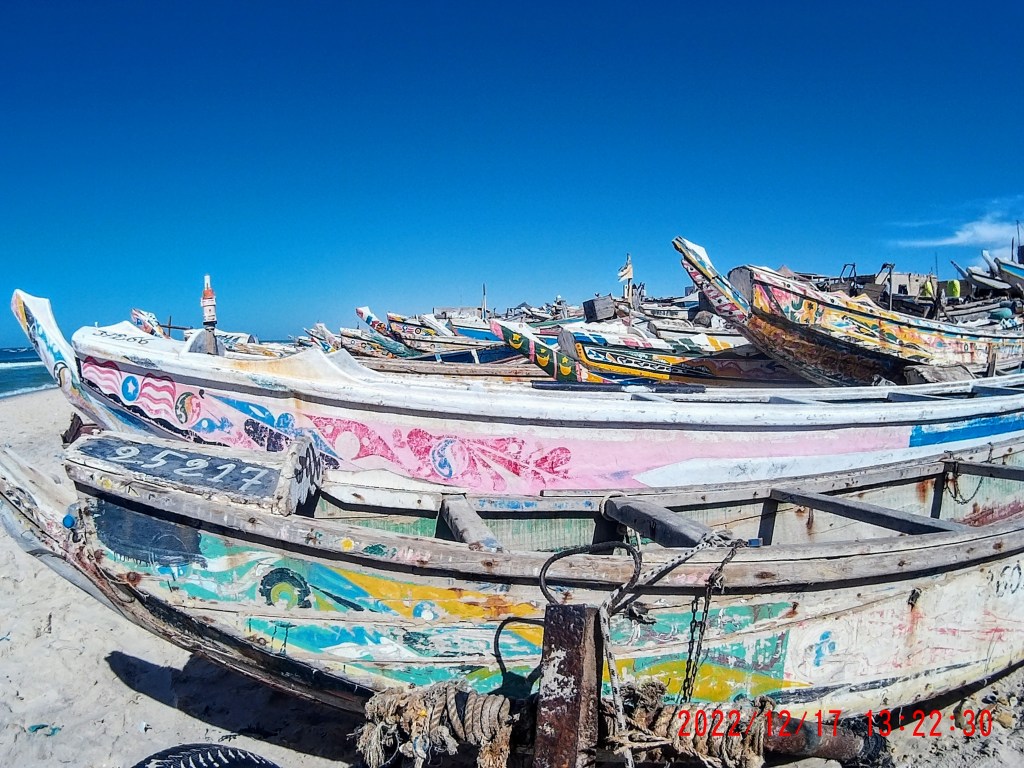
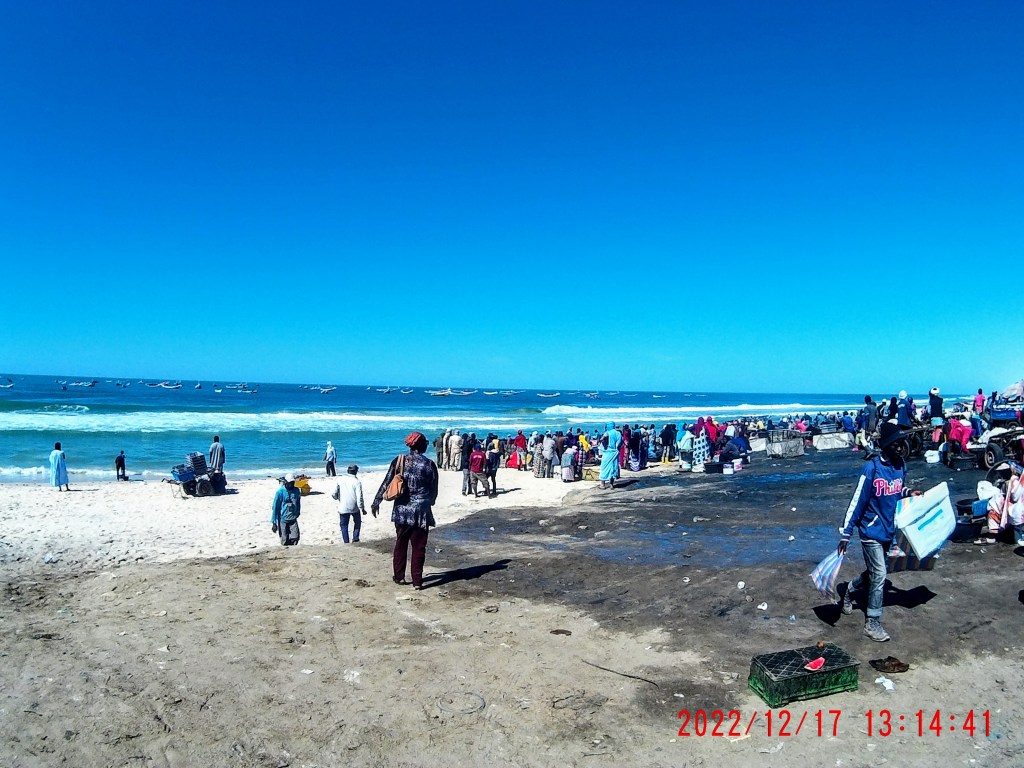
كان بإمكاني رؤية مزيج من الثقافات والأعراق وخاصة في العاصمة. فعلى سبيل المثال، كان العديد من السنغاليين يعملون في ميناء الصيد في نواكشوط / Especially in the capital, I could see the mix of cultures and ethnicities. Nouakchott’s fishing harbor, for example, was where many Senegalese worked
زيارة إلى شنقيط
سبب ثاني لتحمسني لزيارة موريتانيا هو مخطوطاتها العربية العديدة. ومن أجل ذلك، ذهبت إلى مدينة شنقيط القديمة. تأسست هذه المدينة الجميلة في القرن الثاني عشر كمحطة قوافل للحجاج في طريقهم من وإلى مكة المكرمة، وأصبحت مركزاً مهماً لدراسة الشريعة الإسلامية والدين والرياضيات والعلوم الأخرى. كما كانت أيضاً واحدة من أكثر المواقع الغربية للتجارة عبر الصحراء، والتي وصلت حتى المملكة العربية السعودية. وشملت المنتجات المصدرة من بين أمور أخرى التمور والمنتجات المصنوعة من الخشب، بينما شملت المنتجات المستوردة الذهب والمنسوجات. غالباً ما كان التجار والحجاج العائدين من مكة يجلبون معهم المعرفة من خلال المخطوطات الجديدة التي يتم حفظها في المدينة.
أوضح أمين مكتبة إحدى المكتبات العائلية التي زرتها في شنقيط، بأن العصر الذهي للمدينة كان الفترة بين القرنين الثالث عشر والسابع عشر، حيث وصل عدد المخطوطات إلى ما يقارب من ٤٥.٠٠٠ مخطوطة. ولكن مع تضاؤل أهمية التجارة عبر الصحراء الكبرى، قل الاهتمام بالمدينة نفسها ايضاً. بالإضافة إلى ذلك، أضطر سكانها إلى الانتقال للعيش في أماكن أخرى بسبب الجفاف والتصحر وتناقص الفرص الاقتصادية. علاوة على ذلك، انخفضت السياحة بشكل كبير بعد عام ٢٠٠٧ عندما قتل أربعة سياح فرنسيين. وحين هاجرت العائلات التي كانت تمتلك مخطوطات قامت بترك هذه المخطوطات في منازلها دون عناية، الأمر الذي أدى إلى إتلاف العديد منها بفعل الظروف الطبيعية والحشرات الضارة. يقدّر حالياً أن هناك حوالي ٧٠٠٠ مخطوطة متبقية من أجزاء مختلفة من العالم العربي، بما فيها من الأندلس.
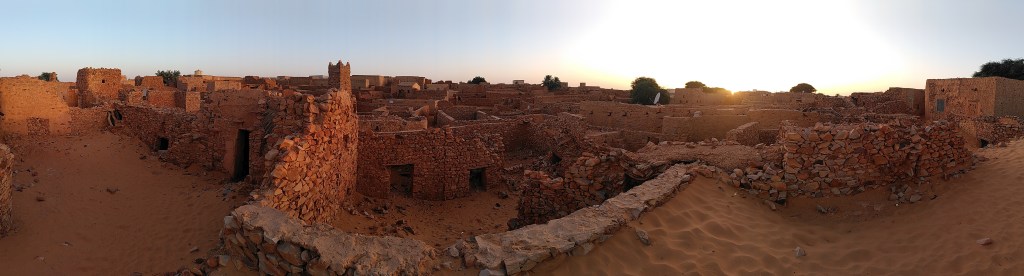
مدينة شنقيط القديمة / The old town of Chinguetti
تحديات المجال الثقافي
سألتُ أمين المكتبة عن الحفاظ على المخطوطات وترميمها، وما إذا كان هناك أي دعم خارجي. فرد بأن الحفاظ على المخطوطات هو في الأساس مسؤولية العائلات نفسها. وقد قدم اليونسكو دعماً خارجياً، حيث صنفت شنقيط على قائمة التراث العالمي منذ عام ١٩٩٦، لكن أمين المكتبة أوضح أنه من الصعب مواءمة مبادرة اليونسكو مع مطالب العائلات التي تملك المخطوطات عندما يتعلق الأمر بعرض المخطوطات في متحف محلي.
وقال أيضا إن هناك نقصاً في الدعم من الحكومة الموريتانية وكذلك من الدول العربية، للحفاظ على المخطوطات وترميمها: “عندما يأتي شخص من الخليج، على سبيل المثال، لزيارة المدينة والمخطوطات، فإنه عادة ما يهتم بشراء المخطوطات فقط”. وقد جاء بعض الدعم من أوروبا، سواء من الحكومات الأوروبية، ومن الجهات الأكاديمية، وكذلك بمبادرات خاصة من بعض البحاثة. فعلى سبيل المثال، تبرعت الحكومة الإسبانية بإهداء الأرشيف الذي تم تخزين المخطوطات فيه. ومع ذلك، وعلى الرغم من هذه المبادرات، لا يزال دعم جهود فهرسة المخطوطات وحفاظها وترميمها وترقيمها، ضئيلاً.
كما عبّر كل من مدير متحف اتويزكت الأثري الذي زرته في مدينة أطار وصاحب مكتبة عائلية خاصة في نواكشوط، وكلاهما يمتلكان مجموعة من المخطوطات والتحف التاريخية الأخرى، عن نقص الدعم للمجال الثقافي في موريتانيا. ويبدو أن الحفاظ على تاريخ موريتانيا هو في أيدي عدد من الأفراد الذين بذلوا جهوداً شخصية هائلة لجمع القطع الأثرية القيمة والحفاظ عليها.
عندما سألت أمين المكتبة عما ينبغي فعله برأيه، أجاب بأنه يجب أن يكون هناك المزيد من الدعم الحكومي للسياحة والقطاع الثقافي. هذا من شأنه أن يسمح للعائلات العاملة في هذا المجال بالحصول على دخل مقابل جهودهم في الحفاظ على المخطوطات. كمثال على ذلك، قال إن الدولة يمكن أن توفر راتباً لشخص واحد في كل أسرة للعمل من أجل الحفاظ على مخطوطات الأسرة نفسها. كما دعا السلطات الموريتانية إلى تسهيل التعاون بين الحكومات الأوروبية وعائلات شنقيط العاملة في هذا المجال.
وفي ختام الزيارة، شدد أمين المكتبة على أهمية المخطوطات في شنقيط والمدن الموريتانية الأخرى باعتبارها تراثاً للبشرية جمعاء، وليس فقط الموريتانيين، لأنها ساهمت في تطوير المعرفة على المستوى العالمي. كان متفائلاً بشأن مستقبل شنقيط، ومقتنعاً بأن المدينة ومخطوطاتها الثمينة ستبقى.
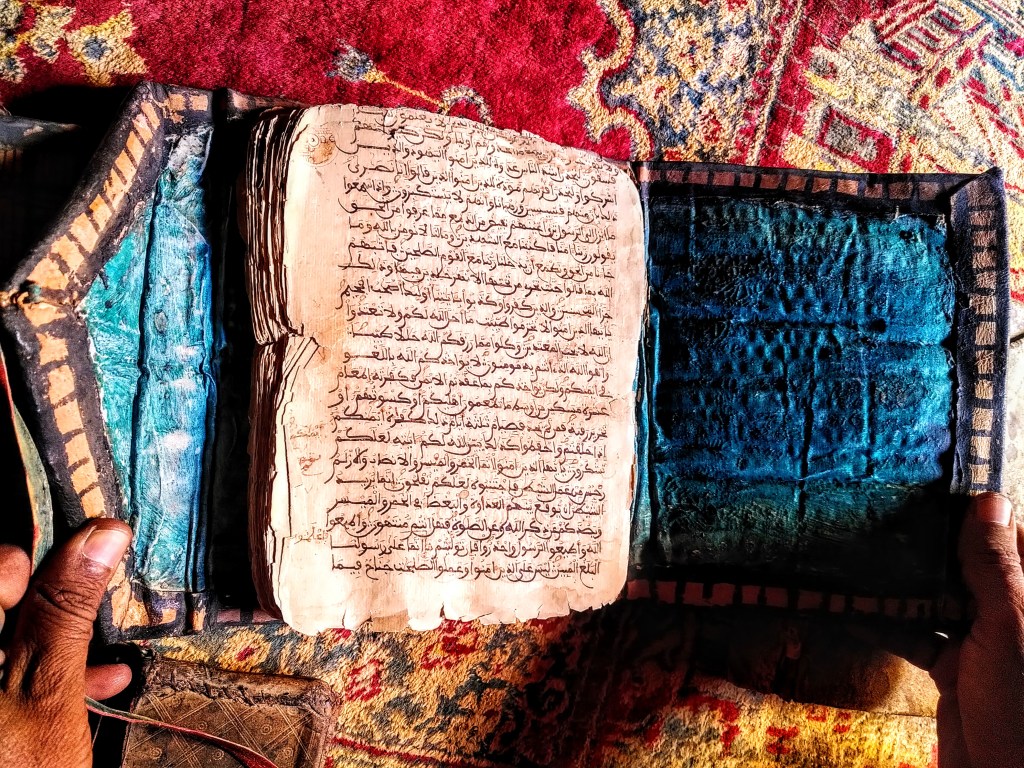
مخطوطة قرآنية من مكتبة أهل حامُني / A Qur’anic manuscript from the library of the al-Hamuni family
موريتانيا وأوروبا
على الرغم من الاهتمام الأوروبي المحدود بالثقافة الموريتانية، كما هو موضح أعلاه، إلا أن موريتانيا بلد مهم بالنسبة لأوروبا عندما يتعلق الأمر بالمصالح الاقتصادية ومراقبة الهجرة والأمن الإقليمي. فيما يتعلق بالجانب الاقتصادي، لدى الاتحاد الأوروبي أكبر اتفاقية صيد بحري مع موريتانيا. وفي الآونة الأخيرة، كان هناك أيضاً اهتمام متزايد باحتياطيات الغاز الطبيعي في موريتانيا، على الرغم من أن البلاد لا تزال بحاجة إلى تطوير البنية التحتية الضرورية لتصديره مثل خطوط الأنابيب والموانئ. ويرى بعض المراقبين هنا إمكانية لإقامة روابط اقتصادية أقوى بين موريتانيا والاتحاد الأوروبي، على الرغم من أن آخرين يشيرون إلى العواقب البيئية والاجتماعية السلبية التي قد تترتب على تطوير البنية التحتية.
ويعتبر مراقبة الهجرة من ضمن الاهتمامات الرئيسية الأخرى للاتحاد الأوروبي والدول الأوروبية. وفي بحثه الذي صدر مؤخراً عن موضوع تكليف جهات خارجية بعملية مراقبة حدود الاتحاد الأوروبي في موريتانيا، أعاد الباحث حسن ولد مختار التفكير في التنظيم الاستعماري السابق لإشكالية التنقل البشري في الصحراء. حيث يصف في بحثه، من بين أمور أخرى، دور الفاعلين الدوليين والسلطات الموريتانية في إدارة الحدود. كما أبرمت بعض الدول الأعضاء الاتحاد الأوروبي صفقات أمنية مع موريتانيا، وآخرها مع إسبانيا التي وقعت اتفاقية لمكافحة الهجرة غير الشرعية والتهريب وأشكال أخرى من الجريمة المنظمة.
فيما يتعلق بالقضايا الأمنية، أوضح أحد الخبراء الذين تحدثت إليهم أن موريتانيا هي البلد الوحيد المستقر في منطقة الساحل التي تعاني من الاضطرابات مثلما هو الوضع في مالي وبوركينا فاسو وتشاد. بالإضافة إلى ذلك، فقد كانت موريتانيا واحدة من أكثر الدول الفاعلة في التعامل مع الإرهاب. وقال الخبير إن الاتحاد الأوروبي والدول الأوروبية مهتمة بتطوير العلاقات مع موريتانيا لأسباب أمنية مثل مكافحة الإرهاب والجريمة المنظمة. لكن قال أيضا أن نهج الدول الأوروبية والاتحاد الأوروبي معيب لأنهم يعملون مع موريتانيا داخل حدودها، في حين أن القضايا التي يحاولون مواجهتها تتطلب نهجاً إستراتيجياً إقليمياً يهم منطقة الساحل بأكملها، من موريتانيا إلى السودان.
هنا، قد يكون الحوار على المستوى السياسي والمستوى المجتمع المدني بين دول المنطقة ونظيراتهم الأوروبية من أجل تطوير رؤية واستراتيجية مشتركة، مشروع ذو قيمة مضافة لكل الأطراف. وفي مثل هذا الحوار، يمكن أن تكون التجربة الموريتانية في التعامل مع مكافحة التطرّف الديني مثالاً لمنطقة الساحل الأوسع، وخاصة في مالي. ذكر أحد الخبراء الذين التقيت بهم أن موريتانيا حققت نتائج إيجابية في اجتثاث التطرف من خلال إشراك الشخصيات الدينية في إجراء اتصالات مع الإسلاميين المتطرفين وإحالتهم في النهاية إلى شكل أكثر اعتدالاً من الإسلام باستخدام المصادر الإسلامية المحلية والفقهية المحلية.
المنظور الأدبي
بالنسبة لأولئك المهتمين بالتعرّف على مواضيع التنوع الثقافي، ومدينة شنقيط، وعلاقات موريتانيا مع أوروبا من منظور أدبي تاريخي، أوصي بقراءة رواية الشنقيطي للدكتور سيد ولد أباه. تصف الرواية، من خلال الشخصية التاريخية ولد رزقة، التغييرات التي حدثت في منطقة الصحراء الغربية الكبرى من نهاية القرن السابع عشر إلى القرن الثامن عشر. ومن بينها الحروب والتحالفات القبلية المختلفة، والبنية الاجتماعية لهذه الرقعة الجغرافية، وبداية التوسع الأوروبي في المنطقة والمنافسة بين الهولنديين، والفرنسيين، والبريطانيين، وكذلك الحياة في مدينة شنقيط. بالإضافة إلى ذلك، تعكس الرواية العلاقة بين السلطة الدينية والسياسية من وجهة نظر تاريخية.
من خلال تناول هذه الموضوعات، تستكشف الرواية الهوية في المنطقة، وتتسأل عما إذا كانت تنتمي إلى إفريقيا أو النطاق العربي، أو كليهما. تستخدم الرواية إطاراً تاريخياً لطرح أسئلة لا تزال وجيهة حتى يومنا هذا تتعلق بالموقع الجيوسياسي والاستراتيجي لموريتانيا، وتنوعها الثقافي، ودور الدين فيها.
الخلاصة
على الرغم من أنني لم أكن “السائحة الوحيدة” في البلاد، كما توقع المسافر التركي، إلا انه كان هناك عدد قليل نسبياً منا. بالإضافة إلى ذلك، جاء معظم السياح الآخرين الذين قابلتهم بشكل أسايس من أجل المناظر الصحراوية، والتي، بالمناسبة، كانت جميلة جداً بالفعل! ومع ذلك، أعتقد أن موريتانيا تستحق المزيد من الاهتمام لتراثها الثقافي الغني، سواء يتعلق بتنوعها الثقافي أو بالدور الذي لعبته في تطوير التراث الفكري العربي الإسلامي. ومن الأمثلة على ذلك قد تكون زيادة التعاون الدولي في مجال الثقافة والحفاظ على التراث.
علاوة على ذلك، أتوقع أن تكسب موريتانيا أهمية متزايدة كشريك للجهات الفاعلة الدولية في منطقة الساحل وغرب إفريقيا. في حين أني عرضت في هذه المقالة أمثلة عن العلاقات بين موريتانيا وأوروبا، إلا أن الصين ودول الخليج زادت أيضاً من استثماراتها في البلاد. وكل هذا سيزيد من مكانة موريتانيا الدولية، وربما يجعلها أكثر جاذبية للزوار الدوليين. يبقى أن نرى كيف سيظهر هذا في النهاية المطاف بأبعاده الاجتماعية والبيئية والاقتصادية.
تابعوا ديزيري على تويتر @desicusters
Visiting Mauritania, a country of manuscripts and of the future
I arrived in Nouakchott, Mauritania, on the night of the 16th of December, 2022. Most of the flight’s passengers were Mauritanian, and there was only a small group of people, among them myself, who formed a line for the entry visa. In front of me in the line stood a man from southern Turkey who asked me in the Shami Arabic dialect what I am doing in Mauritania. When I answered, he jokingly said I would be the only tourist
Mauritania, although a stable Sahel country, does not know much tourism and is not a country much is known about in the West. Yet, after my recent travels through the country I do believe it merits a visit by those who are interested in history and culture, and who enjoy desert sceneries. In this note I will write some of my observations of the trip
I stayed in Mauritania for nine days, and traveled from the capital, Nouakchott, to Atar, and from there to Chinguetti and returned to Nouakchott through the same route. Between the cities, I traveled with public transportation. Travel as a single female was easy and the road infrastructure was good
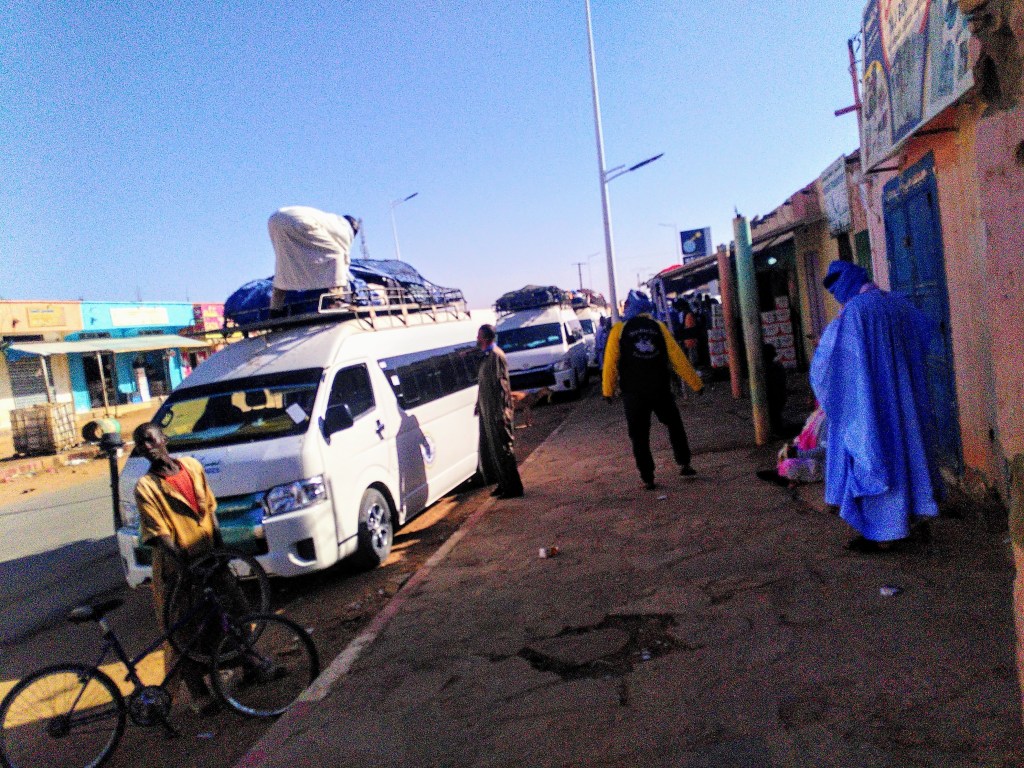
The bus between Nouakchott and Atar / المواصلات العامة من نواكشوط إلى أطار
A diversity of cultures
One of the reasons I wanted to travel to Mauritania was the diversity of its population. I imagined it as a place where sub-saharienne cultures meet Maghrebi influences. And this is indeed the case. Many Mauritanians speak the Hassaniya Arabic dialect, and many also command the Fusha Arabic. Other languages of Mauritania include Wolof, Pulaar, Bambara. I could easily get by with my knowledge of French and Arabic, and learned some Hassaniya words along the way
The Mauritanian population is made up of four principal groups: people of mixed Berber-Arab ancestry who speak the Hassaniya dialect, often referred to as Beidans, people with black skin who speak Hassaniya (known as Haratines, these are descendants from former slaves to the Berber-Arabs who have become part of the Arabo-Islamic culture), and dark-skinned people who belong to sub-Saharan African ethnic groups (such as Haalpulaar, Wolof, Soninke and Bambara). In addition, there are migrants from other African countries, mainly Senegalese
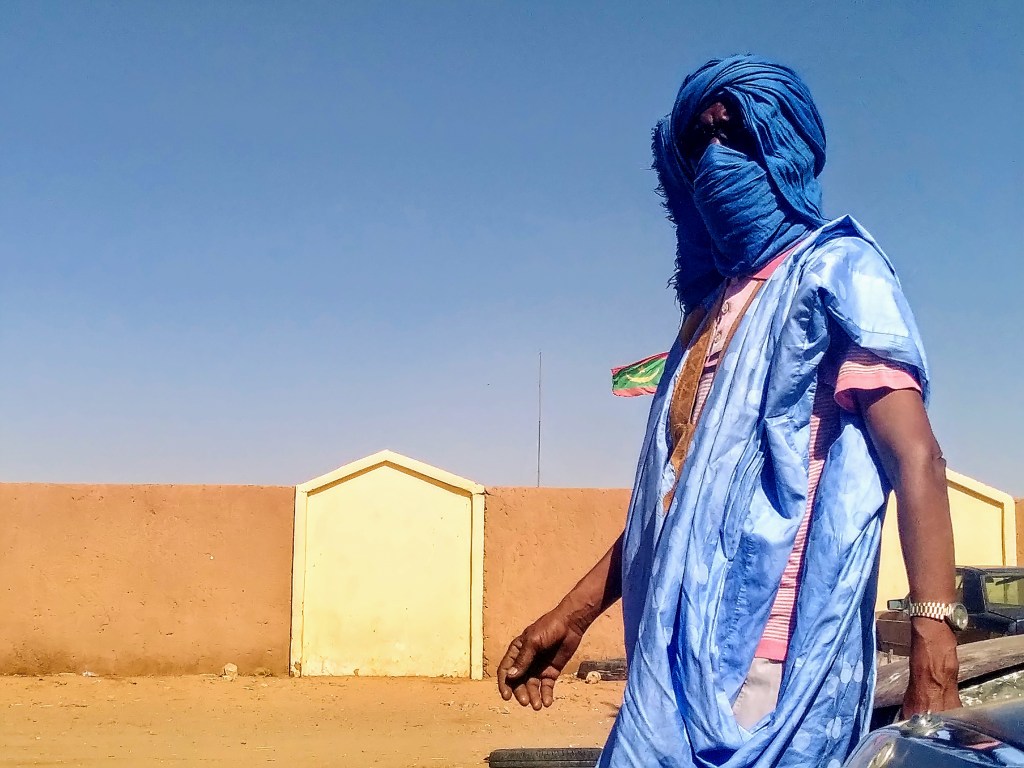
Man in traditional clothing (boubou) / (الدراعة) رجل في ملابس تقليدية
The ethnic and cultural diversity is not without its problems. Before leaving for Mauritania, I saw a protest in front of the European Commission in Brussels of a number of people carrying signs written on them “non a l´arabization de la Mauritanie” (‘no to the Arabization of Mauritania’). When I met a young Hapulaar activist in Nouakchott, I understood the background of the protest more. The activist told me about his activism for equal rights for black Mauritanians. He talked about a recent bill passed by the national assembly that would allow education in the population’s mother tongue, which black Mauritanians fear will lead to the imposition of Arabic
He also talked about the racial discrimination in the country towards the darker skinned population. The activist spoke about hereditary slavery of the dark-skinned Heratin still de facto being practiced, though now it is done in less obvious ways. International reports have also supported the finding that hereditary slavery is still practiced
When I asked how the situation can change, the activist answered that it comes down to “changing people’s mentality, and that is a big challenge”. He pointed to the importance of education and raising awareness, and gave the example of the police. Darker skinned people fear the police, but the police should be there to protect them. And if the police are there to protect them, he explained, the people should also do something for the police. Here he talked about the responsibility of equal rights organizations to raise awareness and educate the police and others on issues of racism. And though his suggestions have not yet found futile ground, he remains hopeful that the situation will some day change
Nouakchott by night / نواكشوط بالليل
A visit to Chinguetti
A second reason why I wanted to visit Mauritania was for its many Arabic manuscripts. For this, I went to the ancient town of Chinguetti. Founded in the 12th century as a caravan stop for pilgrims en route to Mecca, it became an important center for studying Islamic law, religion, mathematics, and other sciences. It was also one of the most western locations of the trans-Saharan trade, which went all the way to Saudi Arabia. Exported products included among others dates and products made of wood, while imported products included gold and textiles. Traders and pilgrims to Mecca often brought with them knowledge through new manuscripts that were saved in the town
The librarian of one of the family libraries I visited explained that Chinguetti, in its golden era between the 13th and 17th century, used to have approximately 45.000 manuscripts. But as the importance of the trans-saharan trade diminished, so did the interest in the town. In addition, its inhabitants were forced to move elsewhere by drought, desertification, and decreasing economic opportunities. Furthermore, tourism decreased drastically after 2007 when four French tourists were killed. Families who owned manuscripts left them in their homes when they migrated, and many have thus been destroyed by the elements or insects. Currently, some 7.000 manuscripts are left from different parts of the Arab world, including Andalusia
Challenges to the cultural field
I asked the librarian about the preservation and restoration of the manuscripts, and if there is any outside support. He said that preserving the manuscripts is mainly the responsibility of the families themselves. Outside support has been given by UNESCO, which has classified Chinguetti on its World Heritage List since 1996. But the librarian explained that it was difficult to harmonize UNESCO´s initiative with the demands of the local population when it came to the presentation of the manuscripts in a local museum
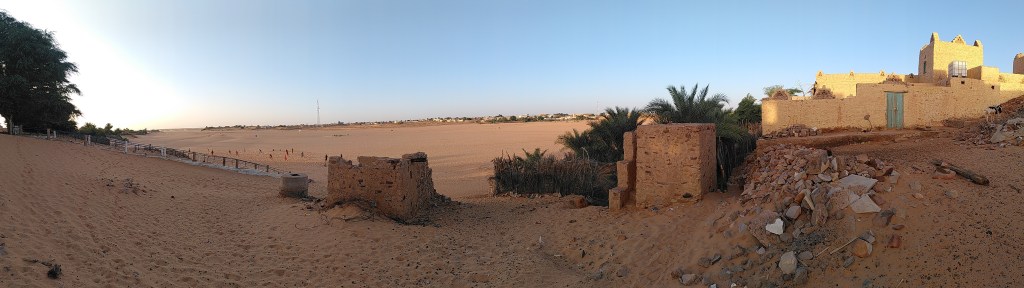
على حافة شنقيط / The edge of the town of Chinguetti
He also said that there is a lack of support from the Mauritanian government, as well as other Arab states to preserve and restore the manuscripts: “When someone from for example the Gulf comes to visit, they are usually only interested in buying manuscripts”. Some support has come from Europe, both from European governments, the academic field, and private initiatives by researchers. The archive where his manuscripts where stored in, for example, were donated by the Spanish government. Yet, despite these initiatives, support for, for example, the indexation, preservation, and digitalization of the manuscripts remains minimal
The lack of support for the cultural field in Mauritania was also expressed by the director of the Touezekt museum I visited in Atar, and the owner of a private library in Nouakchott, both of whom own a collection of manuscripts and other historical artifacts. The conservation of Mauritania’s history seems to be in the hands of a number of individuals who have made extraordinary personal efforts to collect and preserve valuable artifacts
When I asked the librarian what in his opinion should be done, he answered that there should be more government support for tourism and the cultural sector. This would allow for the families to get an income for their efforts in preserving the manuscripts. As an example, he said the state could provide one member of each family with a salary to work on the family’s own manuscripts. He also mentioned that cooperation between European governments and the families of Chinguetti should be made easier by Mauritanian authorities
To end the visit, the librarian emphasized the importance of the manuscripts in Chinguetti and other Mauritanian cities as heritage of humankind at large, not only Mauritanians, as they have added to the development of global knowledge. He was optimistic about the future of Chinguetti, and convinced that the city and its precious manuscripts will survive
Mauritania and Europe
Though the European cultural interest in Mauritania is, as described above, limited, Mauritania is an important country to Europe when it comes to economic interests, migration control, and regional security. Concerning this first, the European Union (EU) has its largest fisheries agreement with Mauritania. Recently, there has also been growing interest in Mauritania’s natural gas reserves, though the country still needs to further develop its pipelines and port infrastructure. Here some observers see potential for stronger economic ties between Mauritania and the EU, although others point to the negative environmental and social consequences this infrastructure development could have
Another main interest of the EU and European countries include migration control. Researcher Hassan Ould Moctar, in a recent publication, looks at the topic of EU border externalization in Mauritania, which it relates to the former colonial regulation of problematizing human mobility in the Sahara. Among others, his research describes the role of international actors and the Mauritanian authorities in border management. Individual EU countries have also made security deals with Mauritania, most recently Spain signed an agreement for combating undocumented migration, smuggling, and other forms of organized crime
When it comes to security issues, one expert I spoke to explained that Mauritania is the only stable country in the Sahel region which is plagued by unrest in among others Mali, Burkina Faso, and Chad. In addition, it has been one of the most resilient in dealing with terrorism. The EU and European countries, the expert said, are interested in developing relationships with Mauritania for security reasons such as counter-terrorism and combating organized crime. But according he also said that the approach of European countries and the EU is flawed because they work with Mauritania within its country borders, while the issues they try to counter ask for a regional strategic approach that concerns the whole of the Sahel, from Mauritania to Sudan
Here, a dialogue between all of these countries and their European counterparts on the political and civil-society level to develop a common vision and strategy would be of added value. In such a dialogue, the Mauritanian experience in dealing with deradicalization could be an example for the broader Sahel region, most importantly Mali. Another expert I met mentioned that Mauritania has had positive results in deradicalisation by involving religious figures in making contact with radical Islamists and eventually retiring them to a more moderate form of Islam with the use of local Islamic sources and Fiqh
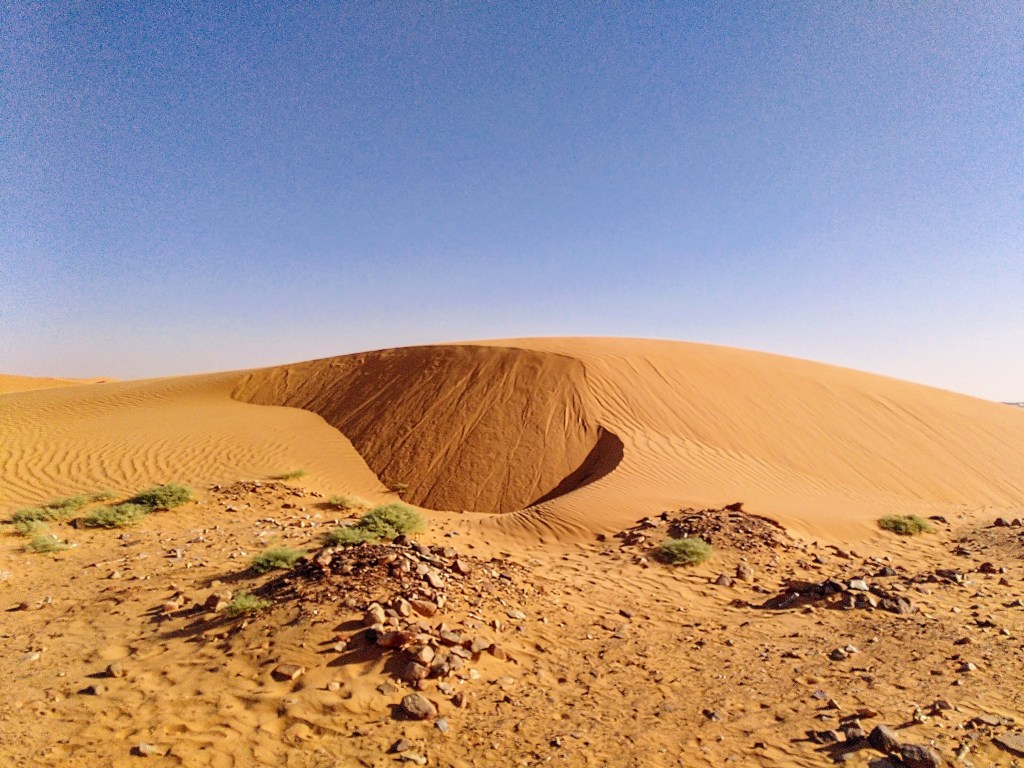
The desert near Chinguetti / الصحرء قريب من شنقيط
The literary perspective
For those who are interested to learn about the topics of cultural diversity, the city of Chinguetti, and Mauritania’s relations with Europe from a historical, literary perspective, I would recommend the Arabic-language novel al-Shinqiti by doctor Sayyid Ould Bah
The novel, through the historical character of Ould Razqa, describes the changes taking place in the greater western Sahara region from the end of the 17th century into the 18 century. Among these are the different tribal wars and alliences, the social structure of the geographical region, the start of European expansionism and competition between the Dutch, French, and English in the region, as well as life in the city of Chinguetti. In addition, the novel reflects on the relationship between religious and political authority from a historical point of view
By addressing these topics, the novel reflects on identity in the given region, asking if it belongs to black or Arab Africa, or both. The novel uses a historical setting to pose questions that are still relevant to this day about Mauritania’s strategic geopolitical position, its cultural diversity, and the role of religion
Conclusion
Though I wasn’t the only tourist in the country, as the Turkish traveler predicted, there were relatively few of us. In addition, most other tourists I met mainly came for the desert sceneries, which, by the way, were beautiful! Yet, I believe the country merits more attention for its rich cultural heritage, whether it relates to its cultural diversity or to the role the country has played in the development of the Arab-Islamic intellectual heritage. Examples of this could be increased international cooperation in the field of culture and heritage preservation
Furthermore, I predict that Mauritania will become increasingly important as a partner for international stakeholders in the Sahel and West-Africa region. In this article I gave the example of relations between Mauritania and Europe, but China and Gulf countries have also increased their investments in the country. All of this will increase Mauritania’s international profile, possibly making it more attractive for international visitors. How this will eventually play out in the social, environmental, and economic dimensions, remains to be seen
Desiree tweets via @desicusters
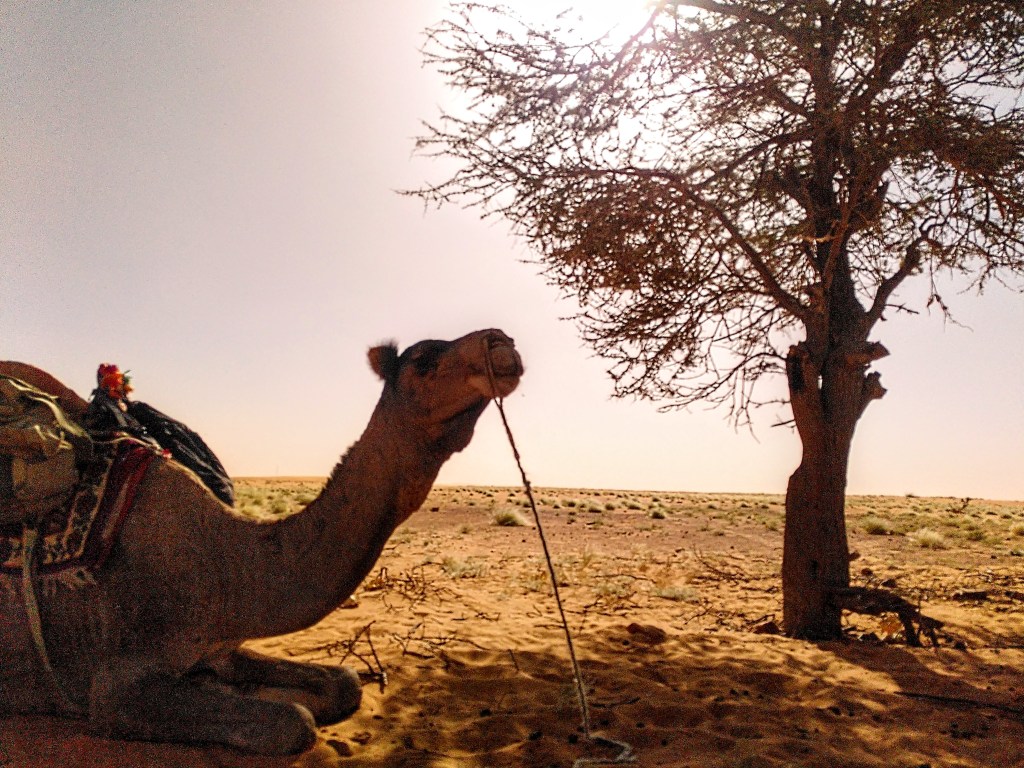
A camel in the desert near Chinguetti / جمل في الصحراء قريب من الشنقيط
 issabramil.com
أضف تعليق