
For English scroll down
الحوار من أجل عالم أفضل
في مقابلة أجرتها معي مؤخراً المجلة الإخبارية الأسبوعية الهولندية دي غرونا امستردامير، تحدثت عن عملي في الشرق الأوسط وطموحاتي للمستقبل. في الذكرى السنوية الـ ١٤٥ لتأسيس المجلة بدأت سلسلة لقاءات تحت عنوان (عالم جميل، أين أنت؟) حيث تقوم بمقابلات مع أشخاص يعملون من أجل عالم أفضل. في المقابلة، تحدثت عن عملي في مجال دبلوماسية المسار ال١,٥ وال٢، وعن اهمية الحوار بالنسبة لي.
الدبلوماسية ومساراتها المختلفة
في عالم الدبلوماسية هناك مستويات أو “مسارات” مختلفة. المستوى الأول، المسار ١، هو المستوى الرسمي، بما في ذلك المفاوضات الرسمية أو المحادثات بين السياسيين والدبلوماسيين المحترفين، سواء على مستوى العلاقات الثنائية بين الدول أو متعددة الأطراف أو في سياق المؤسسات الدولية.
أنا أعمل في مجال دبلوماسية المسار ١,٥ و٢. تجمع هذه الدبلوماسية أشخاصًا من الأطراف المعادية لمناقشة سبل تحسين العلاقات. يُمكن أيضًا تسميتها بالدبلوماسية أو الوساطة غير الرسمية. وهي محادثات غير رسمية بين أفراد من مجموعات أو دول معادية بهدف استكشاف الإمكانيات ووضع استراتيجيات لحل النزاع القائم، على سبيل المثال من خلال التأثير على السياسيين أو الرأي العام.
بينما يتواصل على مستوى دبلوماسية المسار ال١ الممثلون الرسميون لمجموعة أو بلد مع بعضهم البعض، يتم إجراء محادثات على المسار ال٢ من قبل مجموعة متنوعة من الأشخاص، مثل الأكاديميين والصحفيين ورجال الأعمال والمؤثرين والشخصيات الدينية والفنانين وأحيانًا أيضا الممثلين الرسميين من البلدان من ذوي الرتب العاديّة أو بصفة شخصية. تسمى حالة هذا الأخير دبلوماسية المسار ١،٥.
الهدف من دبلوماسية المسار ١،٥ و٢ هو هذا المسار التأثير على السياسيين وصانعي القرار، بالإضافة إلى جمع الأشخاص من الدول و / أو المجموعات المعادية معًا، حيث لا يحدث هذا عادةً، وبالتالي بناء الثقة. غالبًا ما يكون تكميليًا للمسار ١.
مثال الحوار بين إيران والسعودية
في المقابلة، أشرت إلى مثال حوار المسار ٢ الذي أيسرته مع مؤسسة كاربو، حيث أعمل مديرة مشروع. من خلال مبادرة الحوار الإيراني السعودي، قامت كاربو بتسهيل المحادثات بين الإيرانيين والسعوديين منذ عام ٢٠١٥. هنا، نركز على قضايا مثل التدهور البيئي، والتبادل الأكاديمي، والعلاقات الثقافية، بالإضافة إلى الموضوعات الأمنية.
على الرغم من أن الخصمين الإقليميين تمكّنا مؤخرًا من الحصول على اتفاق وهناك اتجاه عام نحو خفض التصعيد على المستوى الإقليمي، فإنني ذكرت في المقابلة أن هذه النتائج لا يمكن أن تُعزى إلى جهودنا، لأنه من الصعب جدًا قياس نتائج هذه الأنواع من هذه المبادرات الحوارية. وكما ورد في المقال: “مهمتنا هي الجمع بين الناس من الأطراف المعادية. الأمر متروك للمشاركين فيما يفعلونه بالمعلومات. من المهم أن يشعر المشاركين بالأمان وأن يعبروا عن أنفسهم. نحن نسهل ويجب أن نفعل ذلك بشكل متواضع وحيادي وسري.” هذا النوع من الدبلوماسية غير الرسمية هو عملية طويلة المدى ونحن نقوم ببناء الثقة. لكن غالبًا ما يظل من غير الواضح كيف يؤثر ذلك على صانعي القرار في تلك البلدان.
أهمية الحوار
في المقالة، بالإضافة إلى وصف كيف أصبحت شغوفة باللغة العربية وبعض الأشياء التي جمعتها في شقتي من خلال رحلاتي، ذكرت أيضًا شغفي بالحوار. بالإشارة إلى أعمالي الفنية المذكورة في المقالة، أقول: “الحوار هو أيضًا نوع من الفن. الفن قائم في الواقع، لكنه يخلق شيئًا جديدًا. هذا هو الغرض من الحوار. إنه ينبع من الواقع، لكنه يحاول في نفس الوقت خلق واقع جديد “.
بالنسبة لي، الحوار أمر بالغ الأهمية، خاصة بين الخصوم والأشخاص ذوي الأيديولوجيات أو الآراء المختلفة. السؤال الذي أثار اهتمامي دائماً هو كيف يمكن للأشخاص من خلفيات مختلفة أن يتعايشوا مع بعضهم البعض بطريقة بناءة. في عملي يتعلق الأمر بأشخاص من بلدان مختلفة، لكنني كتبت أيضًا في هذه المدونة عن التوترات بين الثقافات المختلفة في هولندا وبلجيكا.
أرى أن الحوار وسيلة لزيادة التفاهم بين المجموعات. لكن الحوار هو أيضًا كلمة تُستخدم كثيرًا وقد أصبحت تقريبًا كليشيه. أعتقد أن الحوار لا يمكن أن يؤدي إلى مزيد من التفاهم إلا إذا كان لدى الأطراف فضول حقيقي للظرف الآخر ووجهات نظر بعضهم البعض، وإلا فإن التواصل سيتعثر في افتراضات حول الآخر ويتم تفسيرهم على أنها تهدد هويتهم لذا يتطلب إجراء حوار حقيقي إلى شجاعة.
مؤسسة إيوانا للتفاهم الثقافي
المقال أيضًا هو أول إشارة إعلامية إلى مؤسسة إيوانا للتفاهم الثقافي. في كانون الثاني (يناير) ٢٠٢٣، أسست هذه المؤسسة مع مجموعة من الأفراد من العراق وإيران وألمانيا الذين يؤمنون بقوة بقيمة الثقافة كوسيلة للتنمية البشرية وتواصلها.
بينما يشير اختصار الكلمة إيوانا (EWANA) باللغة الإنجليزية إلى أوروبا وغرب آسيا وشمال إفريقيا (Europe, West Asia, North Africa)، فإنه يشير باللغة العربية إلى كلمة “إيوان”، وهي شكل معماري تقليدي تم تطويره في بلاد ما بين النهرين ووجد في المباني الدينية والعلمانية في جميع أنحاء غرب آسيا وشمال إفريقيا. إنها مساحة مستطيلة الشكل أو قاعة ذات نهاية واحدة مفتوحة للخارج، ولها وظيفة اجتماعية هامة، وهذا هو ما تهدف إليه ايضاً مؤسسة إيوانا.
كما ذكرت في المقالة “مع مؤسسة إيوانا نود فتح حوار بين هذه المناطق الثلاث لمناقشة التوترات وسوء الفهم الثقافي. وهذا دون الرغبة في نفي الاختلافات الثقافية، لأن الاختلافات مثيرة للاهتمام وتؤدي إلى النمو. نود تحسين التفاهم الثقافي ليس فقط للآخر. ولكن أيضًا أن نكون قادرين على النظر إلى أنفسنا من خلال الآخر. دائمًا نحتاج إلى الآخر لتشكيل هويتنا، لكن من المهم أن نفعل ذلك بطريقة بناءة.”
بالنسبة لي، يجلب الحوار الأمل. يلهمني عندما أشاهد أشخاصًا يتواصلون مع بعضهم البعض. وأنا متحمسة للغاية للاستمرار في هذا المجال من العمل، وتسهيل الاتصالات، سواء كان ذلك في مبادرات دبلوماسية المسار ١,٥ و٢ مع كاربو، أو استكشاف التبادل الثقافي والعلاقات الثقافية بين أوروبا وغرب آسيا وشمال إفريقيا من خلال مؤسسة إيوانا للتفاهم الثقافي.
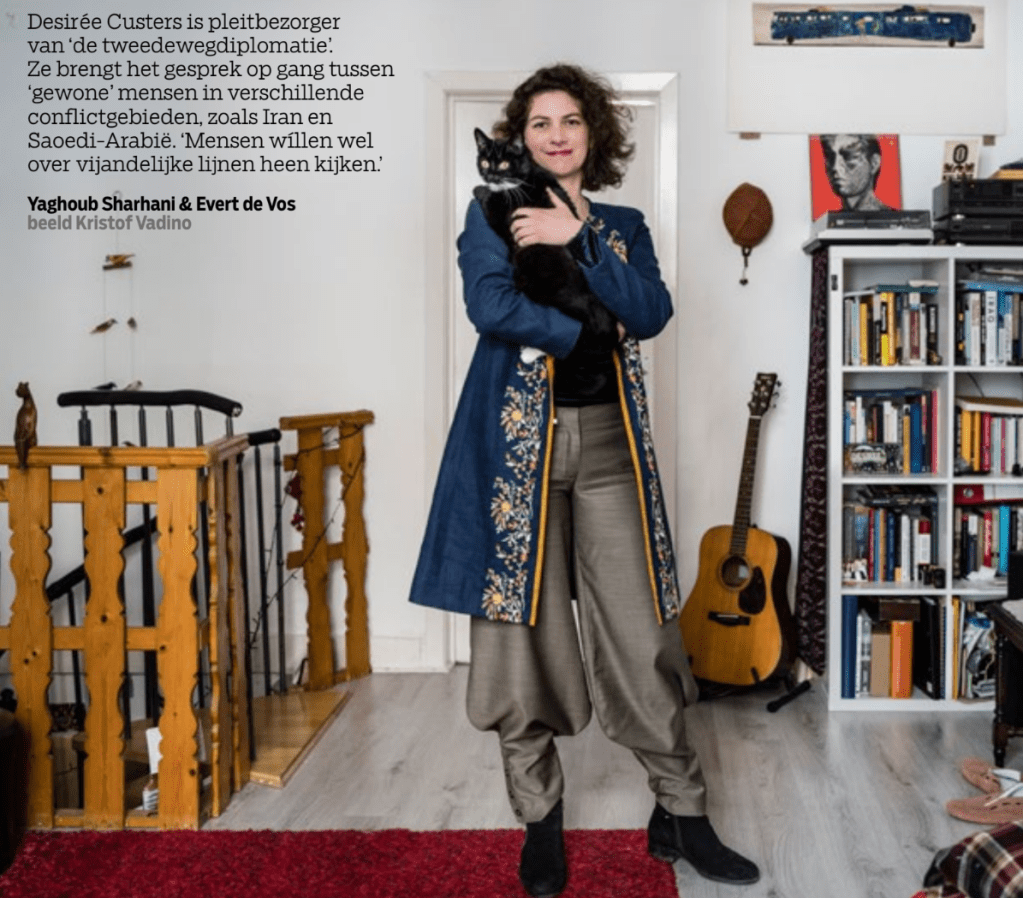
كتب المقالة الصحفيان يعقوب شرهاني إيفيرت دي فوس وصورة الغلاف كريستوف فادينو
تابعوا ديزيري على تويتر @desicusters
The Beautiful Case of Dialogue
In a recent interview with the Dutch weekly news magazine De Groene Amsterdammer, I speak about my work in the Middle East and my ambitions for the future. For its 145-year anniversary, De Groene Amsterdammer started their series Schöne Welt, wo bist du (beautiful world, where are you) in which they interview people who work towards a hopeful world. In the interview, I talk about my work in track-1,5 and track-2, and about the importance of dialogue
Diplomacy & different tracks
In the world of diplomacy there are different levels, or “tracks”. The first level, track 1, is the official level, including formal negotiations or conversations between politicians and professional diplomats, either on a bilateral level, multilaterally, or in the context of international institutions
I work in the field of track 1,5 and track-2 diplomacy. This diplomacy brings together people from adversary parties to discuss means to improve relations. You could also call it informal diplomacy or mediation. These are unofficial, informal conversations between individuals from hostile groups or countries with the aim of exploring options and devising strategies to resolve the existing conflict, for example by influencing politicians or public opinion
While in track-1, first level official representatives of a group or country communicate, on the track-2 level conversations are conducted by a diversity of people, such as academics, journalists, business people, influencers, religious figures, artists, and sometimes also official representatives from countries of a low rank or in a personal capacity. The case of this latter is called track 1.5 diplomacy
The aim of tracks 1, 5 and 2 is not only to influence politicians and decision-makers, but also to bring people from hostile countries and/or groups together where this normally does not happen, and thus build trust. It is often complementary to track-1
The example if Iran and Saudi Arabia
In the interview, I mentioned the example of a track-2 dialogue I have been facilitating with the Center of Applied Research in the Orient (CARPO), where I work as project manager. With the Iran Saudi Dialogue Initiative, CARPO has been facilitating conversations between Iranians and Saudis since 2015. Here, we have focused on issues like environmental degradation, academic exchange, and cultural relations, in addition to security topics
Although the two regional rivals have recently brokered an agreement and there is a general trend towards regional de-escalation, I mention in the interview that these results cannot be attributed to our efforts, since it is very difficult to measure the results of these kinds of dialogue initiatives. As quoted in the article: “Our job is to bring people together from hostile parties. It is up to the participants what they do with the information. It is important that they feel safe and express themselves. We facilitate and must do this modestly, neutrally and confidentially.” This type of informal diplomacy is a long process. We do the groundwork, building trust. But it often remains unclear how this affects decision makers in those countries
The importance of dialogue
The article, in addition to describing how I came to be passionate about Arabic and some of the things in my apartment I collected during my travels, also mentions the passion I have for dialogue. Referring to my own artwork mentioned in the article, I say: “Dialogue is also a kind of art. Art is based in reality, but it creates something new. That is the purpose of a dialogue. It springs from reality, but at the same time tries to create a new reality
For me, dialogue is critical, especially between adversaries and people with different ideologies and opinions. A question that interests me a lot is how people from different backgrounds can relate to each other in a constructive way. In my work this is about people from different countries, but I have also written in this blog about tensions between different cultures in the Netherlands and Belgium
I see dialogue as a means to increase understanding between groups. But dialogue is also a word that is used often and has almost become cliché. I think dialogue can only lead to more understanding if the parties are genuinely curious about each other and each other’s points of view, otherwise the contact will get stuck on assumptions about the other and interpreting the other as threatening to their own identity. It takes courage and hard work to have a sincere dialogue
The EWANA Center for Cultural Understanding
The article is also the first public mention of the newly established organization: The EWANA Center of Cultural Understanding. In January 2023, I co-founded the EWANA Center with like-minded people from Iraq, Iran and Germany who strongly believe in the value of culture as a means to human development and communication
While the acronym EWANA in English stands for Europe, West Asia, and North Africa, in Arabic it refers to the word “Iwan”, a traditional architectural form developed in Mesopotamia and found in religious and secular buildings all around the West Asia and North Africa region. It is a rectangular space or hall used as a place for meeting, kind of like a community house, which is what the EWANA Center strives to be
As the article cites: “With EWANA we would like to open a dialogue between these three regions to discuss tensions and cultural misunderstandings. This without wanting to negate cultural differences, because differences are what is interesting. We would like to improve cultural understanding not only for the other. But also to be able to look at ourselves through the other.” You always need the other to shape your own identity. The trick is to do that in a constructive way
For me, dialogue brings hope. It inspires me when I witness people making a connection with each other. I am extremely motivated to continue in this field of work, the facilitating of connections, be it in the track-1,5 and track-2 initiatives with CARPO, or exploring cultural exchange and relations between Europe, West Asia and North Africa through the EWANA Center of Cultural Understanding
The article was written by Yaghoub Sharhani and Evert de Vos. Cover picture by Kristof Vadino
Desiree tweets via @desicusters
 issabramil.com
أضف تعليق