For English please scroll down
بعد سقوط الاتحاد السوفييتي وتحول أوزبكستان إلى دولة مستقلة، عزلت نفسها واحتفظت بعلاقات متفرقة مع جيرانها. وعلى الرغم من أنها في متناول الأجانب، إلا أن عزلتها أدت إلى صورتها الغامضة وأثارت أسماء سمرقند وبخارى خيال الكثيرين، خاصة أولئك الذين يعرفون طريق الحرير الذي كانت ازبكستان جزءًا أساسيًا منه. ومع وجود رئيس جديد، تتطلع أوزبكستان الآن إلى الخارج من خلال تكثيف علاقاتها الخارجية، مع تحقيق تطورات داخلية سريعة الوتيرة، بما في ذلك التطورات في قطاع السياحة، مما يُظهر التراث الثقافي والتاريخي الغني للبلد.
في يونيو من عام ٢٠٢٤ قمت بزيارة البلد لمدة أسبوعين للتعرف على تاريخها الغني ونظرتها المستقبلية. قمت بزيارة المدن التالية: طشقند وسمرقند وبخارى ونوقوس وخيوة وسافرت بنفسي باستخدام وسائل النقل العام (القطار). وهنا أكتب بعض ملاحظاتي.
أوزبكستان: الانفتاح وزيادة الاهتمام الأجنبي
منذ استقلال اوزبكستان عن السيطرة السوفييتية عام ١٩٩١، أصبح إسلام كريموف أول رئيس للبلد. ومع اختفاء كتلة القوى الكبرى المتمثلة في الاتحاد السوفييتي، اضطرت العديد من دول آسيا الوسطى إلى البحث فجأة عن هويتها الخاصة، وفي حالة أوزبكستان، طبق كريموف استراتيجية العزلة عن الجيران المباشرين مع موازنة العلاقات مع القوى الكبرى على الساحة الدولية مثل الولايات المتحدة، وروسيا، وألمانيا.
تواصل أوزبكستان سياستها في العلاقات الخارجية البراغماتية حتى الآن، حيث أصبح الاتحاد الأوروبي والصين ودول الخليج العربي الآن مهتمين بشكل متزايد بالبلد ولا تزال العلاقات مع روسيا قائمة. يعود الاهتمام الدولي بأوزبكستان، من بين أمور أخرى، إلى قربها من أفغانستان، ومركزيتها في آسيا الوسطى، وموقعها الاستراتيجي على “طريق الحرير الجديد”، وإمكاناتها للاستثمار الاقتصادي الأجنبي.
عندما وصل الرئيس الحالي إلى السلطة في عام ٢٠١٦، غيّر مسار العلاقات الإقليمية وجعل من أولوياته تطوير علاقات جيدة مع الدول المجاورة في إطار استراتيجيته الإصلاحية تحت شعار “أوزبكستان الجديدة“. وعلى هذا النحو، كانت زيارته الأولى إلى تركمانستان، تليها بسرعة أستانا عاصمة كازاخستان. لقد تم ذكر هذا الانفتاح على التعاون الإقليمي في كثير من الأحيان في المحادثات التي أجريتها خلال رحلتي، على سبيل المثال مع خبراء السياسة الأوزبكيين الذين رأوا أنه تطور مرحب به حيث يمكنهم الآن السفر بسهولة للقاء نظرائهم في المنطقة. وقال أحد الباحثين: “إن استبعاد خطاب العداء بين جيران أوزبكستان قد أفسح المجال لروح التعاون”.
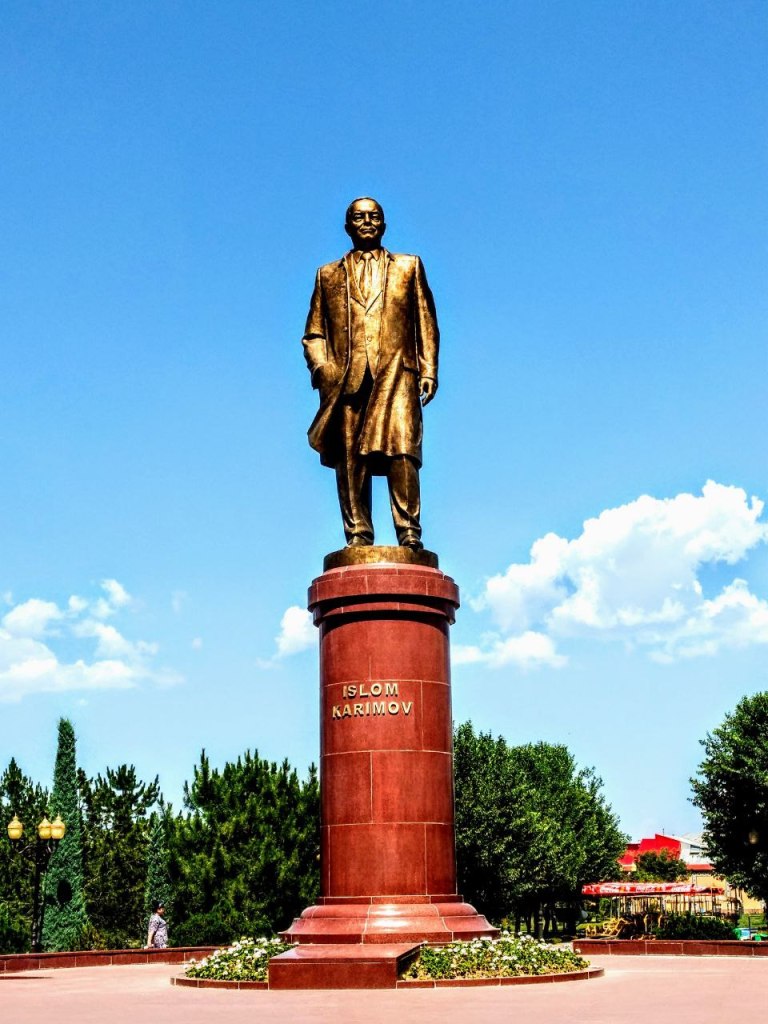
Statue of former president Karimov in Samarkand / تمثال الرئيس السابق كريموف في سمرقند
المستقبل الأوزبكي (١): الطاقة الخضراء والتعاون الإقليمي
كما ذكرنا سابقًا، فإن اهتمام الدول الأجنبية بتطوير العلاقات مع أوزبكستان، وأيضاً اهتمام أوزبكستان لتظهر كدولة مثيرة للاهتمام بالنسبة للمستثمرين الأجانب، مدفوع بمركزيتها في آسيا الوسطى وإمكاناتها للاستثمار الاقتصادي الأجنبي، لا سيما في المجال لإنتاج الطاقة الخضراء. والدافع وراء هذا الأخير إلى حد كبير هو مخاوف أوزبكستان المتزايدة بشأن انعدام أمن الطاقة والتلوث البيئي الناجم عن مصادر الطاقة التقليدية.
فتاريخياً، اعتمدت أوزبكستان على تصدير القطن، وهي صناعة كثيفة الاستخدام للمياه وأدت إلى مشاكل كبيرة في ملوحة البلد. ونتيجة لذلك، جف بحر آرال بالكامل تقريبًا. ويعد سوء إدارة المياه والافتقار إلى إطار إقليمي بشأن تقاسم المياه من الأسباب الإضافية لاختفاء موارد المياه ومحفزات للتعاون الإقليمي. وتتطلع أوزبكستان إلى التحول إلى الطاقة الشمسية وطاقة الرياح بشكل أساسي.
وبما أنني أقوم عادةً بإجراء أبحاث حول الشرق الأوسط، فقد كنت فضولية حول العلاقات بين الدول العربية وأوزبكستان. أصبح من الواضح خلال رحلتي أن دول الخليج العربي استثمرت بكثافة في مشاريع في قطاع الطاقة الخضراء، وتكنولوجيا المعلومات، والصحة، والنقل، والتواصل الإقليمي. ومن الأمثلة على ذلك شركة أكوا باور، وهي شركة سعودية خاصة، وشركة مصدر لدولة الإمارات العربية المتحدة، والتي شاركت في تطوير أول محطة للطاقة على نطاق المرافق العامة في أوزبكستان (الطاقة الشمسية). وتعتبر قطر أيضاً مستثمراً محتملاً في البنية التحتية (انظروا أدناه). هذه كلها تطورات جديدة نسبيًا، كما ذكر الأشخاص الذين تحدثت إليهم، ويجب استكشاف العلاقة بين أوزبكستان ودول الخليج العربي بشكل أكبر، بما في ذلك كيفية اختلاف وتطابق وجهات النظر الخاصة بالنسبة لمثلاً التعاون الإقليمي مع دول مثل إيران وأفغانستان.
وبدا أن المستثمر الأكثر وضوحاً كان الصين. لقد استثمر هذا اللاعب العالمي ذو الوزن الثقيل مبالغ ضخمة في البلد في إطار مبادرة الحزام والطريق (التي يشار إليها أحيانًا باسم طريق الحرير الجديد) وكثيرًا ما تم ذكره كلاعب دولي مهم في المنطقة بشكل عام، وفي أوزبكستان بشكل خاص. وقد شمل ذلك الاستثمار في البناء، مثل السكك الحديدية وفي الآونة الأخيرة أيضًا مشاريع الطاقة المتجددة. وبالمثل، سعى الاتحاد الأوروبي وأوزبكستان إلى تعزيز علاقاتهما، من بين أمور أخرى، كجزء من مشروع “البوابة العالمية“، على الرغم من أنه في محادثاتي مع الخبراء الأوزبكيين يبدو أن الاتحاد الأوروبي متخلف كثيرًا من حيث الأهمية مقارنة بالصين ودول الخليج العربي.
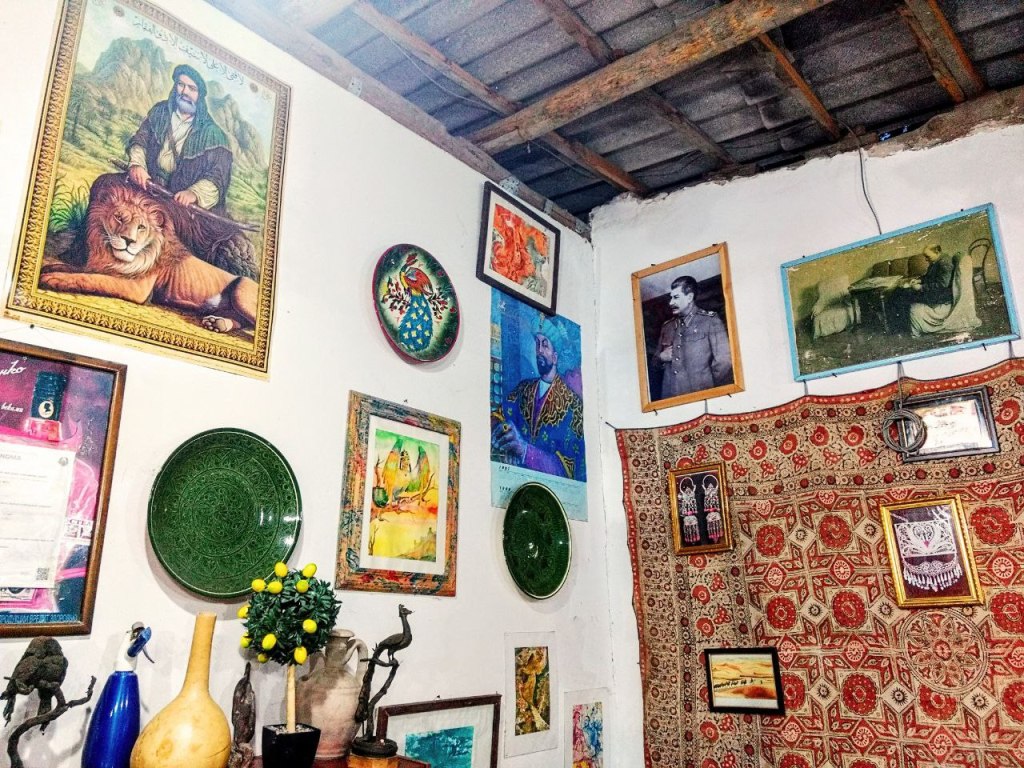
Scene in a restaurant in Bukhara depicting the region’s history: Timur , Ali, Lenin & Stalin share a stage / مشهد في أحد مطاعم بخارى يصور تاريخ المنطقة: تيمور وعلي ولينين وستالين يتشاركون الجدار
المستقبل الأوزبكي (٢): تنويع ممرات النقل والاتصال الإقليمي
ومن الجانب الأوزبكي، فإن التعاون مع دول وسط وغرب آسيا يعتمد على الحوافز الاقتصادية. ومن الضروري هنا تنويع ممرات النقل، الأمر الذي من شأنه أن يزيد من أهمية أوزبكستان الجيوسياسية والجيواقتصادية في المنطقة وخارجها. بالإضافة إلى ذلك، بما أن أوزبكستان دولة غير ساحلية، فإن لديها مصلحة في تطوير علاقات جيدة مع الدول التي يمكن أن توفر لها الوصول إلى البحر، بما في ذلك إيران وباكستان.
ومن الأمثلة المثيرة للاهتمام على ذلك سعي أوزبكستان لبناء خط السكة الحديد ترمذ-مزار-الشريف-كابول-بيشاور، والذي من شأنه أن يربط البلد بباكستان عبر أفغانستان. ولتمويل خط السكة الحديد هذا، أجرت أوزبكستان عدة جولات من المفاوضات مع قطر والإمارات العربية المتحدة. وقد أعاق عدم الاستقرار في أفغانستان تطورها، رغم أن أحد الباحثين الذين التقيت بهم ذكر أن أوزبكستان تمكنت من التعامل مع حكومة طالبان الأفغانية بطريقة عملية. ومع ذلك، فقد جعلت حكومة طالبان من أولوياتها تطوير طرق العبور مع الدول الأخرى، الأمر الذي قد يقلل من أهمية أوزبكستان كشريك في النقل.
مثال آخر هو العلاقة بين أوزبكستان وإيران، حيث استأنفت المحادثات الفنية منذ عام ٢٠١٦، ومؤخرًا بعد أن ترك الصراع في أوكرانيا الجهات الفاعلة الدولية تبحث عن طرق تجارية بديلة، تكثفت لتشمل حوارًا سياسيًا رفيع المستوى، ومبادرات لمزيد من التعاون الاقتصادي وتعزيز فرص النقل. وهنا، تعد إيران دولة عبور مثيرة للاهتمام إلى المحيط الهندي، ولكن أيضًا إلى دول الخليج العربي، مثل الممر بين أوزبكستان وتركمانستان وإيران وعمان. ومع ذلك، تحرص أوزبكستان على عدم تجاوز العقوبات الدولية المفروضة على إيران، لأن ذلك قد يؤدي إلى تفاقم علاقاتها مع الشركاء الغربيين.
المنظور التاريخي لأوزبكستان وسياقه
عندما سألت الناس في أوزبكستان عن رأيهم في الاتجاه نحو علاقات إقليمية ودولية أفضل، بما في ذلك تدفق السياح وتطوير قطاع السياحة (وهو ما استفدت منه!) ذكر الكثيرون أن هذا أمر طبيعي باعتبار أن أوزبكستان كانت تتمتع دائمًا بعلاقات إقليمية. لقد كانت جزءًا من طريق الحرير. ولكن أيضاً العلاقات الجيدة مع الجيران أمر منطقي لأن العديد من دول آسيا الوسطى اتبعت مساراً مماثلاً. وأود هنا أن أذكر مثالين لفت انتباهي: النفوذ الفارسي والفترة السوفييتية.
الفيروز: لون المنطقة
تعلمت عن العمارة التاريخية في أوزبكستان منذ حوالي ٦ سنوات من خلال الدرس ”العمارة العربية والإسلامية“ في الجامعة، وهي كانت أحد الأسباب الرئيسية التي دفعتني إلى القيام بهذه الرحلة. كخريجة في الدراسات العربية والإسلامية، لاحظت بالطبع اللغة العربية. السور والآيات القرآنية التي أعرفها تزين المباني، لكن بأسلوبها الخاص، وهو أسلوب يشبه التراث الفارسي.
كانت سمرقند وبخارى مركز الثقافة الفارسية في آسيا في العصور الوسطى خلال حكم الأسرة التيمورية. وينعكس هذا الجزء من التاريخ المشترك في المنطقة في الهندسة المعمارية: يمكن العثور على العمارة التيمورية في جميع أنحاء آسيا الوسطى وإيران، كما أن منطقة ريجستان في سمرقند تشبه المباني في يزد وأصفهان ومدن أخرى في إيران. يعد اللون الفيروزي أحد دلالات هذه الفترة المعمارية.
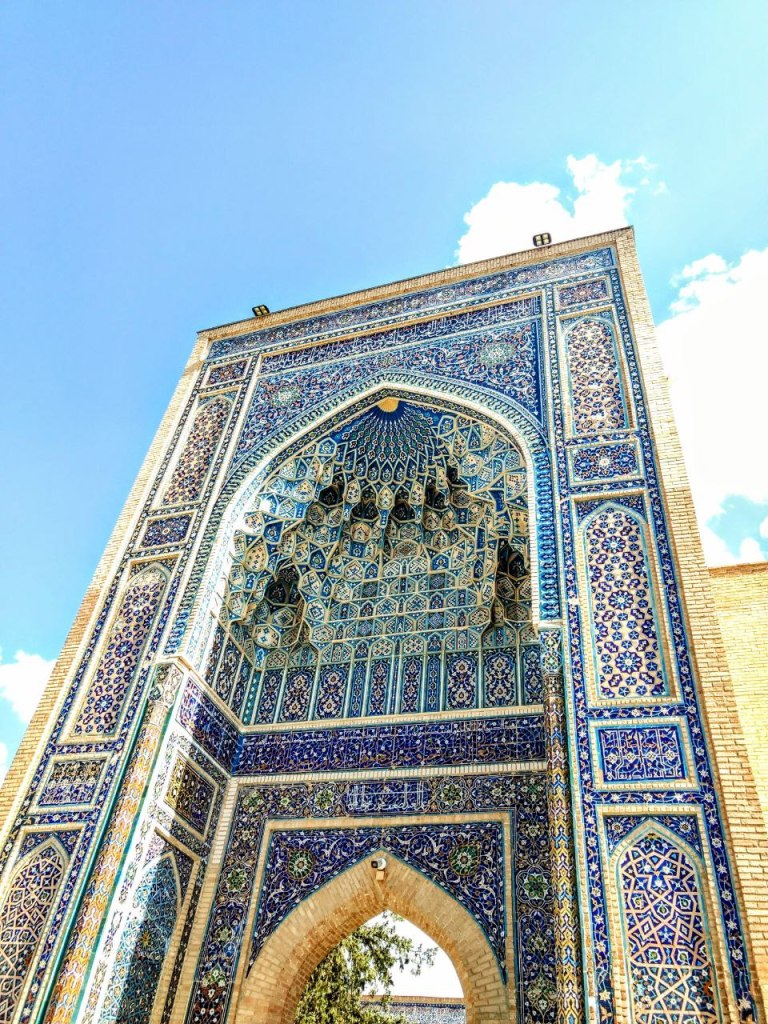
The Pishtaq and Muqarnas of Gur-e-Amir in Samarkand / پیشطاق ومقرنص غور الأمير في سمرقند
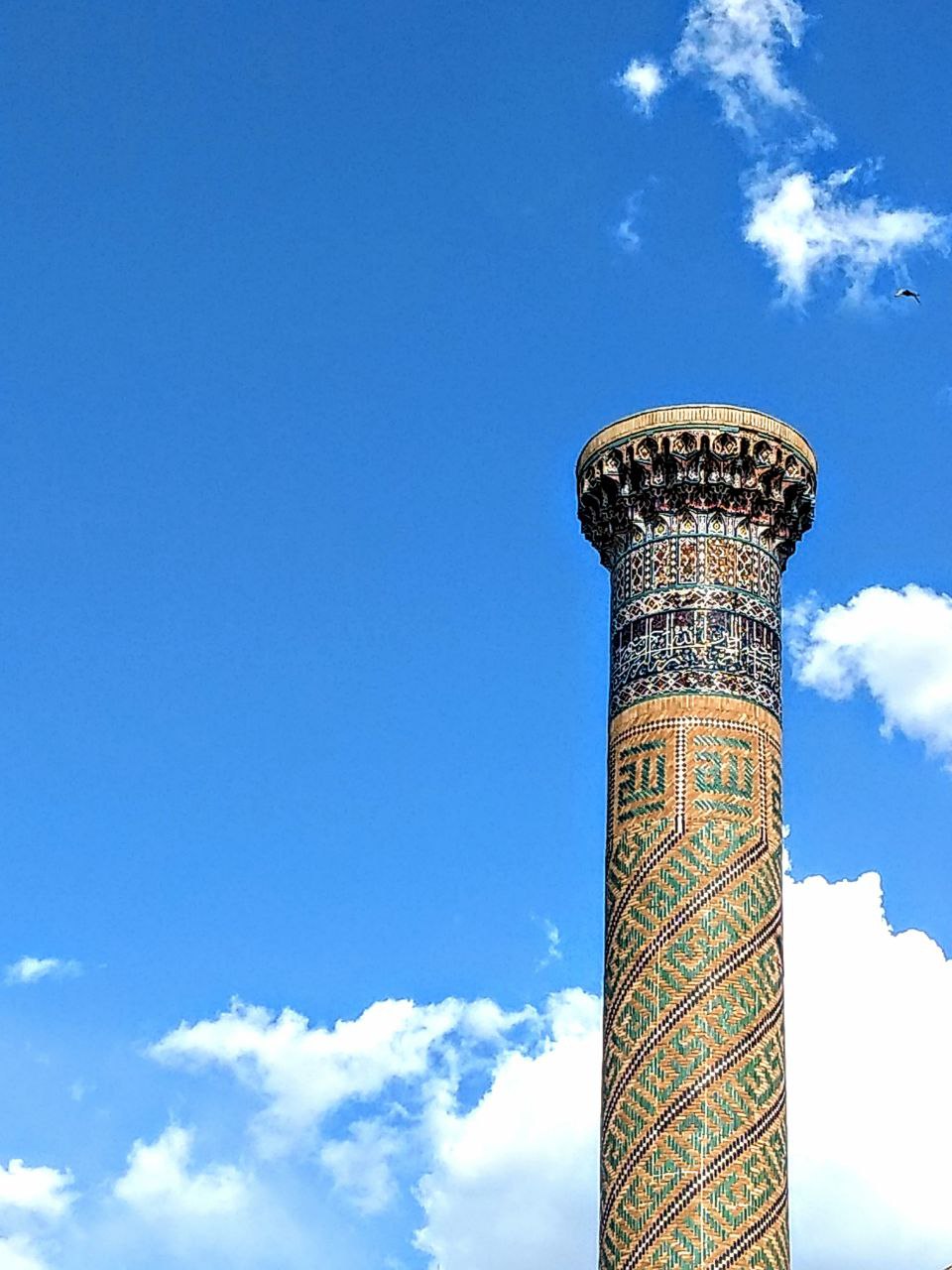
من أجمل المباني التي رأيتها كان غور الأمير، ضريح تيمور في سمرقند. ومن الخارج كان له (پیشطاق) جميل فيه مقرنص مفصلة تزين الإيوان بدرجات مختلفة من اللون الأزرق. وبصرف النظر عن المقرنصات، وجدت بالفعل نقش المئذنة جميلا، حيث كتبت كلمتي محمد (ﷺ) واسم الجلالة بالخط الكوفي المربع.
قضيت بضع ساعات في ساحة ريجستان في سمرقند، ووصلتُ عندما كانت الشمس لا تزال مشرقة. كان الجو هادئًا في الساحة، وأخذت وقتي في النظر إلى كل تفاصيل المباني، وإلى السائحين الآخرين. راقبت أصحاب المتاجر الأوزبكيين الحازمين بسعادة غامرة، وقررت أن أنظر إلى غروب الشمس فوق مدرسة شير دور: تغير الضوء إلى وهج برتقالي مما جعل اللون الأزرق أعمق، وبدأت الطيور تحلق حول المئذنتين كما لو كانت تحاول تدوير البناية كلها إلى السماء. هذا الجو الشفق الذي أحبه.
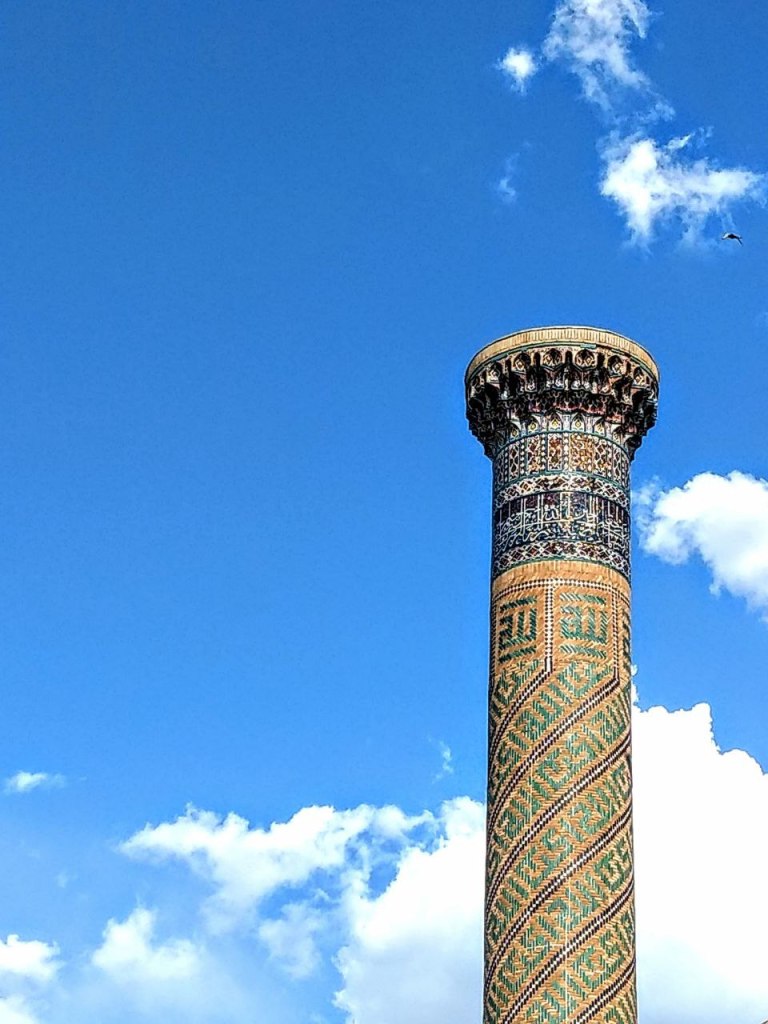
Minaret of Gur-e-Amir: can you read it? / مئذنة كر أمير: هل يمكنك قراءتها؟
وينعكس التراث الفارسي أيضاً في العلماء المهمين الذين عاشوا في أوزبكستان. خلال الإمبراطورية السامانية، وهي إمبراطورية مسلمة سنية فارسية، نافست بخارى بغداد في أنشطتها الفكرية والثقافية، وكانت موطنًا لشخصيات مثل البخاري، العالم الإسلامي وجامع الحديث، والطبيب والفيلسوف الفارسي ابن سينا، وبهاء الدين نقشبند. مؤسس الطريقة النقشبندية الصوفية. كما زار الرحالة المغربي ابن بطوطة سمرقند وبخارى.
وبعيداً عن التأثير الفارسي في الهندسة المعمارية، تحتوي اللغة الأوزبكية على العديد من الكلمات المشابهة أو نفسها للفارسية، مثل “درخت” للشجرة و”داروخانه” للصيدلة، كما يتحدث جزء كبير من سكانها اللغة الفارسية الطاجيكية، وهي اللغة الرئيسية في بخارى. وذكر أحد الباحثين أن الروابط التاريخية والثقافية مع بلد فارس تسهّل المحادثات الحالية مع إيران بشأن التعاون في مجال النقل والتواصل وما إلى ذلك.
التاريخ السوفييتي في أوزبكستان
في التاريخ الحديث، كانت العديد من الدول جزءًا من الاتحاد السوفيتي. وحتى يومنا هذا، يمكن ملاحظة إرث هذه الفترة. لا تزال اللغة الروسية هي اللغة المشتركة بين دول آسيا الوسطى، وفي أوزبكستان تتم كتابة معظم القوائم والمعلومات الإدارية والعامة والإعلانات إما باللغة الروسية أو باللغتين الروسية والأوزبكية. كثير من الناس ثنائيي اللغة. ولا تزال روسيا وأوزبكستان تتمتعان بعلاقات وثيقة.
تلعب بعض الشركات دورًا في الحنين إلى الثقافة السوفيتية. المطعم (جيغولي) على سبيل المثال، مصمم على الطراز السوفيتي القديم، ويعزف الموسيقى الروسية ويعرض المسلسلات السوفيتية على التلفزيون. ومع ذلك، أشار بعض الأشخاص الذين التقيت بهم إلى أن هناك اتجاهًا قويًا نحو الاستخدام الحصري للغة الأوزبكية وربطوا ذلك بتركيز الحكومة على خلق هوية وطنية.
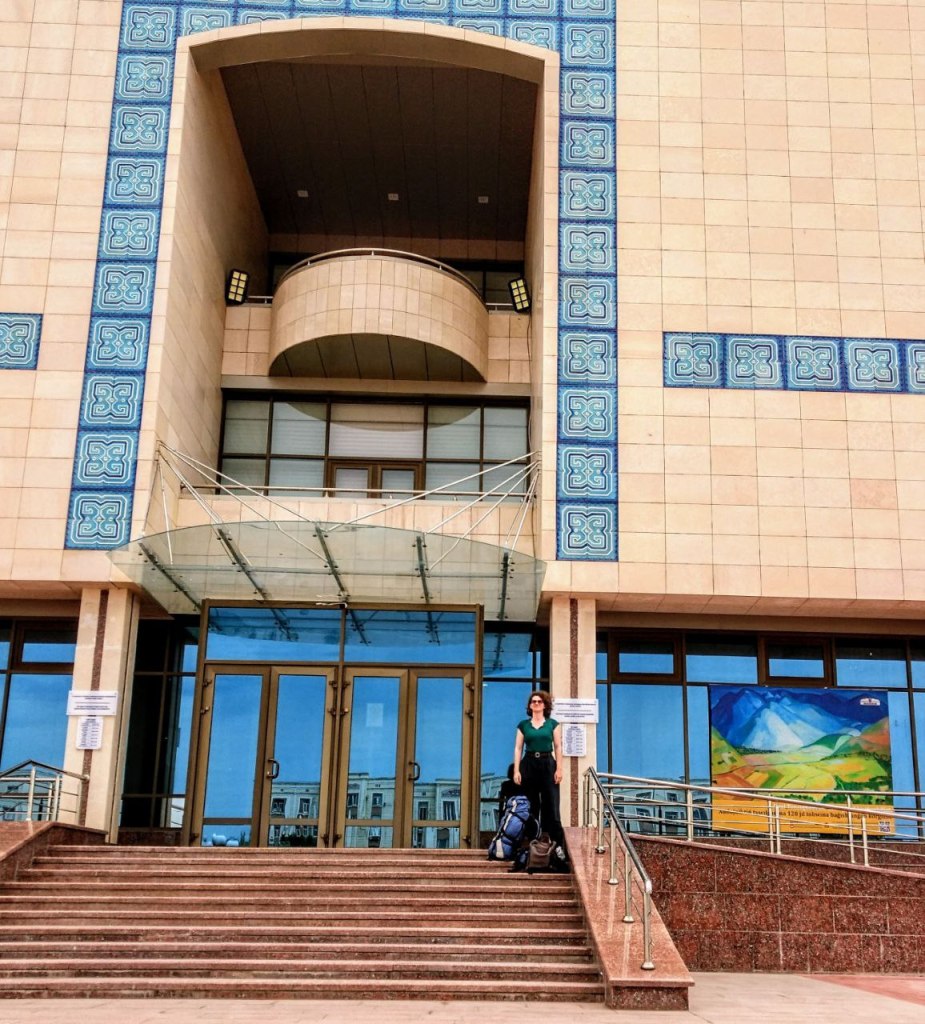
Me visiting the Savitsky museum in Nukus / زيارة متحف سافيتسكي في نوقوس
أحد الأماكن الأكثر إثارة للاهتمام التي قمت بزيارتها كان متحف سافيتسكي الواقع في نوقوس، عاصمة قرقل باغستان، جمهورية أوزبكستان المتمتعة بالحكم الذاتي. يحكي الفن الموجود في هذا المتحف قصة المقاومة: فهو يعرض فن المعارضة بالإضافة إلى أعمال فولكلور وتاريخ قرقل باغستان. بدأ المعرض في عام ١٩٦٦ على يد إيجور سافيتسكي في مدينة صحراوية صغيرة يصعب الوصول إليها، وعرض في البداية اكتشافات أثرية من قرقل باغستان. لكن بعيدًا عن الدولة المركزية في موسكو، تطورت لعرض لوحات طليعية لفنانين من آسيا الوسطى لم تكن خاضعة لعقوبات الحزب الشيوعي. المتحف يستحق الزيارة وما أذهلني هو المعرض الذي أظهر حب الفنانين لبحر آرال وجفافه التدريجي. كان من المؤلم مشاهدته.
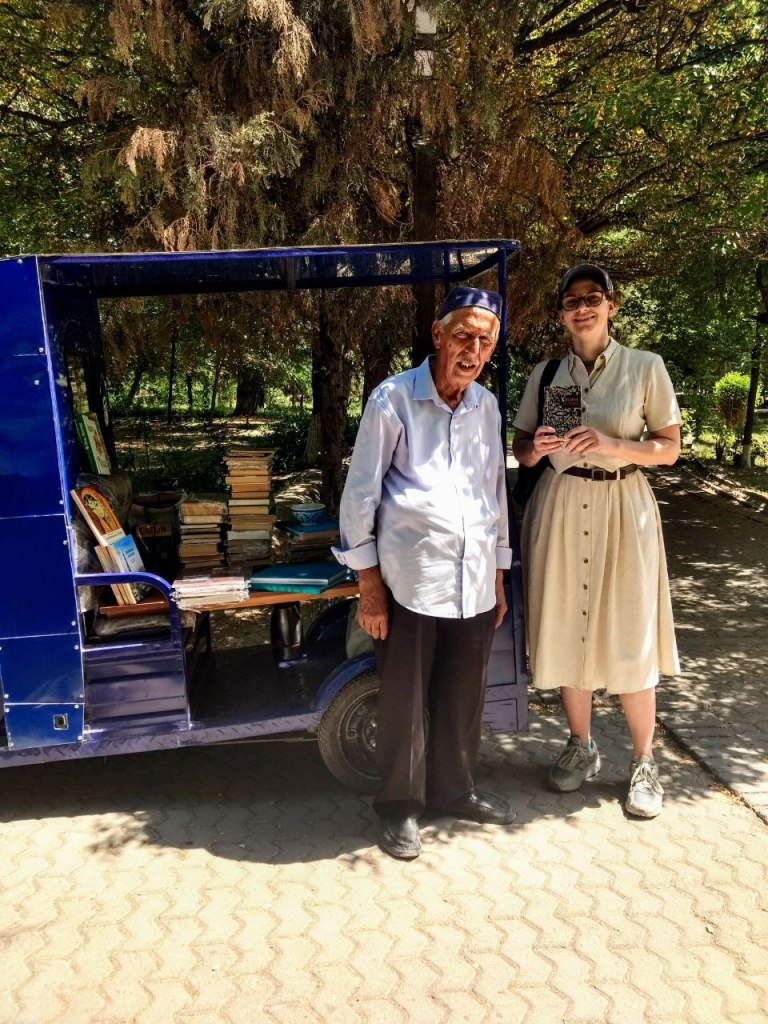
The bookseller and his stand in Bukhara / صاحب الكتب ودكانه في بخارى /
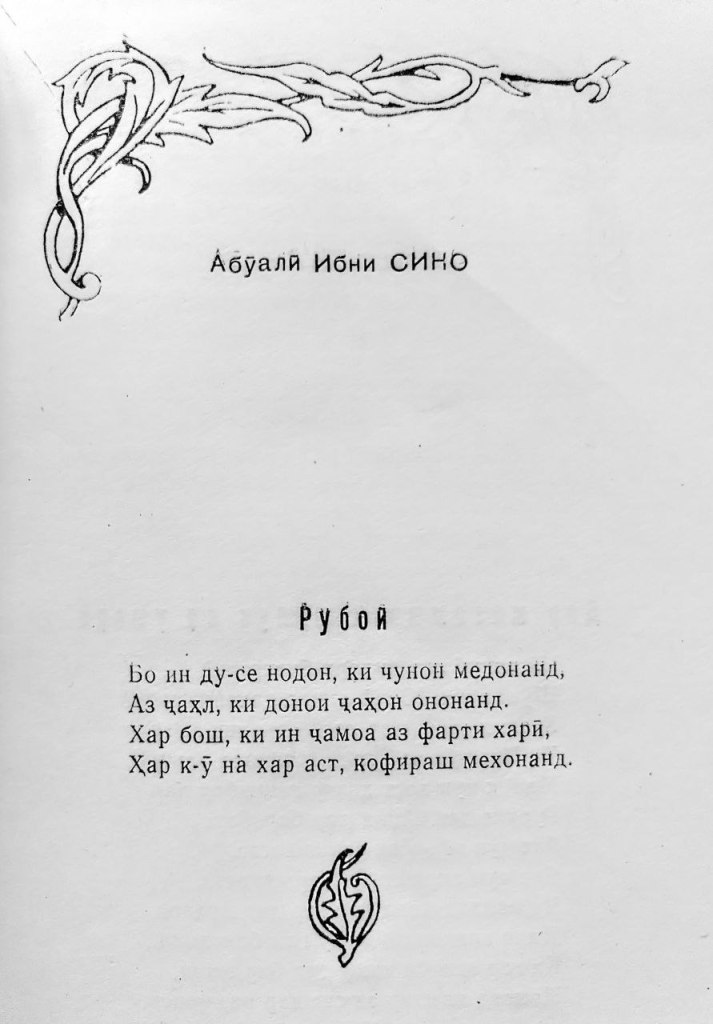
وفي مكتبة صغيرة في بخارى، تمكنت من العثور على شيء يجمع بين المرحلتين التاريخيتين: كتاب كوميدي وهجاء مكتوب باللغة الطاجيكية الفارسية، ولكن بالأحرف السيريلية! ما أجمل هذا الإكتشاف! لقد تحدثت باللغة الفارسية مع بائع الكتب اللطيف، الذي كان سعيدًا جدًا لدرجة أنه أعطاني كتيبًا إضافيًا عن الرئيس الأوزبكي السابق كريموف كهدية. يمكنكم ان تنظروا أدنى لمثال من الكتاب، رباعية لأبو علي بن سينو لمن أراد فك الشفرات
هناك أشياء كثيرة لم أرها خلال رحلتي إلى أوزبكستان. لم أزر وادي فرغانة، ولا أيًا من المواقع الزرادشتية، ولا ما تبقى من بحر آرال. هناك أيضاً أشياء لم أكتبها، فقصة السفر هذه تحتوي بالفعل على أكثر من ٢٠٠٠ كلمة، مثل تجربة ركوب القطار المسائي (بخارى-نوقوس) أو القطار الذي يستغرق ١٥ ساعة من خيوة إلى طشقند، أو لماذا تقريبًا كل سيارة في البلد هي شيفروليه. ومع ذلك، وبما أنني مقتنع بالاهتمام الأجنبي بأوزبكستان، فأنا متأكدة من أننا سنسمع الكثير عن البلد، سواء كان ذلك قصصاً من زملائنا السياح، أو تحليلات جيوسياسية حول دور البلاد في التعاون الإقليمي أو الأهمية المتزايدة لأوروبا.
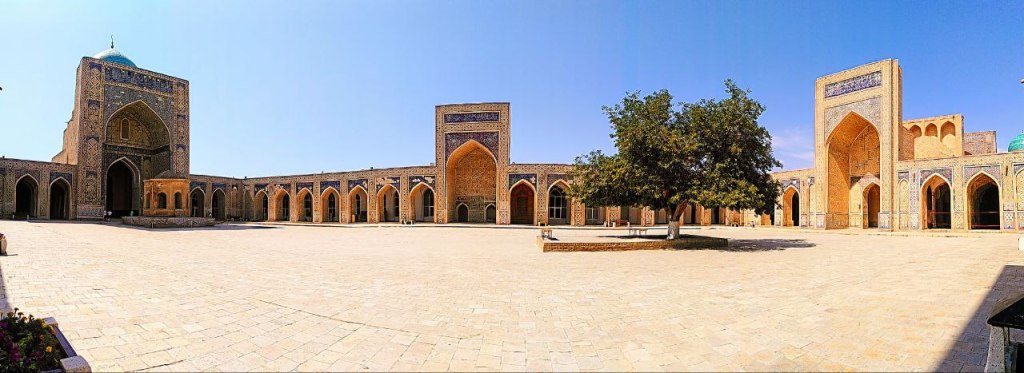
Kalan Mosque in Bukhara / مسجد كالان ببخارى
Uzbekistan: discovering its regional importance and cultural heritage
Following the fall of the Soviet Union and Uzbekistan becoming an independent state, the country isolated itself and retained sparse relationships with its neighbours. Though accessible for foreigners, its isolation led to its mysterious image and the names of Samarkand and Bukhara triggered the imagination of many, especially those familiar with the silk route, which it was an essential part of. With a new president in place, however, Uzbekistan is now looking outward by intensifying its external relations, while also realising fast paced internal developments, including developments in the tourist sector, showing the country’s rich cultural and historical heritage
In June of 2024 I visited the country for two weeks to learn about its rich history and future outlook. I visited the following cities: Tashkent, Samarkand, Bukhara, Nukus, and Khiva, and travelled by myself using public transport (train). Here I write up some of my observations
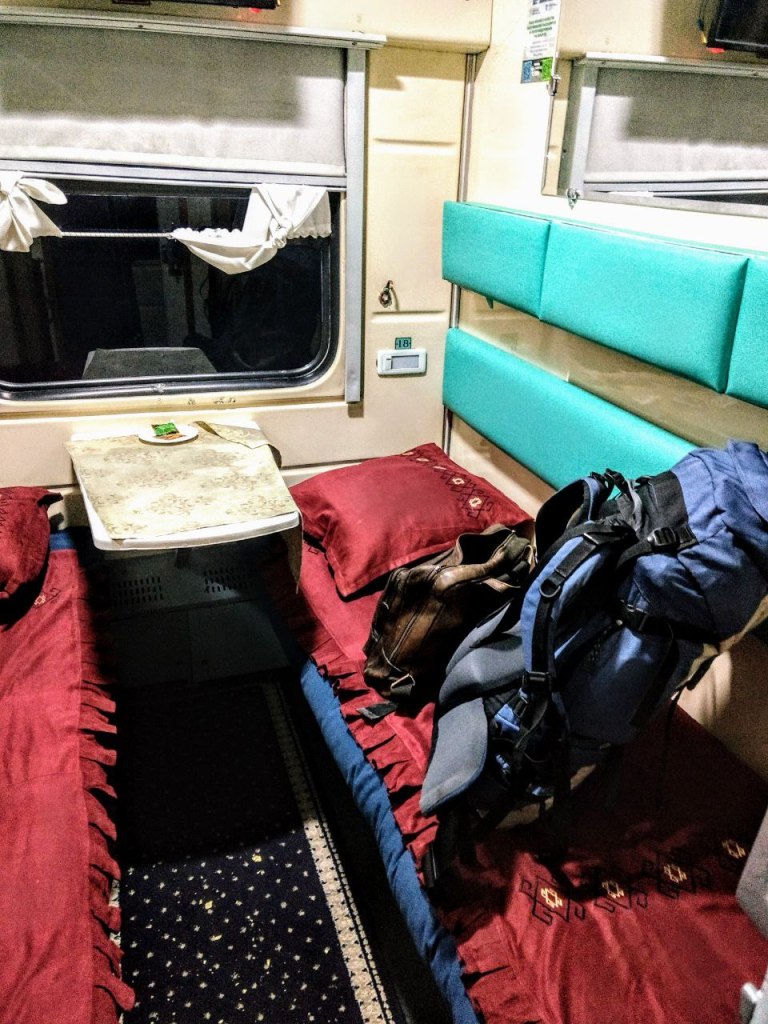
The night-train from Bukhara to Nukus / القطار الليلي من بخارى إلى نوقوس
Uzbekistan: opening up and increased foreign interest
After the fall of the Soviet Union in and Uzbekistan’s independence in 1991, Islam Karimov became the country’s first president. With the big powerbloc of the Soviet Union gone, many countries in Central Asia had to suddenly look for their own identity and in the case of Uzbekistan, Karimov applied a strategy of isolation from direct neighbours while balancing ties with big powerblocks on the international arena like the United States, Russia and Germany
Until this day, Uzbekistan continues its policy of pragmatic foreign relations, as the European Union (EU), China, and Arab Gulf states are now increasingly becoming interested in the country and relations with Russia are still in place. International interest in Uzbekistan is among others because of its proximity to Afghanistan, centrality in Central Asia, strategic position on the ‘new silk road’, and potential for foreign economic investment
When the current president came to power in 2016, he changed course on regional relations and made it a priority to develop good ties with neighbouring states under his strategy of reforms with the tag-line “New Uzbekistan”. As such, his first visit in office was to Turkmenistan, followed swiftly by Astana, Kazachstan. This opening up of regional cooperation was often mentioned in conversations I had during the travels, among others with Uzbeki political scientists who saw it as a welcome development as they can now easily travel to meet with counterparts in the region. “The discourse of animosity and ‘othering’ of Uzbekistan’s neighbours has made place for a spirit of cooperation”, one researcher said
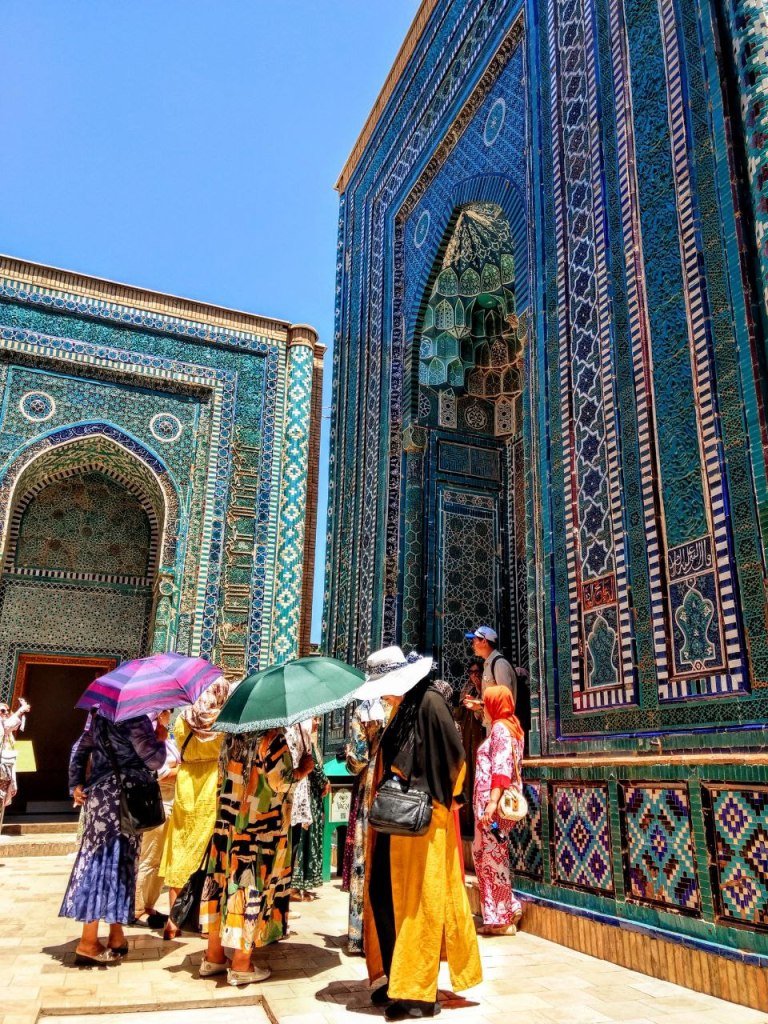
Local tourists visiting the Shah-i-Zinda in Samarkand / سياح محليون يزورون شاه زنده في سمرقند
Uzbek future I: green energy and regional cooperation
As mentioned, the interest of foreign countries in developing relations with Uzbekistan, and for Uzbekistan to profile itself as an interesting country for foreign investors, is pushed by Uzbekistan’s centrality in the Central Asian region and its potential for foreign economic investment, particularly in the field of green energy production. This latter is motivated to a large extent by Uzbekistan’s growing concerns about energy insecurity and environmental pollution resulting from conventional energy sources
Historically, Uzbekistan has been reliant on cotton export, an industry that is extremely water intensive and has led to massive salination problems in the country. As a consequence, the Aral sea has almost completely dried up. Water mismanagement and a lack of a regional framework on water sharing are further causes of disappearing water resources and motivators for regional cooperation. Uzbekistan is looking to shift to mainly solar and wind power
As I am usually researching the Middle East, my interest was to learn in particular about relations between Arab countries and Uzbekistan. It became clear during my travels that Arab Gulf states have heavily invested in projects in the green energy sector, IT, health, transport, and interregional connectivity. Examples include ACWA Power, a private Saudi company, and the United Arab Emirates owned Masdar, which co-developed Uzbekistan’s first utility-scale photovoltaic power plant (solar power). Qatar is also a potential infrastructure investor (see below). These are all relatively new developments, people I spoke to mentioned, and the relationship between Uzbekistan and Arab Gulf states is to be further explored, including how respective views on regional cooperation with countries such as Iran and Afghanistan differ and coincide
The most visible investor, it seemed, was China. This heavy-weight global player has invested huge amounts in the country under the Belt and Road initiative (sometimes referred to as the New Silk Road) and was often mentioned as an important international player in the region generally, and Uzbekistan particularly. This has included investment in construction, such as railways, but more recently also renewable energy projects. Similarly, the EU and Uzbekistan have sought to strengthen relations, among others as part of its “Global Gateway” project, although in my conversations with Uzbeki interlocutors the EU seems to be lagging far behind in importance compared to China and Arab Gulf states
Uzbek future II: transport diversification and regional connectivity
From the Uzbeki side, cooperation with countries in Central and Western Asia is pushed by economic incentives. Essential here is the diversification of transportation corridors, which would increase Uzbekistan’s geopolitical and geoeconomic significance in the region and beyond. Plus, as Uzbekistan is a double landlocked country, it has an interest in developing good relations with countries that can offer it access to the sea, including Iran and Pakistan
An interesting example of this is Uzbekistan’s pursuit of constructing the Termez-Mazar-i-Sharif-Kabul-Peshawar railway, which would link the country to Pakistan via Afghanistan. For financing this railway, Uzbekistan has held several rounds of negotiation with Qatar and the UAE. Its development has been hindered by instability in Afghanistan, though one researcher I met mentioned that Uzbekistan has managed to deal with the Afghan Taliban government in a pragmatic manner. Yet, as the Taliban government has made it a priority to develop transit routes with other countries, which could reduce the importance of Uzbekistan as a transport partner
Another example is the relationship between Uzbekistan and Iran, which since 2016 have restarted technical talks, and more recently after the conflict in Ukraine has left international actors to look for alternative trade-routes, has intensified to include high-level political dialogue, initiatives for more economic collaboration, and fostering transport opportunities. Here, Iran is an interesting transit country to the Indian Ocean but also to Arab Gulf states, such as the Uzbekistan-Turkmenistan-Iran-Oman corridor. Uzbekistan is wary, however, not to overstep international sanctions imposed on Iran, since this might worsen its relations with Western partners
The historical perspective on Uzbekistan and its context
When asking people in Uzbekistan their opinion on the turn towards better regional and international relations, which includes an influx of tourists and the development of the tourism sector (which I benefited from!) many mentioned this is only natural considering Uzbekistan always had regional relations as it was part of the silk route. But also, good relations with neighbours makes sense since many Central Asian countries have followed a similar trajectory. Here I would like to mention two examples that stood out to me: the Persian influence and the Soviet period
Turquoise: the colour of the region
I learned about the historical architecture of Uzbekistan about 6 years ago in my class “Arabic and Islamic architecture”, and it was one of the main reasons for me to make this trip. As a graduate of Arabic and Islamic studies I, of course, noticed the Arabic language. Quranic surahs and ayahs that are familiar to me decorate buildings, but in their own particular style, a style similar to Persian heritage
Samarkand and Bukhara were the epicentre of Persian culture in mediaeval Asia during the Timurid dynasty. This part of shared history in the region is reflected in the architecture: Timurid architecture can be found across Central Asia and Iran, and the Registan in Samarkand bears resemblance to buildings in Yazd, Isfahan and other cities in Iran. The colour turquoise is one of the signifiers of this architectural period
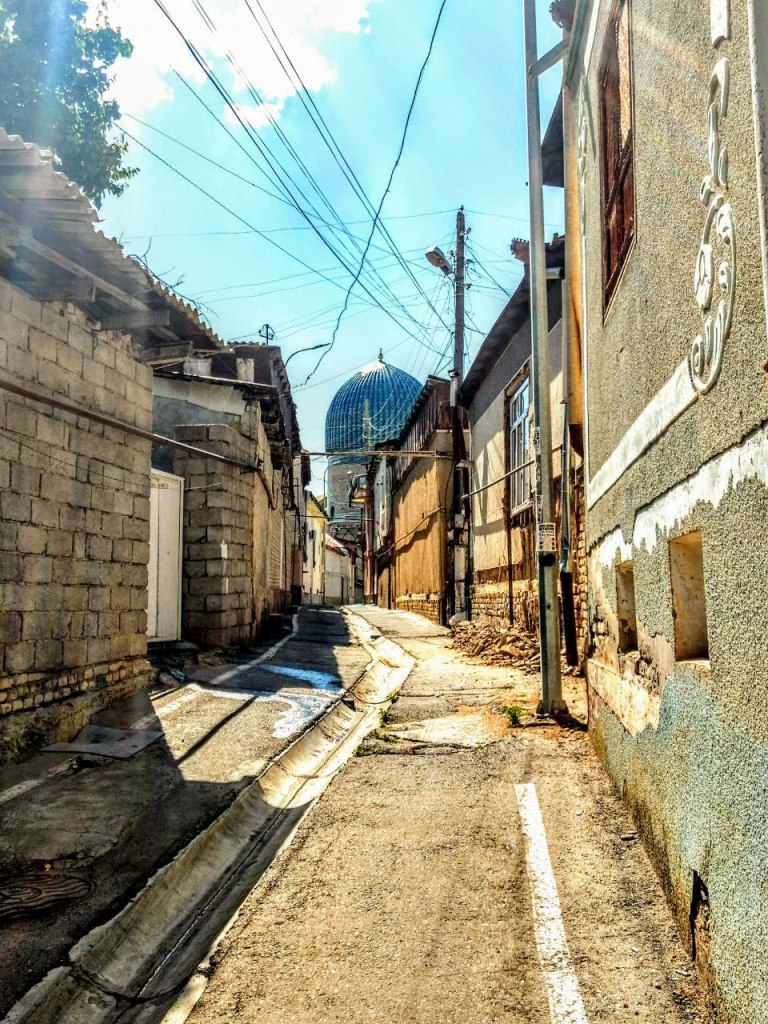
Approaching the Gur-e-Amir from a backstreet in Samarkand / الاقتراب من غور الأمير من أحد الشوارع الخلفية في سمرقند
One of the most beautiful buildings I saw was Gur-e-Amir, the mausoleum of Timur in Samarkand. From the outside it had a beautiful pishtaq with a detailed muqarnas decorating the iwan in different shades of blue. Aside from the muqarnas I really found the inscrption of the minaret beautiful, where the words Mohammed and Allah are written in square Kufic script style
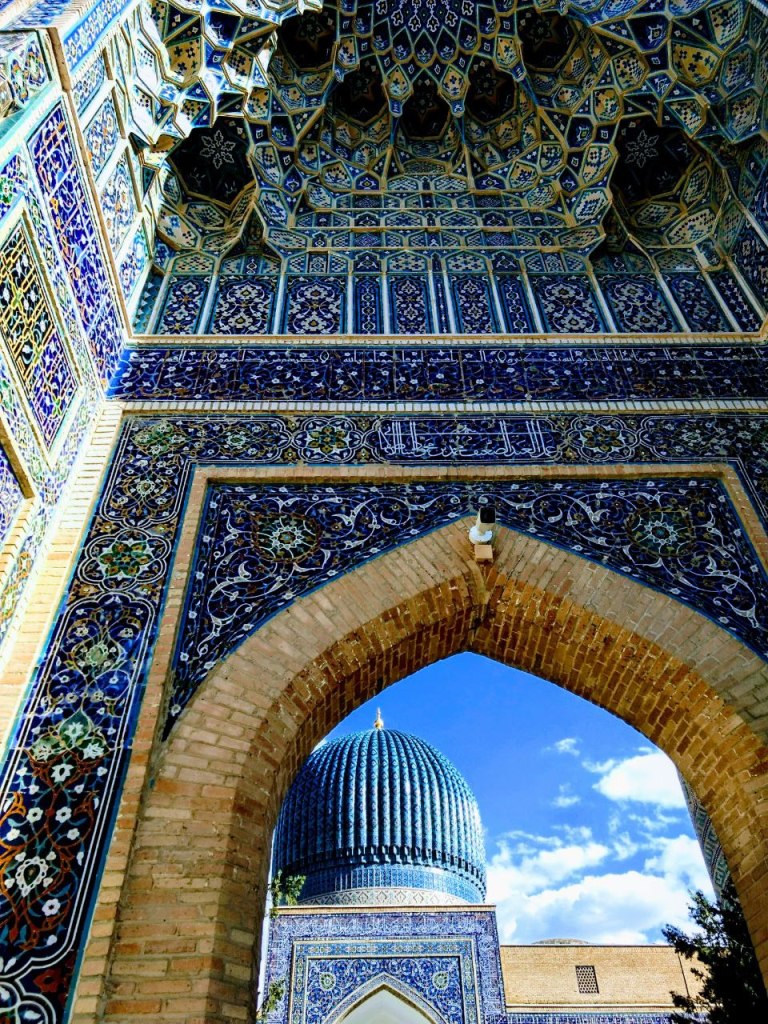
Entering Gur-e-Amir / دخول جور أمير
I spent a few hours on the Registan square in Samarkand, arriving when the sun was still shining brightly. It was calm on the square, and I took my time looking at all the details of the buildings, and at the other tourists. I observed the assertive Uzbeki shopkeepers with great joy, and eventually decided to watch the sunset over the Sher-Dor Madrasah: light changed to an orange glow making the blue deeper, birds started to fly around the two minarets as if attempting to swirl the whole building up into it to the sky. That twilight atmosphere I love
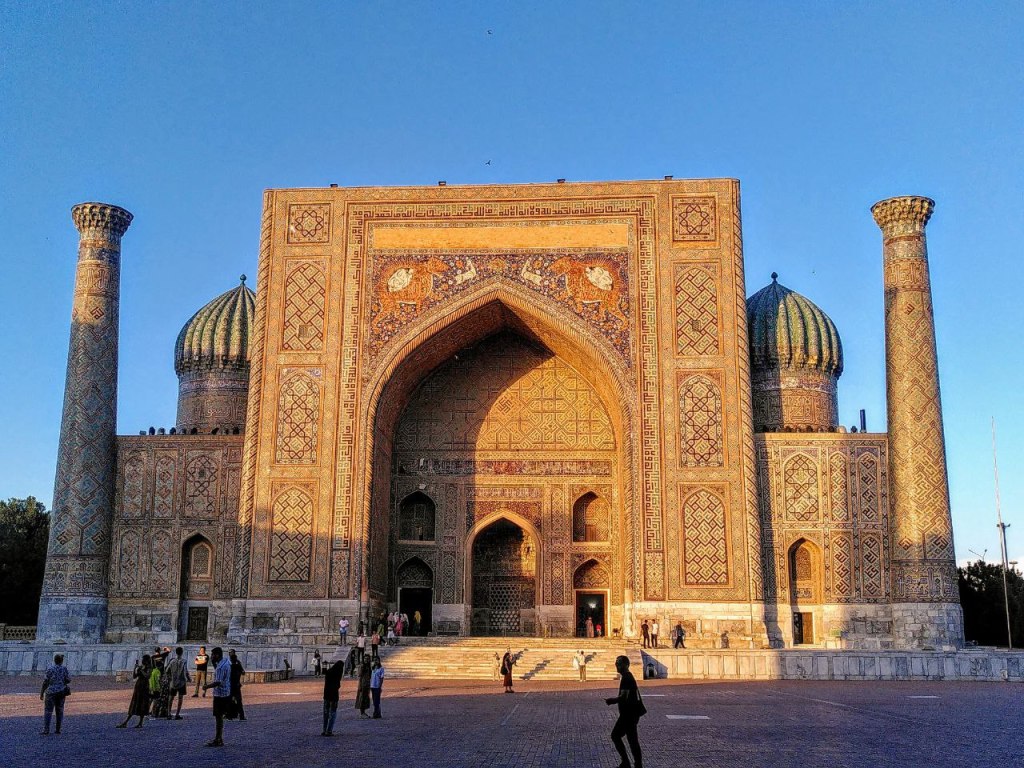
Sunset over Sher-Dor Madrasah in Samarkand / غروب الشمس فوق مدرسة شير دور في سمرقند
Persian heritage is also reflected in the important scholars that lived in Uzbekistan. During the Samanid Empire, a Persianate Sunni Muslim Empire, Bukhara rivalled Baghdad in its intellectual and cultural activities, and had been a home to figures such as Al-Bukhari, Islamic scholar and compiler of Hadith, Persian physician and philosopher Avicenna, and Bahauddin Naqshband, founder of the Naqshbandi order of Sufism. Samarkand and Bukhara were also visited by the Maghrebi traveller Ibn Battuta
Aside from the Persian influence in architecture, Uzbek language contains many words similar or the same as the Persian, such as ‘darakht’ for tree and ‘daroxane’ for pharmacy, and a large part of its population speak Tajik Persian, which is the main language in Bukhara. One researcher mentioned that the historical and cultural ties to Persia ease current conversations with Iran on transport and other forms of cooperation
The Soviet history in Uzbekistan
In more recent history, many countries were part of the Soviet Union. To this day, the legacy of this period can be noticed. Russian is still the lingua franca between Central Asian countries, and inside Uzbekistan most menus, administrative and public information, and advertisements are written either in Russian, or on both Russian and Uzbeki. Many people are bi-lingual. Russia and Uzbekistan still enjoy close ties
Some businesses play on nostalgia for Soviet culture. The Zhiguli bar, for example, is designed in the old Soviet style, plays Russian music and shows soviet series on the tv. Yet, some of the people I met noted that there is a strong trend towards the exclusive use of Uzbeki and linked this to the government’s emphasis on creating a national identity
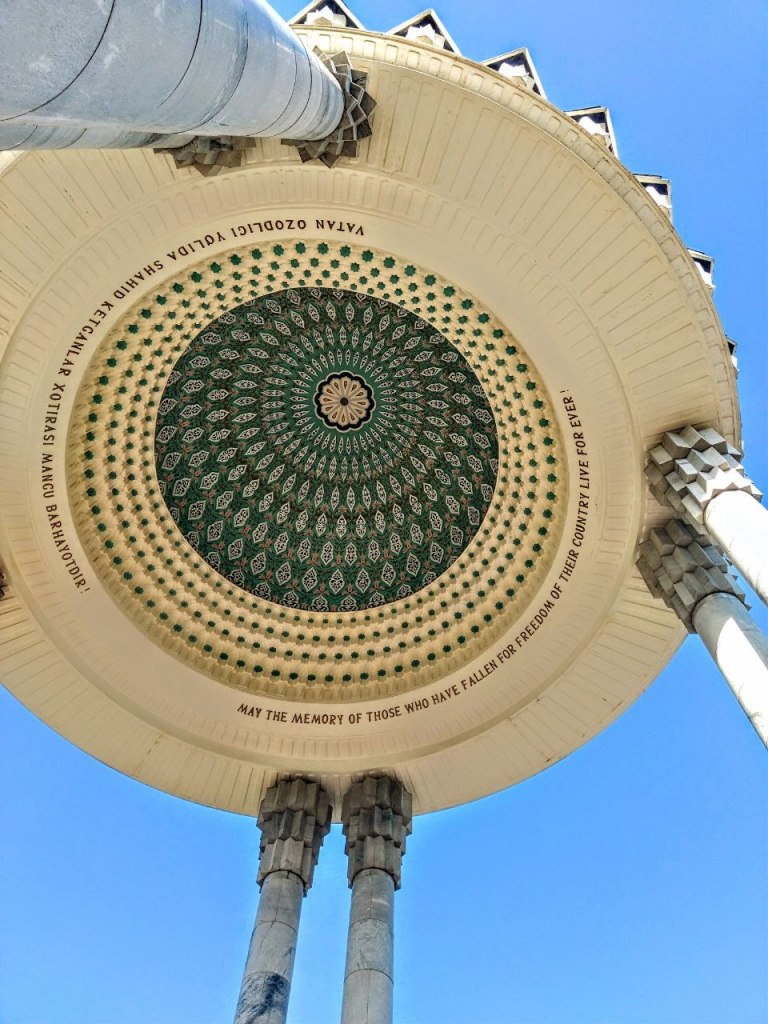
Memorial to the Victims of Soviet Repression in Tashkent / النصب التذكاري لضحايا القمع السوفييتي في طشقند
One of the most interesting places I visited was the Savitsky museum located in Nukus, the capital of Karakalpakstan, an autonomous republic of Uzbekistan. The art in this museum tells a story of resistance: it displays opposition art as well as works of Karakalpakstan folklore and history. It was initiated in 1966 by Igor Savitsky in the then hard to reach, small desert city, and initially exhibited archaeological finds from Karakalpakstan. But, far from the central state in Moscow, it grew to display avant-garde paintings by artists in Central Asia which were not sanctioned by the Communist party. The museum is well worth a visit and what struck me was an exposition that showcased the love the artists had for the Aral Sea, and its gradual drying up. It was painful to watch
At a small bookstand in Bukhara I managed to find something which combines both historical phases: a book of comedy and satire written in Tadjiki Persian, but in Cyrillic letters! How fun! I spoke Farsi with the kind bookseller, who was so pleased that he gave me an additional booklet on the former Uzbeki president Karimov as a gift. Here is an an example from the book, a Rubaiyat by Abu Ali Ibn Sino, for those who wish to decipher
There are many things I haven’t seen during my travels in Uzbekistan. I didn’t visit the Fergana valley, nor any of the Zoroaster sites, nor what remains of the Aral sea. There are also things I didn’t write down, as this travel-story is already over 2000 words, such as the unique experience of riding the night train (Bukhara-Nukus) or the 15 hours train from Khiva to Tashkent, or why almost every car in the country is a Chevrolet, to name a few examples. Yet, since I am convinced of foreign interest in Uzbekistan, I am sure we will hear many more about the country, be it stories from fellow tourists, or geopolitical analyses on the country’s role in regional cooperation or increasing importance to Europe
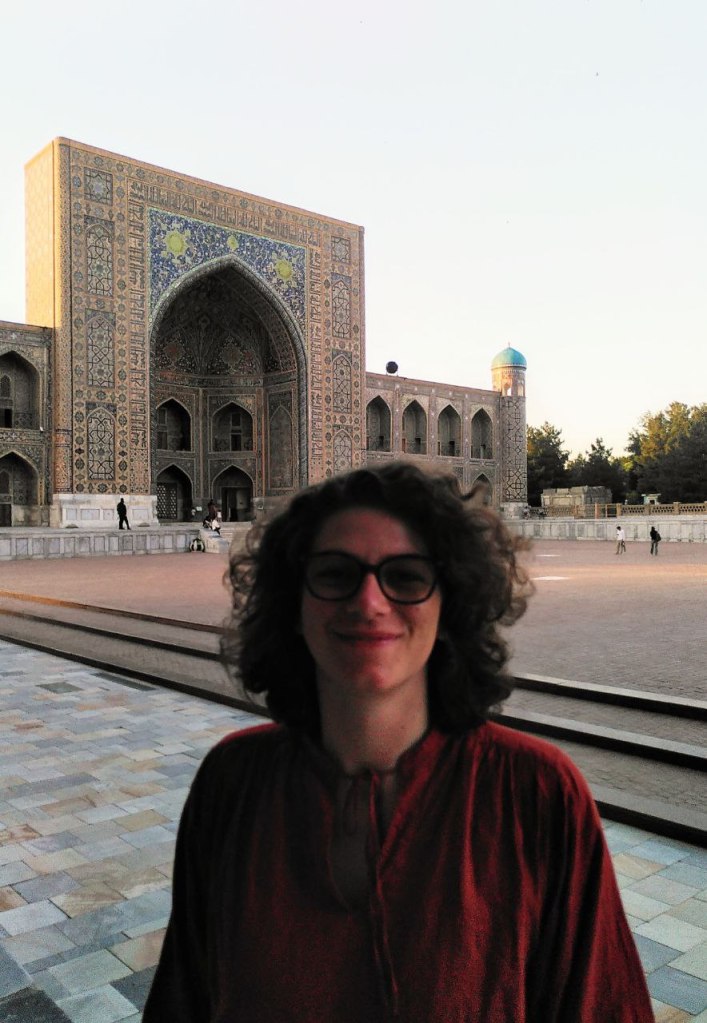
Me visiting the Registan in Samarkand / في زيارة ريجستان في سمرقند
 issabramil.com
أضف تعليق